


Comet Fountain Nozzle
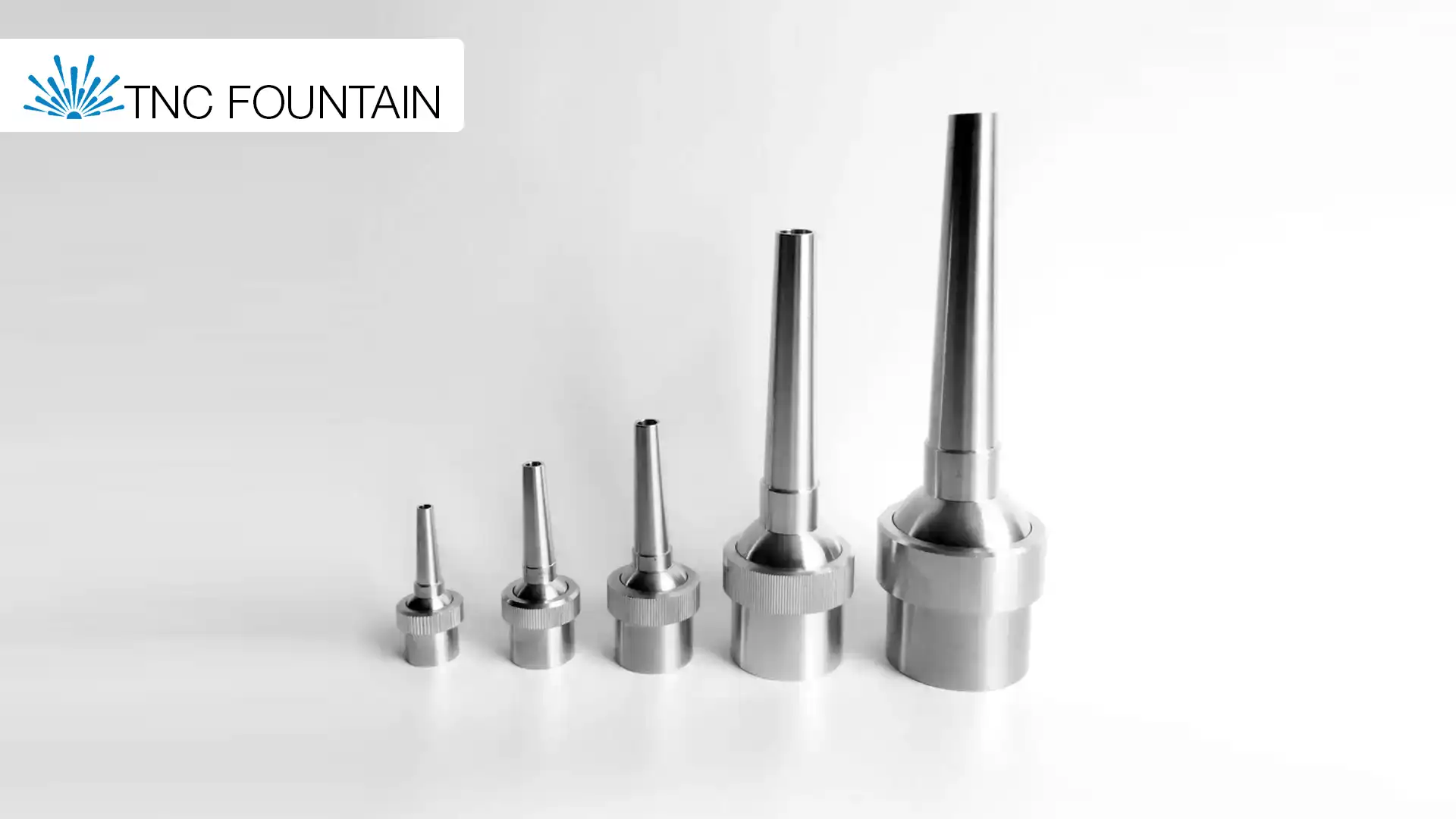
General specifications of the Comet Fountain Nozzle
The main feature of this fountain nozzle is that it works independently of the water level. This helps the designer adjust the water height they want without worrying about the pond depth, creating more attractive effects.
The Comet Fountain Nozzle is usually made from brass or 304 and 316 stainless steel, which increases its resistance against corrosion and rust when in contact with water.
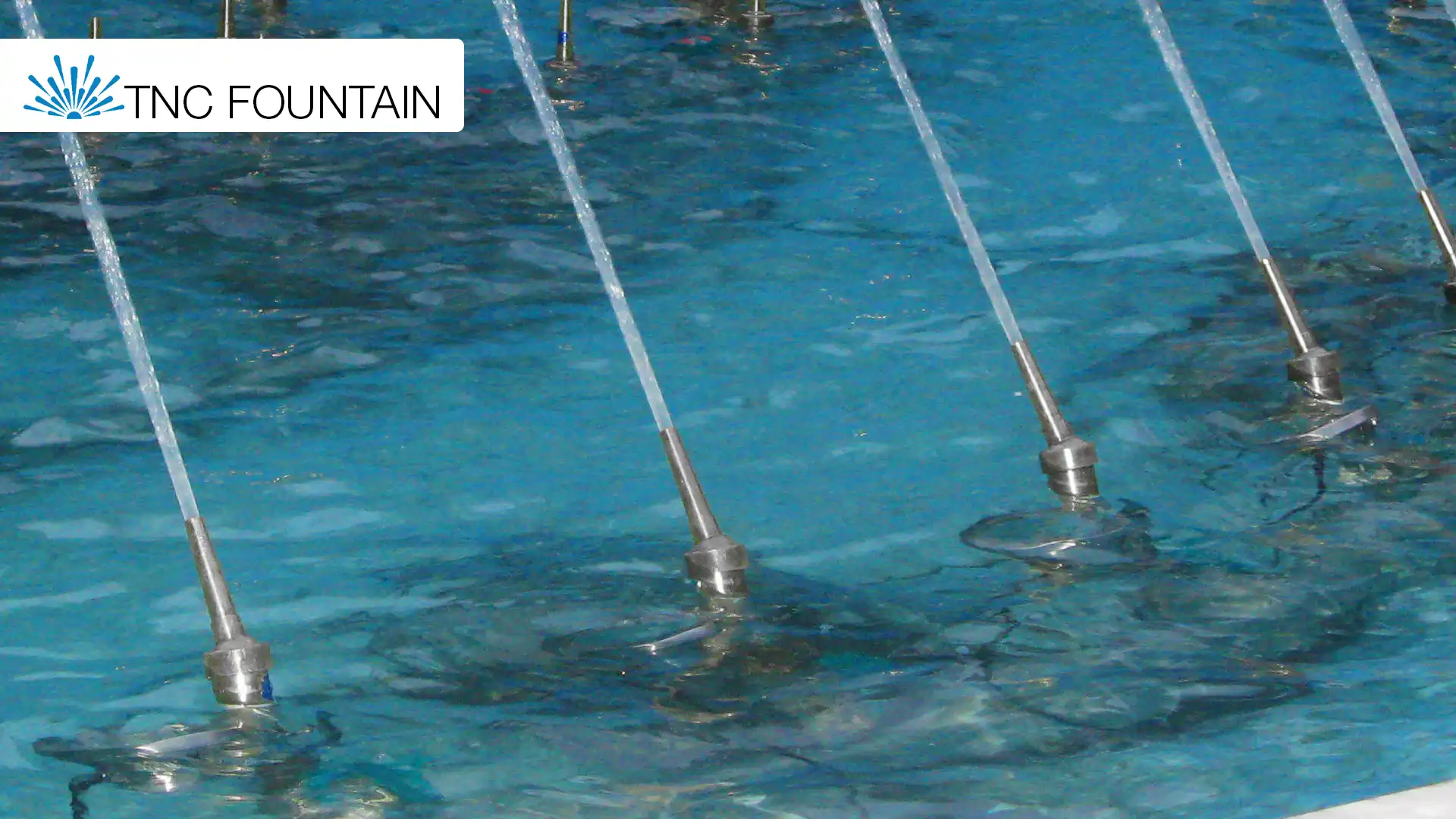
Different models:
Generally, the Comet Nozzle comes in 3 types, and you can choose one based on your project needs:
Fixed model: This model is made with a default vertical angle, and it’s really important to set the right angle on the collector pipe during installation.
Vertical angle adjustable model: In this model, a special nut frees up the ball joint base, so you can set the Comet Nozzle at any angle you want and then tighten the nut to lock it there. With this setup, you can make small adjustments and manage small slopes.
With pressure control screw: This model is used when you’ve connected several nozzles to one collector and need to split the water pressure evenly between all nozzles. You can do this by loosening or tightening a screw at the bottom of the body to reach your desired pressure.
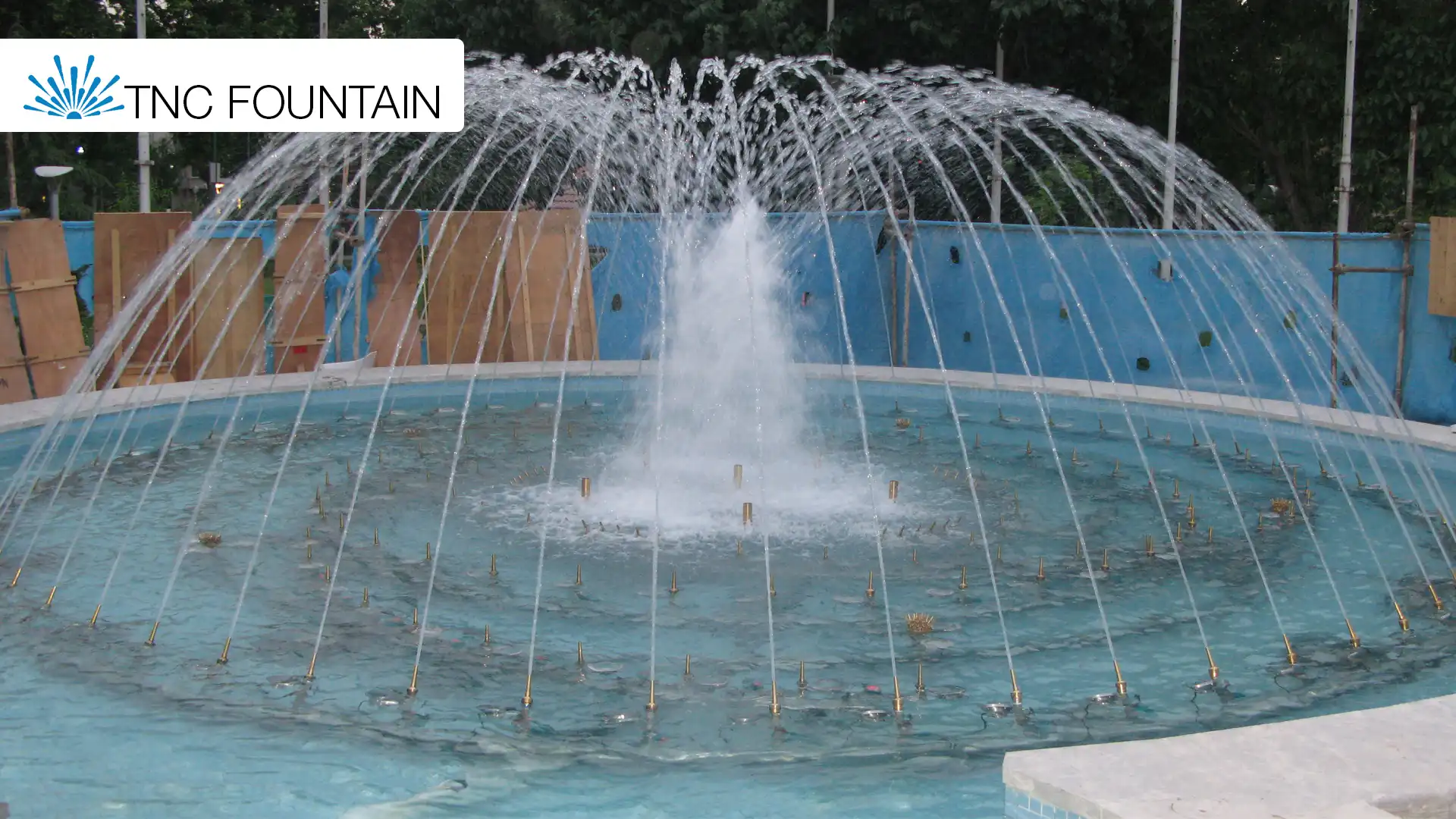
Using the Comet Nozzle in musical fountains
In musical fountains or what they call dancing fountains, the Comet Nozzle is used as the main core of the nozzles. The ability to install them in groups and respond quickly to pressure changes in DMX or PLC systems makes it an ideal choice for these fountains.
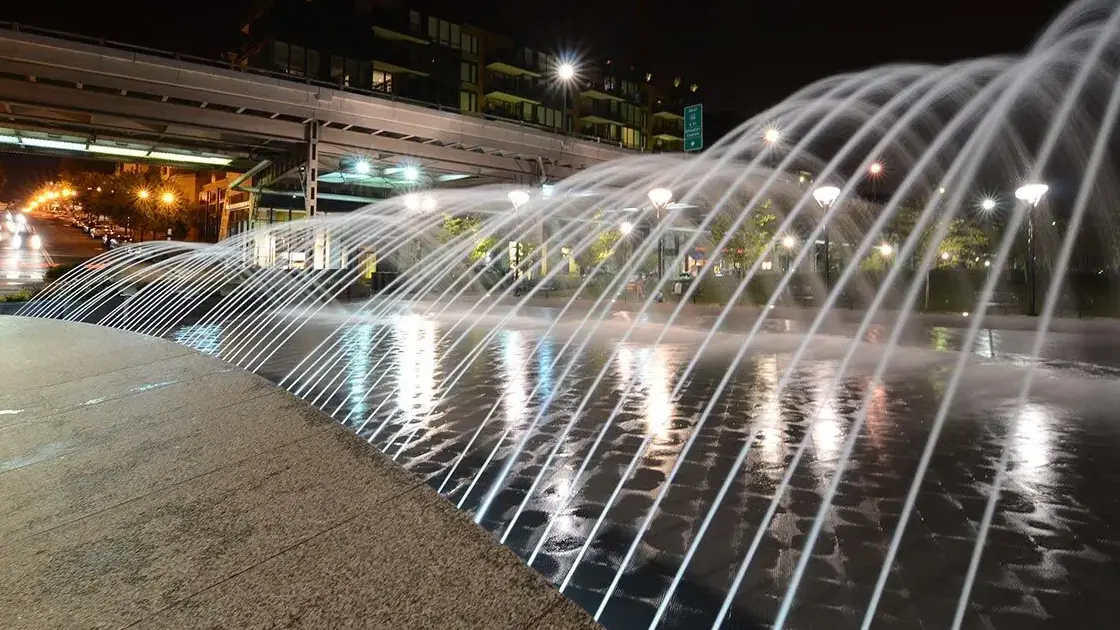
For this, they usually use a solenoid valve for each nozzle, giving engineers the ability to control each nozzle individually and create beautiful, attractive shows with water jets. Using lighting underneath the nozzle doubles the beauty of the show at night, and light passing through the water jet gives you the feeling of a line of light shooting into the sky.
Benefits for engineers
Water feature engineers, especially fountain designers, can optimize the design and building process using the Comet Fountain Nozzle:
Hydraulic Efficiency: The nozzle’s inlet being larger than its outlet creates internal pressure, making the water jet come out with more force.
Easy installation: To install this nozzle, just screw it onto the outlet installed on the collector using its internal threads and tighten it in place.
Strong and impact resistant: Its structure gives it decent strength against environmental damage.
Freedom and flexibility: You can use this nozzle on its own as a tall, single water jet with a 100-meter height, or in smaller arrangements as a group for a musical fountain.
Technical Specifications
| Parameter | Specification Range |
| Material Composition | Stainless Steel (SS316) or Industrial Brass |
| Connection Sizes | 1/2″ to 2″ BSP/NPT |
| Operating Pressure | 1.0 to 3.5 bar |
| Flow Rate | From 5 to 25 liters per minute (model dependent) |
| Projection Height | 0.5 meters to 150 meters (for industrial versions) |
| Internal Mechanism | Directional water guide and flow straightener |
Comet Nozzle maintenance service
It’s true that the Comet Nozzle is strong, but that doesn’t mean you don’t need regular maintenance and upkeep or Filtrations. Depending on the water quality and the size of the outlet opening, this nozzle can build up sediment at the water outlet. If you don’t pay attention to this, over time it’ll affect the water flow and cause the water column to scatter. In smaller models, sediment can lead to complete blockage, meaning no water comes out of the Comet Nozzle opening.
Summary of key points
In the end, I gotta say that the features and hydraulic system of the Comet Fountain Nozzle mean it can be used in all kinds of modern and classic projects. You can pick the right type and size of this nozzle for any project and put on a beautiful water show in your space.