


Engineering Legends: What Iconic Large Fountain Installations Reveal About Design Mastery
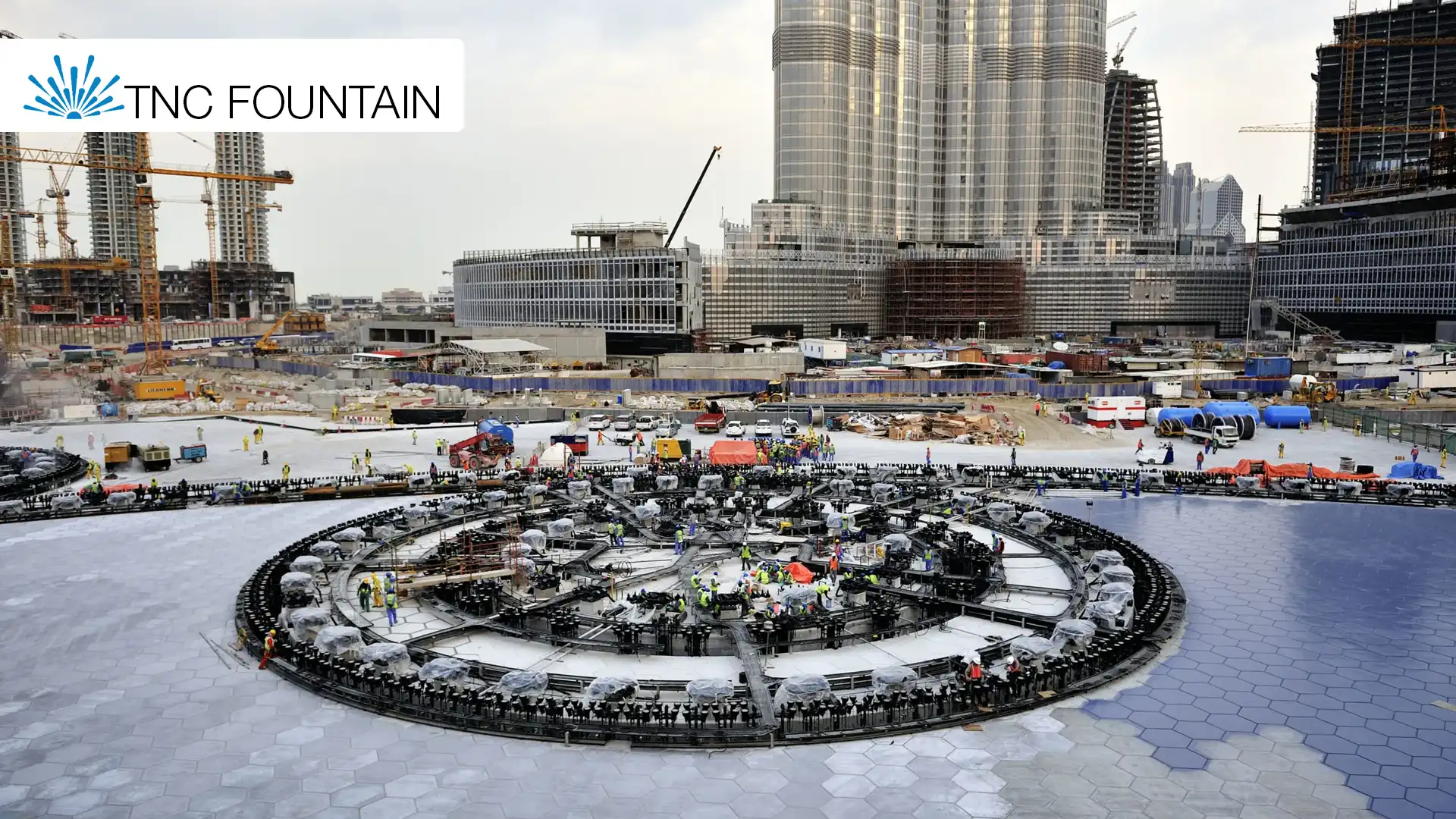
Large Fountain Installations represent extraordinary convergences of architectural ambition, mechanical engineering, and environmental science. These monumental projects demand meticulous coordination across multiple professional disciplines—designers, structural engineers, hydraulic specialists, and construction contractors must operate in precise alignment to deliver installations that function reliably while achieving spectacular visual impact. Examining documented case studies from landmark projects worldwide reveals invaluable lessons about problem-solving approaches, technological innovation, and lasting environmental influence.
World-Renowned Projects Setting Industry Benchmarks
Two installations stand as definitive reference points for professional fountain engineering globally.
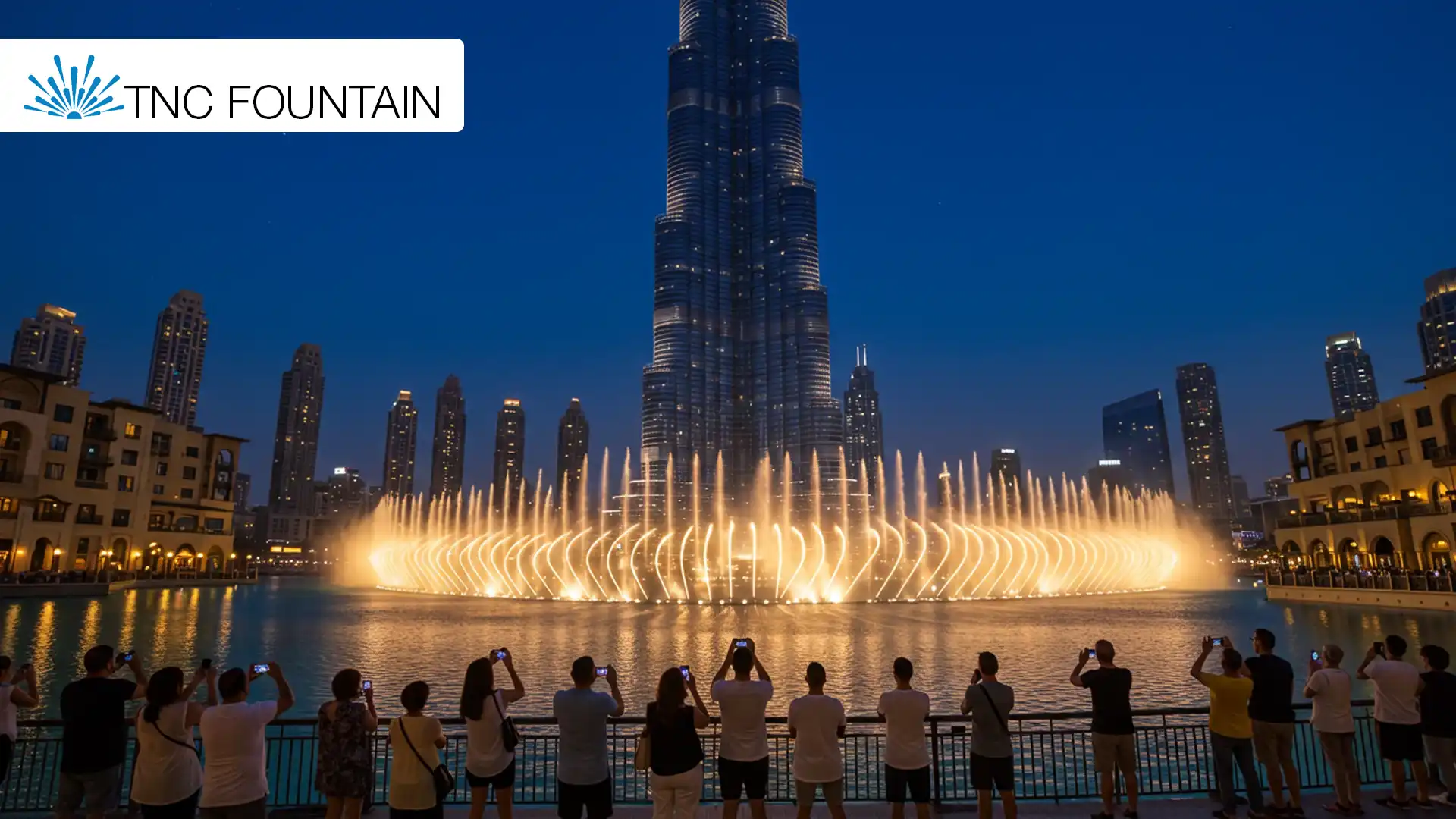
The Dubai Fountain, positioned at the base of Burj Khalifa adjacent to the world’s largest shopping complex, represents perhaps the most technically ambitious musical fountain ever constructed. This installation integrates industrial-grade hydraulic infrastructure, programmable LED arrays, and precision-choreographed audio systems to deliver performances visible from several kilometers distance. Engineers specifically designed its operational systems to maintain consistent performance despite relentless desert environmental pressures including extreme heat, persistent dust accumulation, and significant evaporative water loss.
The Bellagio Fountains in Las Vegas established the contemporary standard for synchronized aquatic performance. An intricate network of over 1,200 individual fountain nozzles and specialized shooter mechanisms generates choreographed water patterns achieving heights exceeding 140 meters. In this iconic musical fountain, precision timing systems coordinate hydraulic sequences with musical programming and dynamic lighting transitions, collectively attracting approximately 30 million visitors annually and generating measurable commercial returns for surrounding properties.
Recurring Challenges in Large Fountain Installations
Professional projects consistently encounter predictable obstacles requiring disciplined engineering responses:
- Site Geometry Constraints: Restricted footprints, irregular terrain profiles, and subsurface infrastructure conflicts demand creative spatial solutions that preserve design intent without compromising mechanical accessibility or structural integrity
- Environmental Performance Demands: Wind loading calculations, thermal expansion coefficients, and freeze-thaw cycle considerations directly influence material specifications, fountain nozzle positioning, and hydraulic pressure parameters across different geographic contexts
- Maintenance Infrastructure: Strategic placement of access points, modular component design, and underwater service provisions determine long-term operational costs and system downtime frequency throughout the installation’s lifespan
- Water Conservation Engineering: High-evaporation environments characteristic of Middle Eastern and desert climates necessitate advanced recirculation systems, chemical treatment protocols, and automated level compensation mechanisms maintaining consistent water volumes
Interdisciplinary Collaboration Driving Innovation
Successful large fountain installations emerge from seamless professional collaboration rather than isolated departmental contributions. Architectural teams establish experiential vision and spatial relationships, hydraulic engineers translate creative concepts into mechanical reality, electrical specialists integrate control systems and illumination infrastructure, while construction contractors manage phased site execution against compressed delivery schedules.
Contemporary projects leverage sophisticated digital workflows—computational fluid dynamics simulation, parametric 3D modeling, and virtual reality visualization enable multidisciplinary teams to identify design conflicts, optimize hydraulic performance, and validate aesthetic outcomes before physical construction commences. For musical fountain projects specifically, acoustic modeling is incorporated alongside hydraulic simulation to ensure audio synchronization systems perform with millisecond precision across large open-air environments. This front-loaded technical investment substantially reduces costly on-site modifications and accelerates commissioning timelines.
Transformative Impact on Urban and Commercial Environments
Documented case studies consistently demonstrate that professionally executed fountain installations generate measurable value extending well beyond visual aesthetics. Large fountain installations function as urban catalysts, activating surrounding public spaces and fundamentally altering pedestrian behavior patterns.
Property valuations within proximity to landmark fountain installations demonstrate statistically significant premiums in multiple international markets. Tourism metrics reveal fountains among the highest-ranked visitor attractions in their respective cities, generating substantial ancillary economic activity for adjacent hospitality, retail, and entertainment businesses. Musical fountain installations in particular command extended visitor dwell times, as synchronized water-and-sound performances create compelling reasons for audiences to remain and return repeatedly.
The precision engineering behind each fountain nozzle configuration directly influences the spatial reach and visual drama of water displays, determining whether an installation becomes a forgettable feature or a defining urban landmark. Careful nozzle selection—from laminar flow jets to aerated fan sprays—shapes the tonal vocabulary of the entire composition.
Climatically, large water features introduce meaningful ambient cooling effects in urban heat island environments—a consideration gaining increasing relevance as metropolitan temperatures rise globally. The evaporative cooling contribution of major installations measurably reduces localized thermal discomfort during peak summer conditions, extending outdoor occupancy periods and enhancing commercial activation of surrounding spaces.
These case studies collectively confirm that large fountain installations, when engineered with precision and maintained consistently, transcend decorative function to become defining elements of urban identity and commercial vitality.