


The Synergy of Motion and Design: A Premiere Rhythmic Fountain Project in Dubai
Technical Integration of The JUMP Laminar Fountain System
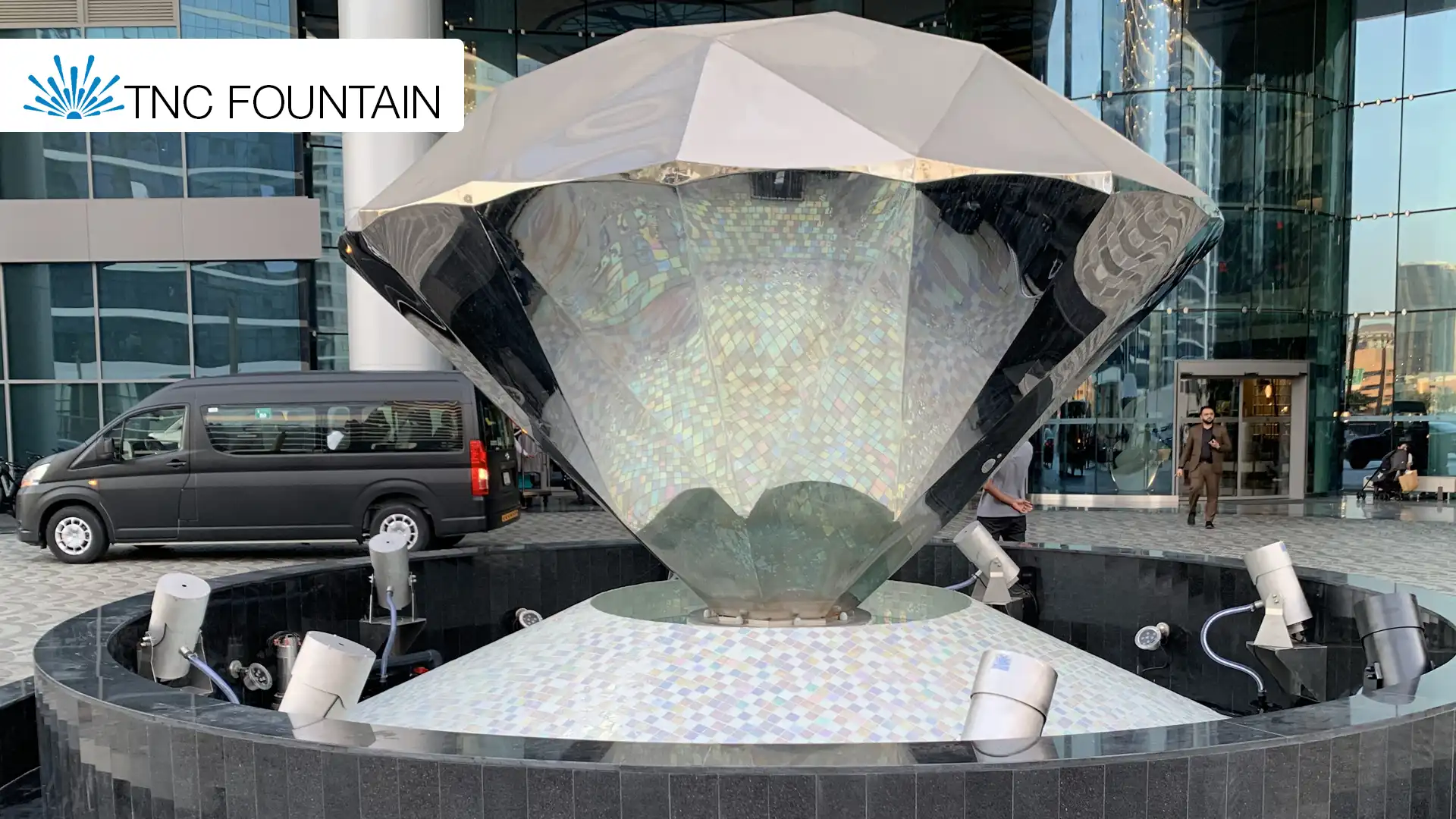
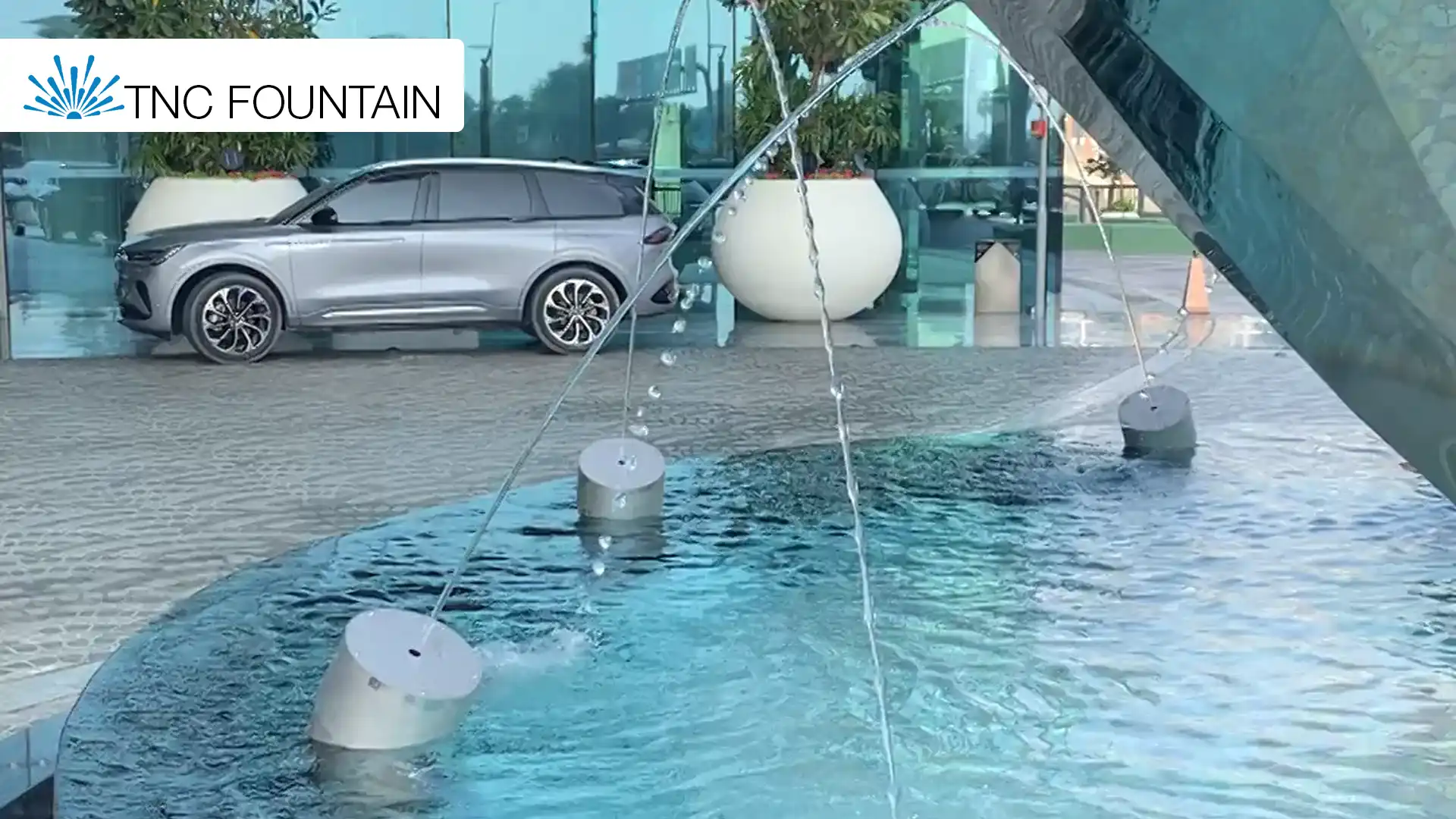
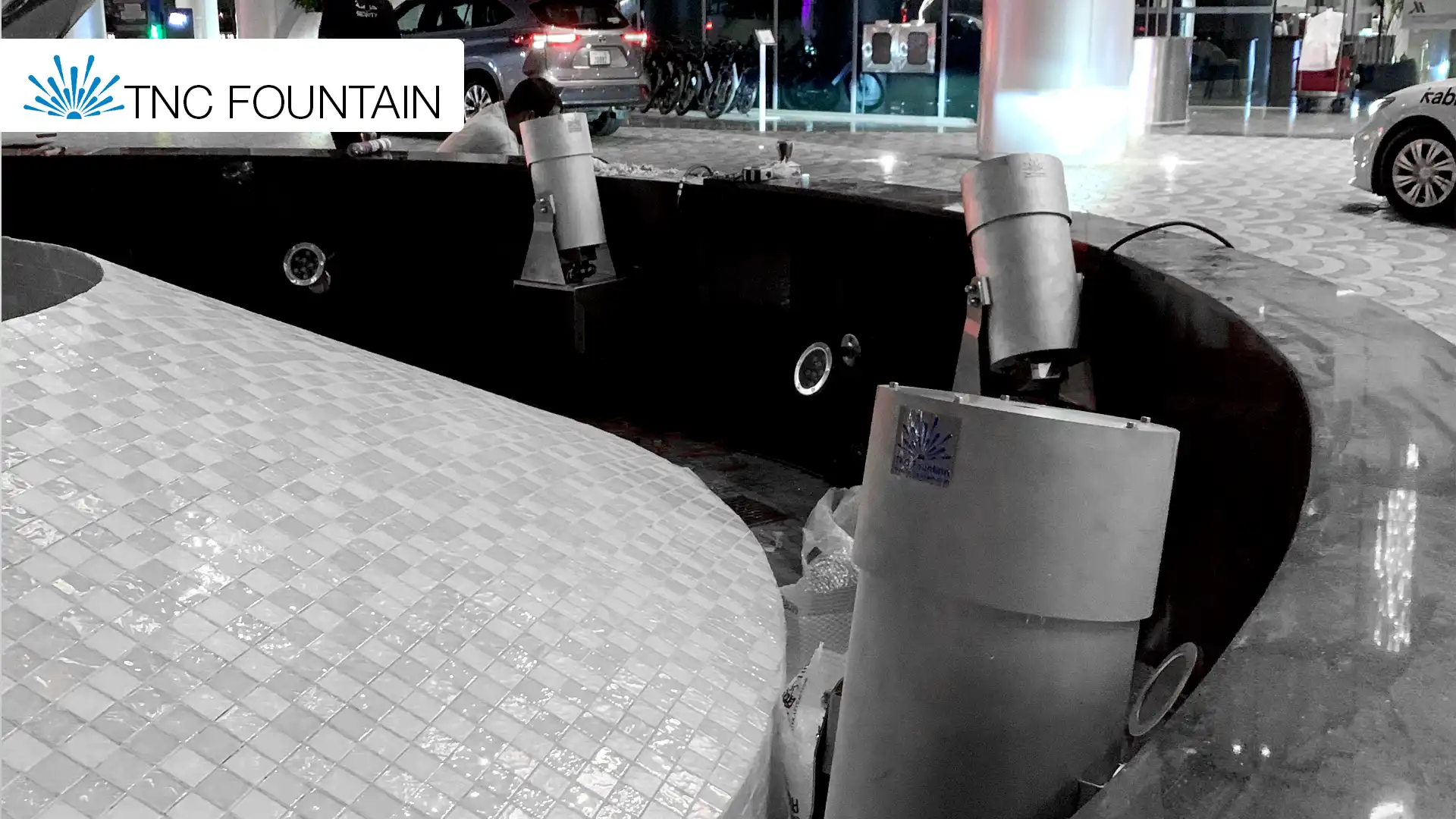
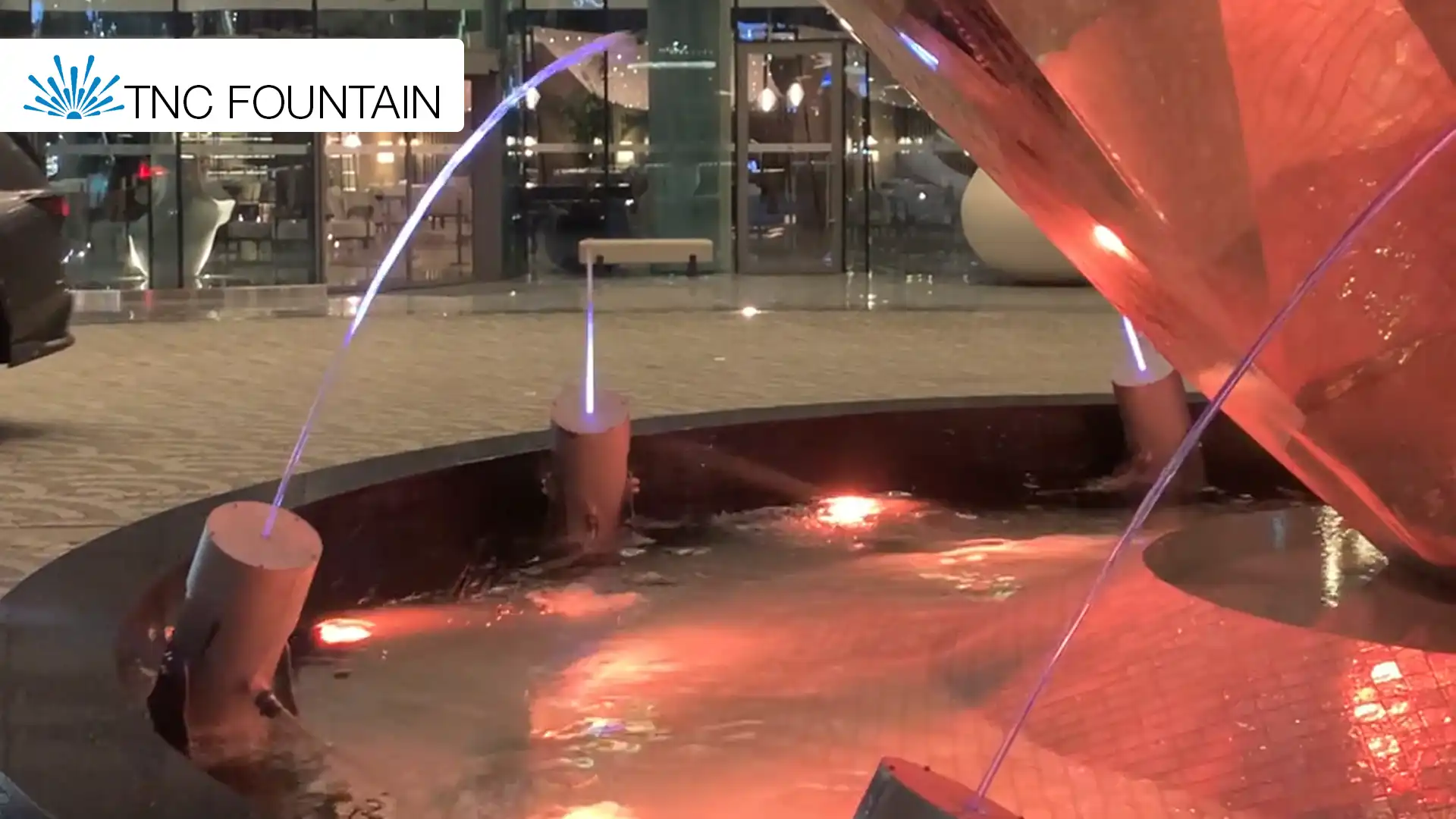
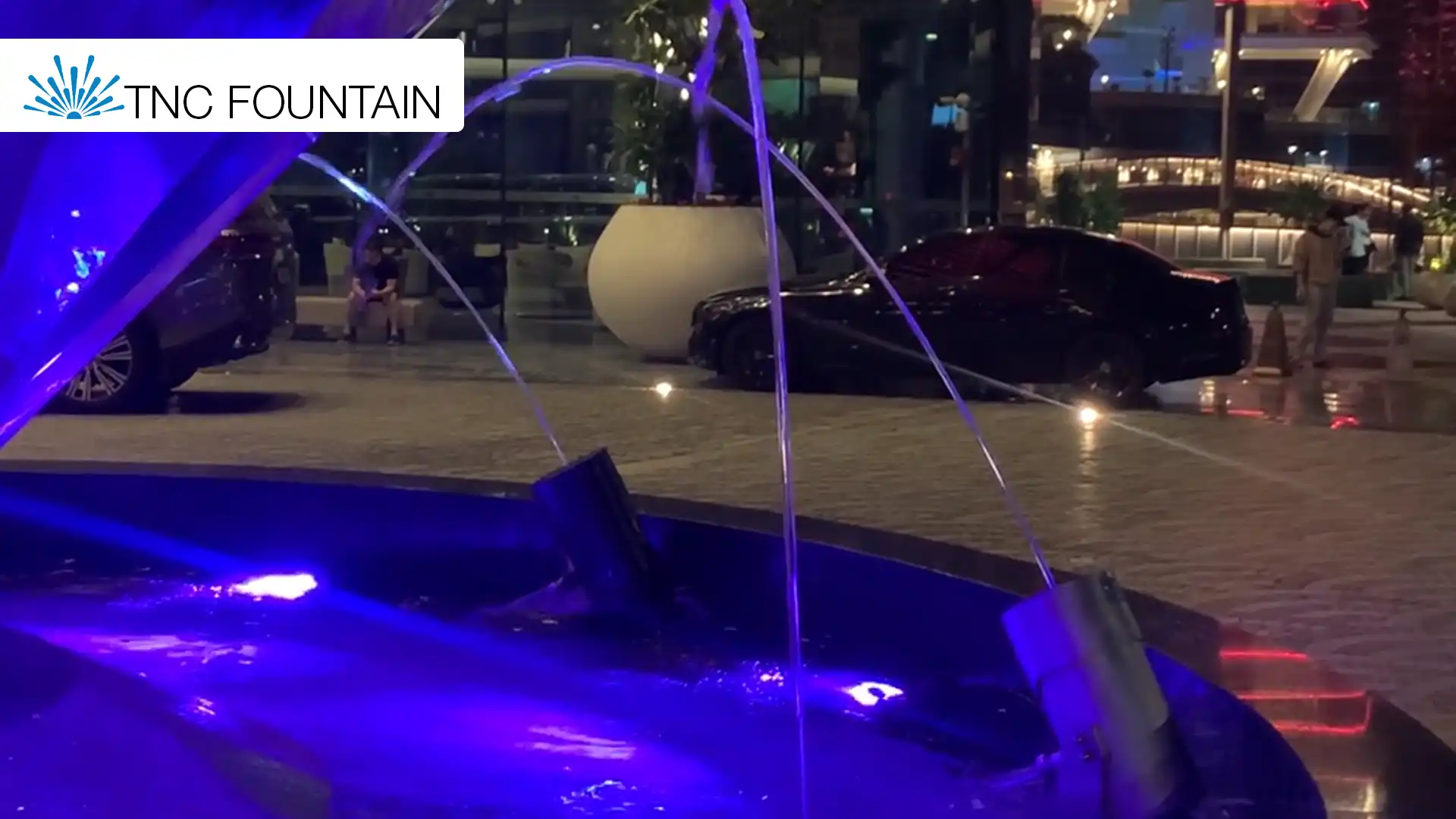
Eight JUMP Laminar Fountain Nozzle units represent the dynamic character of this rhythmic fountain project. Unlike a regular jet, these laminar systems send down a coherent stream of water, resembling glass, and greatly stable even at considerable distance. Every unit shall be powered by its own independent DC pump to permit fine control over the height and angle of each of the individual water bursts.
Technical Components of the Installation:
Independent DC Propulsion: Each JUMP Laminar Fountain is fed by its own dedicated pump, enabling complex “chase” patterns and synchronized group launches.
Multi-Color LED Matrix: Underwater lighting is integrated to illuminate the crystalline streams, with specialized lamps dedicated to the perimeter overflow for 24-hour visual impact.
DMX Control Architecture: The entire system operates on a DMX512 protocol, with the control panels situated in the hotel’s sub-level filtration room.
Smart Scheduling: The system is programmed to operate in 15-minute cycles, balancing visual engagement with mechanical longevity, running from 08:00 AM to 02:00 AM daily.
Why a Rhythmic Fountain Project is an Essential Element for an Urban Landmark?
In a fast-growing area like Dubai Creek, a rhythmic fountain project acts as an important element of “urban furniture” bridging the divide between residential modernism and public luxury. The project is landscaped alongside the Hilton Marina, with the fountain serving as a transitional gateway experience for visitors.
With JUMP Laminar Fountain technology employed, the water display remains “splash-free,” which is essential for the maintenance of surrounding high-end furniture and walking paths. With the recirculating filtration and disinfection system in place, the project complies with stringent environmental requirements while ensuring sparkling clean water within the relevant ambient temperature and dust levels common to the region.
Is the JUMP Laminar Fountain Right for Your Landscape?
For architects and building engineers, choosing between a static feature and a rhythmic fountain project has always revolved around the required level of interaction. The JUMP Laminar system brings several distinct advantages to modern developments:
Visual Clarity: The laminar effect eliminates the “mist” associated with high-pressure nozzles, providing a clean look.
Programmable Agility: The ability to “jump” or “cut” the water stream creates an interactive rhythm that captivates audiences.
Mechanical Longevity: Used in conjunction with specialized filtration systems for the Jebel Creek project, these components provide high resistance to wear.
Spatial Efficiency: These systems provide highly spectacular visuals without occupying the vast footprints that traditional water displays require.
How Does Sub-Level Infrastructure Support Such Projects?
The successful operation of this rhythmic fountain project is hidden beneath the surface. The piping and wiring network connects the main basin directly to the filtration room, which is located on the “minus-one” floor of the hotel. This arrangement isolates mechanical noises from guest areas, allowing technicians to carry out maintenance uninterrupted.
The integration of eight surface lights ensures that the waterfall effect remains visible throughout the night, independent of JUMP Laminar Fountain sequences. Such dual-purpose design ensures that even during rest periods of the fountain, the site remains an attractive piece of architectural design.