


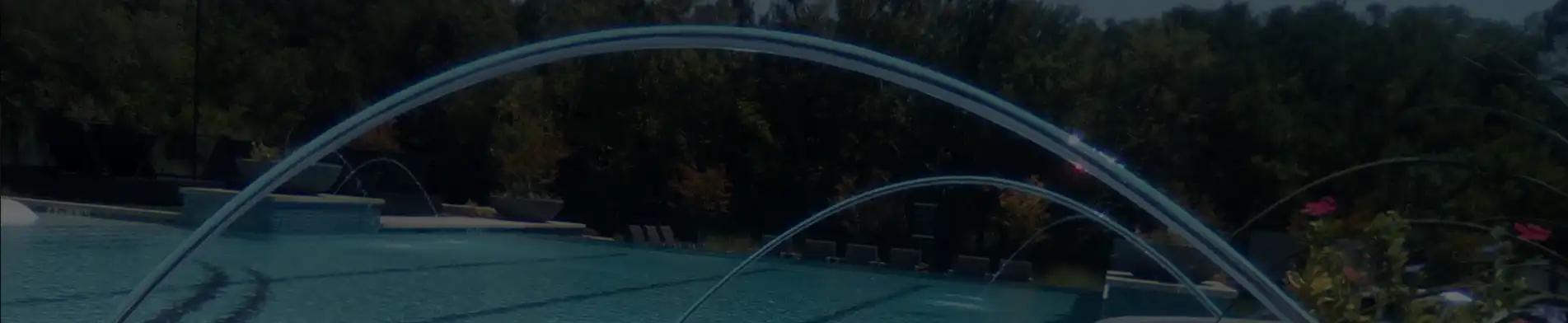
Laminar Fountain Nozzle

In fact, one of the most attractive points for architects in applying a Laminar Fountain Nozzle is its special optical property. The laminar jet remains invisible, unlike most types of fountain nozzles, which generate a furious white spray aerated with air. This allows for an excellent transmission by the water as a conductor for light. With the introduction of internal IP68 LED modules, total internal reflection traps the light within the water stream, thereby providing glowing arcs: a breathtaking visual signature for urban plazas and luxury hotels-as if by magic.

What Specifications Characterize a High-Performance Laminar System?
Achieving the perfect arc requires the fulfillment of several specific critical technical conditions. A Laminar Fountain Nozzle requires precise calibration as a sensitive hydraulic creation. The professional comparison of the different types of fountain nozzle types usually involves the following parameters relating to the technology:
Internal Flow Stabilization: High-end models boast multiple compounds of mesh and baffles that shunt kinetic energy and siphon any vibration well before the flow exits the orifice.
Accuracy of Orifices: The diameter of the nozzle generally lies between 12mm and 25mm. These orifices machined for certainly extreme tolerances ensure the exit stream is “polished” and free from microscopic imperfections.
Integrity of the Material: Professional nozzles are almost always made with stainless steel (304 or 316), or with high-grade brass. That makes the internal geometry clear of rust and mineral build-ups in the course of time.
Pressure Ranges of Operation: Normally that system works under 2 to 5 bars to obtain a laminar flow. If the pressure is above or below the calibrated one, “breaking” occurs causing a loss of the glassy visual effect.
Uniformity of the Required Flow Rate: Depending on the arc height, flow rates can vary between 10 and 50 liters per minute (L/min).
Will Jumping Jet Design Provide an Enhanced Experience Towards the Musical Fountain Choreography?
Jumping Jet model is one of the dynamic variants of the Laminar Fountain Nozzle. This unit has a rapidly responsive mechanical cutter that “slices” the laminar stream into severable segments. While under DMX or PLC control, these “segments” of water appear to float through the air, glowing like pulses of light. Consequently, they are thus much more versatile than static fountain nozzle types, particularly in installations that feature interaction where water must be controlled by music or movement sensors.

Advantages for Constricted Spaces and Interiors
In metropolitan spaces where space is at a premium, the laminar jet provides several strategic advantages:
Minimally-Splashing Radius: Since the water isn’t turbulent, it hardly creates any splash on hitting the basin, making it ideal for interior lobbies and airports.
Excellent Sound Attenuation: The smooth entry into the water surface produces almost no noise, ideal for a silent effect to gardens and hotels.
Resistance to Wind: The high density and the lack of aeration make it much more resistant to wind deflecting the arc than frothy or misting nozzles.

Maintenance Protocols Essential for Sustainability in Operation
Even if the Laminar Fountain Nozzle forms a hardcore installation, given that it has very perfect water clarity, filtration becomes the determining must-haves. A speck of dust that escapes the filtration loop can upset the smooth laminar flow, thus creating a “watery” or irregular stream. Engineers should always implement a secondary fine-mesh filtration system specifically for the laminar circuit to ensure unobstructed internal vanes.
Frequently Asked Questions Regarding Laminar Systems
Does the nozzle need special water treatment? Yes, because the water should be soft and feature free of high mineral content to avoid scaling inside the precision orifice maintaining the “crystal-clear” effect.
Is it suitable in saltwater conditions/in environments with saltwater? Yes, so long as the unit is made of Grade 316 Stainless Steel, which has the required chloride resistance.
How frequently should the internal filters be cleaned? It is advisable to do regular inspection every three to six months, depending on environmental factors affecting exposure and efficiency of the main filtration system.
In the end, the Laminar Fountain Nozzle constitutes a masterly mix of technologically advanced proficiencies and artistic beauty. What a boon this type of any fountain nozzle types represents for the future, allowing architects to construct water features in their designs that will stand for years to come, quiet, self-sustained, and visually mesmerizing landmarks.