


Posts by TncFountain
What Makes a Fountain Contractor Truly Specialized?
Selecting the right fountain contractor fundamentally determines whether a water feature project achieves its full potential or becomes a source of ongoing operational challenges. In the specialized realm of architectural water features, the distinction between a qualified fountain contractor and a general construction firm becomes critically important. Whether developing a monumental public plaza fountain, a musical fountain installation, an upscale residential water feature, or an interactive entertainment installation, the technical complexity demands expertise that extends far beyond conventional construction capabilities.
Understanding what differentiates a specialized fountain contractor helps project owners, architects, and developers make informed decisions that protect their investment and ensure long-term success.
Comprehensive Technical Knowledge Systems
A genuinely specialized fountain contractor possesses deep fluency in contemporary water feature technologies that general builders simply don’t encounter in typical projects. This expertise encompasses high-efficiency variable speed pumps, digitally controlled precision nozzle arrays, multi-stage filtration configurations, automated water chemistry management systems, and sophisticated programmable logic controllers.
These professionals understand the intricate integration points where hydraulic engineering intersects with electrical systems, where lighting design meets water dynamics, and where control automation enables complex choreographed sequences. Their technical knowledge ensures fountain systems—from traditional designs to advanced musical fountain installations—operate reliably, efficiently, and safely while meeting performance specifications and regulatory requirements.
This specialized understanding prevents common mistakes that plague projects managed by generalist contractors—issues like inadequate pump sizing, improper filtration capacity, electrical code violations, or control system programming errors that only become apparent after installation completion.
Integrated Design and Engineering Capabilities
Distinguished fountain contractors maintain in-house technical teams rather than relying entirely on external consultants. These dedicated departments typically include:
- Fountain Design Architects: Professionals who translate conceptual visions into technically feasible water feature designs while balancing aesthetic goals with engineering realities
- Mechanical Engineers: Specialists who perform hydraulic calculations, select appropriate equipment, and design piping systems that deliver required flows and pressures
- Electrical Engineers: Experts who develop power distribution schemes, lighting control systems, and ensure compliance with electrical codes
- CAD Technicians: Skilled drafters who produce detailed construction documents, shop drawings, and three-dimensional visualizations
This integrated approach enables true design-build delivery where a single fountain contractor assumes responsibility for both design development and construction execution, streamlining communication and accountability.
Custom Component Manufacturing and Strategic Sourcing
Specialized fountain contractors distinguish themselves through their ability to manufacture or custom-source critical fountain components. Rather than relying on standard off-the-shelf products that may not suit specific project requirements, these firms:
- Fabricate custom nozzle configurations designed for particular spray patterns and heights
- Manufacture specialized fountain control panels with project-specific programming
- Source or produce LED lighting fixtures with required color rendering, beam angles, and waterproof ratings
- Select stainless steel grades appropriate for specific water chemistry and environmental conditions
- Specify chemical-resistant sealants and waterproofing systems suited to local climate factors
Their material expertise extends to understanding how different substrates perform in varying environmental conditions—knowledge that prevents premature deterioration and costly remediation.
Precision Installation Methodologies
Fountain installation requires accuracy levels that exceed typical construction tolerances. Specialized contractors employ advanced installation techniques including:
Laser-Guided Alignment Systems
Ensuring nozzle positions achieve millimeter-level accuracy necessary for uniform spray patterns and visual symmetry, particularly critical in dry deck fountain installations where jets emerge flush with walking surfaces.
Hydraulic Flow Testing
Verifying that actual flow rates and pressures match design specifications at every nozzle location, adjusting valve settings accordingly.
Electrical Calibration Procedures
Programming lighting controllers, testing emergency shutdown systems, and validating that all safety interlocks function correctly.
Water Quality Baseline Establishment
Commissioning filtration systems and establishing proper water chemistry parameters before public operation begins.
These meticulous procedures separate professional fountain installation from amateur approaches that produce inconsistent performance and accelerated component wear.
Comprehensive Project Coordination
A professional fountain contractor serves as the integration point for multiple design disciplines. They coordinate effectively with:
- Architectural teams to ensure fountain aesthetics align with overall design intent
- Structural engineers to verify basin and equipment support adequacy
- MEP consultants to coordinate utility connections and electrical service requirements
- Landscape architects to integrate water features seamlessly with surrounding plantings and hardscapes
- General contractors to sequence fountain work appropriately within overall construction schedules
Following physical installation, specialized contractors conduct thorough commissioning processes. This includes systematic testing of every subsystem, programming dynamic water and lighting sequences, documenting system operation, and training facility operators on proper maintenance procedures.
Ongoing Maintenance and Support Services
Recognizing that fountain systems require ongoing attention to maintain optimal performance, specialized contractors typically offer comprehensive maintenance programs. Their intimate familiarity with installed systems enables them to:
- Conduct preventive inspections identifying potential issues before they cause failures
- Perform seasonal winterization and spring startup procedures correctly
- Replace wear components at appropriate intervals
- Adjust water chemistry treatment protocols based on changing conditions
- Update control programming as operational requirements evolve
This long-term relationship approach ensures fountain systems deliver consistent performance throughout their design lifespan rather than experiencing gradual degradation due to inadequate maintenance.
Conclusion
Engaging a truly specialized fountain contractor represents a critical decision that influences every aspect of water feature project success. Their focused technical expertise, integrated design-build capabilities, precision installation methods, and comprehensive support services justify the selection process investment required to identify qualified firms.
How Can Water Features Be Designed Sustainably? The Complete Eco-Friendly Guide
Designing water features has evolved significantly as environmental responsibility becomes integral to contemporary urban development and landscape projects. Today’s approach to creating fountains and aquatic installations demands far more than visual appeal—it requires comprehensive consideration of resource consumption, operational efficiency, and ecological impact. As cities worldwide implement stricter environmental standards and communities prioritize conservation, the fountain design industry responds with innovative solutions that balance artistic expression with planetary stewardship.
This transformation reflects broader shifts in architectural philosophy where every design decision carries environmental implications. Water features, once viewed primarily as decorative elements, now serve as demonstrations of sustainable engineering and responsible resource management.
Advanced Water Conservation Strategies
Closed-Loop Recirculation Systems
Contemporary fountain installations universally adopt closed-loop technology, fundamentally changing how water features operate. These systems continuously filter and reuse the same water volume, eliminating the wasteful practice of constant fresh water intake and discharge. Advanced filtration combines mechanical screening, biological treatment, and UV sterilization to maintain water quality without chemical-heavy approaches.
Engineers design these systems with redundant pumps and filtration stages, ensuring continuous operation even during maintenance cycles. The result is water consumption reduction exceeding 95% compared to legacy flow-through designs.
Rainwater Harvesting Infrastructure
Progressive projects now integrate dedicated rainwater collection networks into fountain designs. Roof catchment areas, permeable paving systems, and subsurface storage tanks capture precipitation that would otherwise enter storm drains. Collected rainwater undergoes basic filtration before entering fountain circulation systems, providing a renewable water source independent of municipal supplies.
This approach delivers dual benefits: reducing potable water demand while managing stormwater runoff that can overwhelm urban drainage infrastructure during heavy rainfall events.
Evaporation Mitigation Methods
In arid and semi-arid climates, evaporation represents a significant water loss factor. Designing water features for these environments requires specific strategies:
- Subsurface reservoir placement with minimal exposed water surface area
- Automated water level monitoring with real-time makeup water control
- Precision Fountain Nozzle selection that creates specific spray patterns rather than fine mist
- Strategic landscape placement utilizing natural shade or architectural elements
- Evening and nighttime operation schedules when evaporation rates decline
These combined measures can reduce evaporation losses by 60-75% in challenging climates.
Energy Optimization Technologies
High-Performance Mechanical Systems
Variable frequency drive (VFD) pumps adjust motor speed to match actual demand rather than running constantly at full capacity. This technology alone can cut pump energy consumption by 40-60% compared to fixed-speed alternatives. Magnetic drive pumps eliminate mechanical seals, reducing friction losses and maintenance requirements while improving efficiency.
LED illumination systems now deliver superior light output using a fraction of the electricity consumed by traditional halogen or metal halide fixtures. Modern LED arrays also offer dynamic color control and programmable sequences without additional energy penalty.
Intelligent Control Integration
Smart control systems bring unprecedented efficiency to fountain operations. These platforms integrate:
- Occupancy sensors detecting visitor presence to activate displays
- Astronomical time clocks adjusting schedules to seasonal daylight variations
- Weather station inputs pausing operation during rain or high winds
- Remote monitoring enabling immediate response to operational anomalies
- Demand-response capabilities reducing consumption during grid stress periods
Facility managers access real-time performance data and make adjustments remotely, optimizing the balance between visual impact and resource consumption.
Renewable Energy Applications
Solar photovoltaic integration continues expanding, particularly for smaller installations or supplemental power in larger systems. Designers evaluate site solar exposure, available roof or ground space, and grid connection economics to determine optimal renewable energy contribution. Battery storage systems enable solar-powered operation extending into evening hours when fountains often receive peak viewing.
Hybrid configurations combining solar generation with grid connection provide reliability while substantially reducing conventional electricity consumption.
Environmentally Responsible Material Selection
Sustainable construction practices extend beyond operational efficiency to encompass the materials comprising water features themselves. Recycled stainless steel maintains identical performance characteristics to virgin material while significantly reducing embodied carbon. Reclaimed stone and salvaged architectural elements add character while diverting materials from landfills.
Locally sourced materials minimize transportation emissions and support regional economies. Low-VOC sealants and coatings protect both construction workers and building occupants from harmful chemical exposure while reducing atmospheric pollution.
Comprehensive Benefits of Sustainable Design
Beyond environmental advantages, sustainable water features deliver tangible operational and financial benefits. Reduced water consumption directly lowers utility expenses, while energy-efficient systems cut electricity costs substantially. Lower maintenance requirements for LED lighting and high-efficiency pumps reduce labor expenses and spare parts inventory.
Projects incorporating sustainable design elements often qualify for green building certifications, enhanced permitting processes, and positive media coverage. Public fountains demonstrating environmental responsibility strengthen community connections and align with corporate sustainability commitments.
When thoughtfully integrated into green spaces, water features support urban biodiversity by providing drinking sources for birds and beneficial insects while contributing to microclimate cooling effects.
Conclusion
Designing water features through a sustainability lens represents responsible stewardship that enhances rather than compromises aesthetic impact. By implementing water conservation systems, energy-efficient technologies, and environmentally conscious material choices, designers create installations that inspire while respecting planetary boundaries.
What Materials Make Large Fountains Last? A Complete Guide to Durability and Design
What Materials Make Large Fountains Last? A Complete Guide to Durability and Design
The materials used in constructing large-scale fountains, including musical fountains, fundamentally determine both their longevity and visual impact. When designing these impressive water features, architects and engineers must carefully balance aesthetic goals with practical durability requirements. The foundation materials need to endure constant water exposure, temperature fluctuations, chemical treatments, and environmental stressors while maintaining their structural integrity and appearance over decades.
Every material selection carries implications for maintenance schedules, safety standards, and the overall guest experience. Whether creating a classical heritage fountain or a contemporary interactive water feature, understanding material properties becomes essential for project success.
Primary Structural Materials in Fountain Construction
Reinforced Concrete Foundations
Reinforced concrete serves as the structural foundation for most large fountain installations. This material provides exceptional load-bearing capacity needed to support substantial water volumes, mechanical equipment, and decorative elements. Engineers specify concrete mixtures with specific PSI ratings based on calculated stress loads and environmental exposure levels.
When properly treated with modern waterproofing systems, reinforced concrete develops resistance against water penetration, freeze-thaw cycles, and chemical degradation. Multiple waterproofing layers create redundant protection, ensuring the structure maintains its integrity even if surface coatings experience minor damage.
Stainless Steel Components (Grade 316)
Grade 316 stainless steel represents the industry standard for fountain nozzles, piping, basin liners, and structural frames. This marine-grade alloy contains molybdenum, which significantly enhances corrosion resistance in chlorinated and saltwater environments. The material’s smooth surface naturally inhibits biological growth, reducing maintenance requirements and preserving water quality.
Fabricators typically weld and polish stainless components to eliminate crevices where corrosion might initiate. The material’s strength-to-weight ratio also allows for elegant, minimalist designs without compromising structural performance.
Natural Stone Applications
Granite and other natural stones bring timeless elegance to fountain designs while offering exceptional durability. Granite’s crystalline structure provides:
- Superior resistance to weathering and UV exposure
- Minimal water absorption rates (typically below 0.4%)
- High compressive strength for load-bearing applications
- Natural color variations that age gracefully
- Low maintenance requirements over decades of service
Heritage restoration projects frequently specify locally quarried stone to match historical authenticity, while contemporary designs leverage stone’s thermal mass for climate-responsive features.
Glass and Acrylic Elements
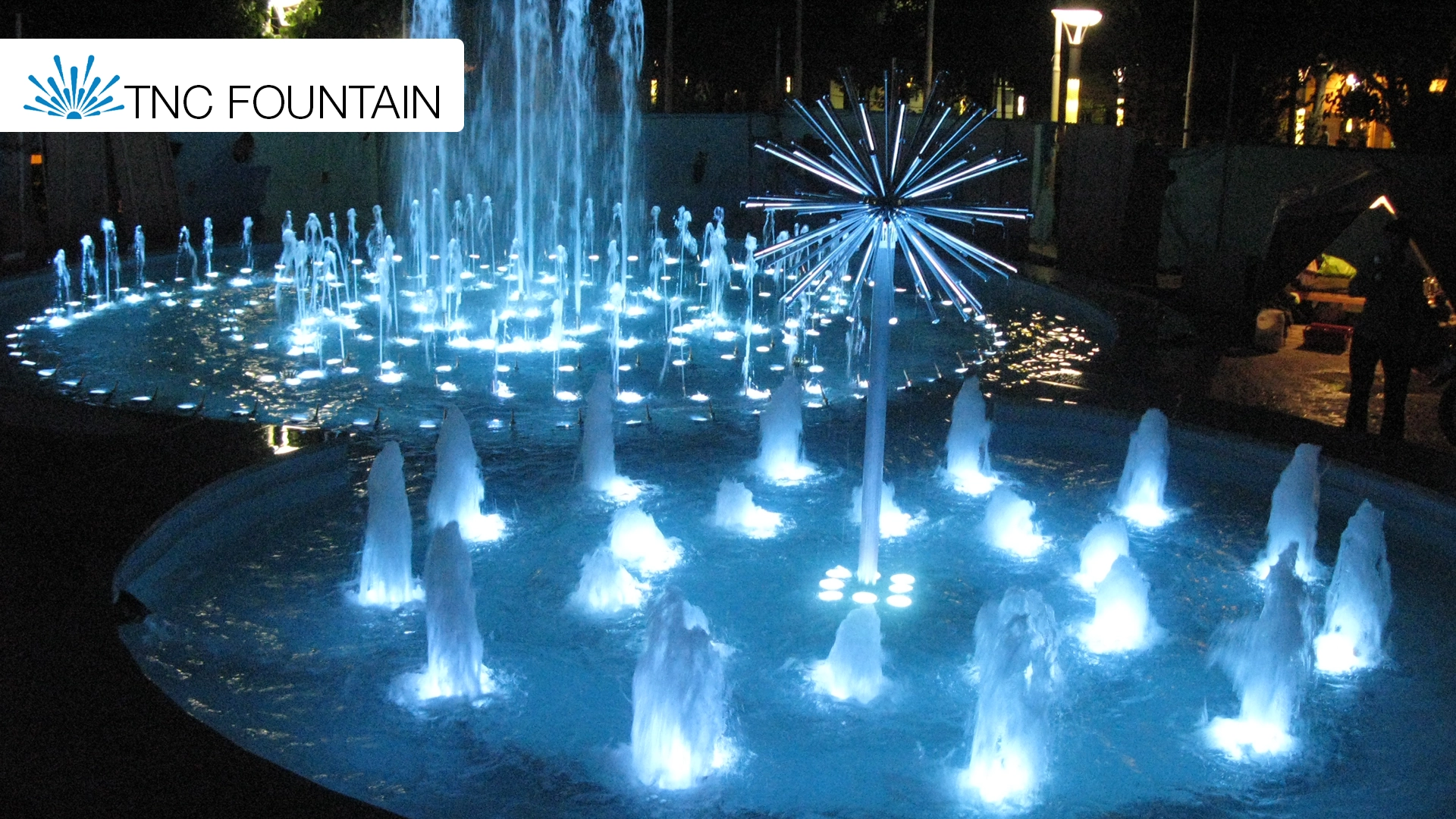
Modern fountain architecture increasingly incorporates transparent materials to create dramatic visual effects. Tempered glass panels withstand water pressure while enabling LED lighting systems to illuminate water flows from within. Acrylic alternatives offer impact resistance and easier fabrication for curved surfaces.
These materials require specialized mounting systems with gaskets and flexible joints to accommodate thermal expansion without cracking. UV-stabilized formulations prevent yellowing and maintain optical clarity throughout the installation’s lifespan.
Surface Treatments and Protective Finishes
Advanced Coating Systems
Epoxy and polyurethane coatings create impermeable barriers on concrete and metal surfaces. Professional applicators typically implement multi-layer systems: primer coats for adhesion, intermediate layers for chemical resistance, and topcoats for UV protection. These systems require surface preparation through sandblasting or acid etching to ensure proper bonding.
High-performance coatings now incorporate anti-microbial additives that inhibit algae formation, reducing cleaning frequency and chemical treatment needs.
Safety-Oriented Surface Textures
Anti-slip finishes address critical safety concerns in maintenance areas and interactive fountain zones. Textured applications include:
- Broadcast aggregate systems embedded in wet coatings
- Acid-etched patterns on polished stone surfaces
- Molded slip-resistant profiles in concrete pours
- Rubberized deck coatings for high-traffic pedestrian areas
These treatments maintain their effectiveness through proper specification of grit sizes and regular inspections to identify worn sections requiring renewal.
Aesthetic Finish Options
Surface finishing choices dramatically influence the fountain’s character. Polished stone finishes reflect light beautifully and suit formal architectural contexts, though they require careful placement away from pedestrian traffic due to slip potential. Honed or flamed finishes provide texture while showcasing stone’s natural beauty, offering practical benefits in public access areas.
Sustainable Material Considerations
Contemporary fountain projects increasingly prioritize environmental responsibility. Recycled stainless steel maintains identical performance characteristics to virgin material while reducing embodied carbon. Low-VOC sealants protect indoor air quality during application and minimize environmental release. Regionally sourced stone reduces transportation emissions and supports local economies.
Water-conserving designs work synergistically with durable materials—longer service life means fewer replacement cycles and reduced resource consumption over the installation’s lifetime.
Conclusion
Strategic material selection ensures large fountains deliver enduring beauty and reliable performance. By combining appropriate structural materials, protective finishes, and thoughtful sustainability measures, these installations become lasting landmarks that enhance their environments for generations.
Water Quality Management in Large Fountain Systems
Water Quality Management in Large Fountain installations represents a critical engineering challenge that extends far beyond surface-level aesthetics. Professional fountain systems demand sophisticated treatment protocols to maintain operational integrity, protect substantial equipment investments, and deliver consistent visual performance. Without strategic water management, installations face accelerated deterioration, biological contamination, and catastrophic system failures that compromise both safety standards and functional longevity.
The Critical Importance of Water Treatment
Large-scale fountain environments recirculate massive volumes—often exceeding tens of thousands of liters—creating unique maintenance challenges. Untreated recirculating water rapidly transforms into contaminated ecosystems harboring harmful microorganisms, invasive algae colonies, and disease-carrying insect populations. These biological threats fundamentally undermine installation integrity while creating genuine public health concerns.
Strategic water quality protocols deliver measurable operational advantages:
- Equipment Protection: Prevents destructive clogging in precision pumps, Fountain Nozzles, and distribution networks
- Component Longevity: Shields expensive mechanical systems, LED arrays, and control electronics from chemical degradation
- User Experience: Guarantees pristine visual clarity and eliminates offensive odors affecting visitor satisfaction
- Regulatory Compliance: Maintains health department standards for public water features
Essential Treatment Infrastructure
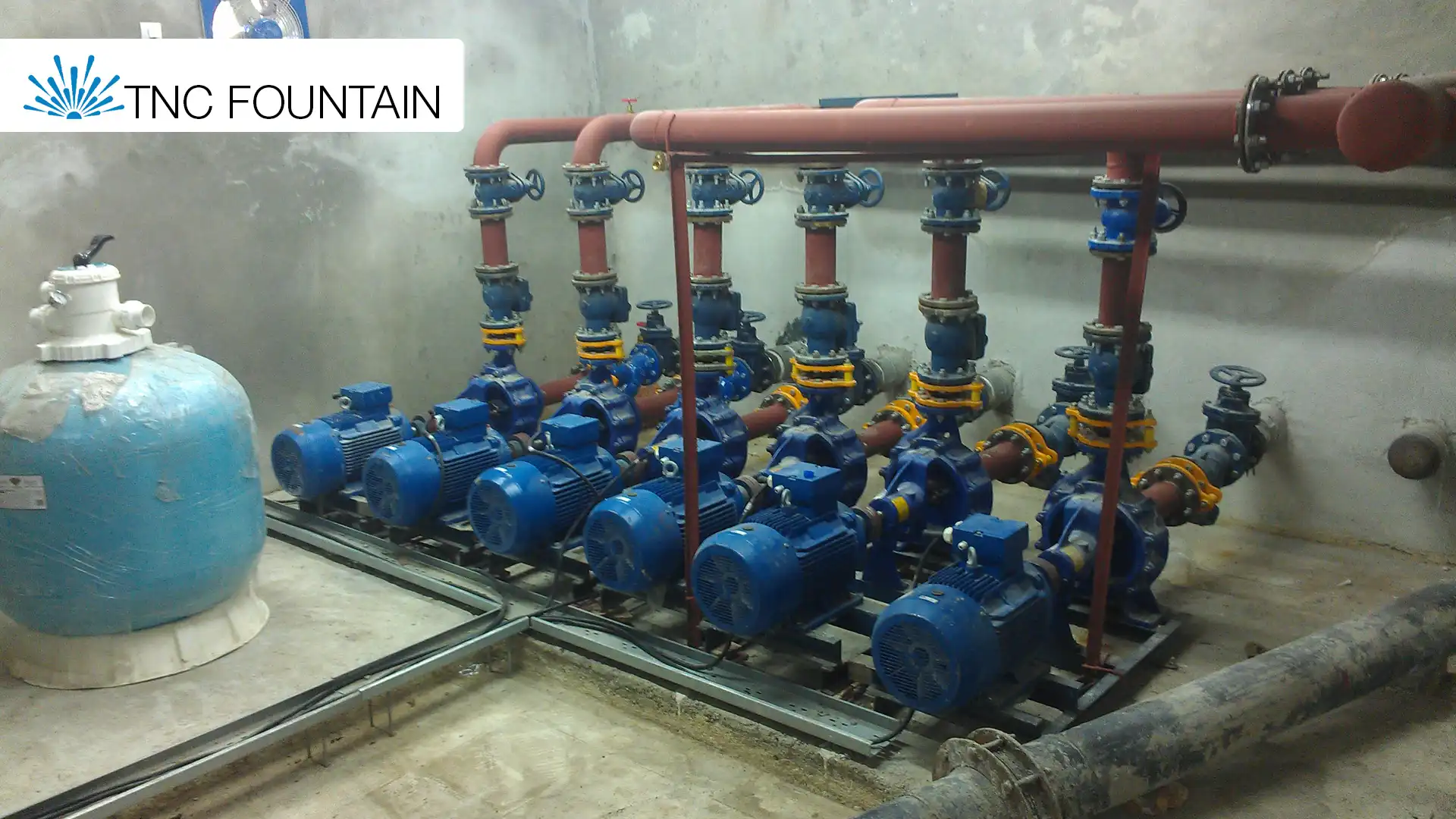
Professional fountain operations integrate multiple purification technologies working synergistically. Mechanical filtration forms the foundation, with industrial sand filters and multi-stage cartridge systems extracting particulate contamination from leaves, atmospheric dust, and environmental debris. These physical barriers protect downstream components while maintaining baseline clarity.
Chemical disinfection employs chlorination or bromination protocols calibrated to eliminate pathogenic bacteria and suppress algae proliferation. Environmentally sensitive installations increasingly adopt advanced ozone generation or ultraviolet sterilization systems that achieve comparable microbial control without introducing reactive chemicals into aquatic environments.
pH regulation systems maintain precise alkalinity parameters—typically 7.2 to 7.8—preventing both scaling deposits that obstruct flow paths and corrosive conditions that attack metal infrastructure. Specialized algaecides and clarifying agents supplement primary treatment during seasonal challenges or exceptional contamination events.
Modern installations leverage automated monitoring platforms equipped with real-time sensors measuring conductivity, turbidity, oxidation-reduction potential, and temperature parameters. Intelligent controllers adjust treatment dosing dynamically, optimizing chemical efficiency while preventing operator error.
Environmental Exposure Considerations
Urban fountain installations confront harsh environmental stressors absent from controlled indoor environments. Atmospheric particulate loading from vehicle emissions and construction activities continuously introduces contamination requiring enhanced filtration capacity. Direct solar exposure accelerates photosynthetic algae growth while elevating evaporation rates that concentrate dissolved minerals and treatment chemicals.
Wind-driven debris accumulation demands frequent skimming protocols, while temperature fluctuations stress biological treatment systems. Engineered solutions incorporate automatic level compensation systems responding to evaporative losses, strategic shading through architectural elements or landscaping integration, and oversized debris baskets protecting mechanical components.
Operational Maintenance Protocols
Consistent preventive maintenance distinguishes professional installations from deteriorating systems. Filter inspection schedules require weekly assessment with cleaning intervals determined by contamination rates and seasonal conditions. Water chemistry testing—conducted biweekly minimum—tracks pH, sanitizer residuals, alkalinity, and calcium hardness against established parameters.
Seasonal basin drainage enables comprehensive cleaning removing accumulated sediment and biological films that evade routine filtration. Sensor calibration verifies measurement accuracy while preventing treatment system drift that compromises water quality or wastes chemicals.
Material selection profoundly impacts maintenance requirements and system durability. Marine-grade stainless steel, specialized polymer composites, and advanced protective coatings resist both chemical attack and environmental weathering, reducing replacement cycles while maintaining aesthetic standards.
Sustainable Resource Management
Contemporary Water Quality Management in Large Fountain design prioritizes environmental stewardship through innovative conservation strategies. Closed-loop recirculation systems minimize municipal water consumption while rainwater harvesting infrastructure converts precipitation into supplemental feed reducing freshwater demand. Variable-frequency pump drives and intelligent scheduling algorithms slash energy consumption without sacrificing hydraulic performance.
In water-scarce regions throughout arid climates, these efficiency measures transform fountains from resource liabilities into demonstrations of responsible environmental engineering. Properly executed systems balance spectacular visual impact against measurable sustainability achievements.
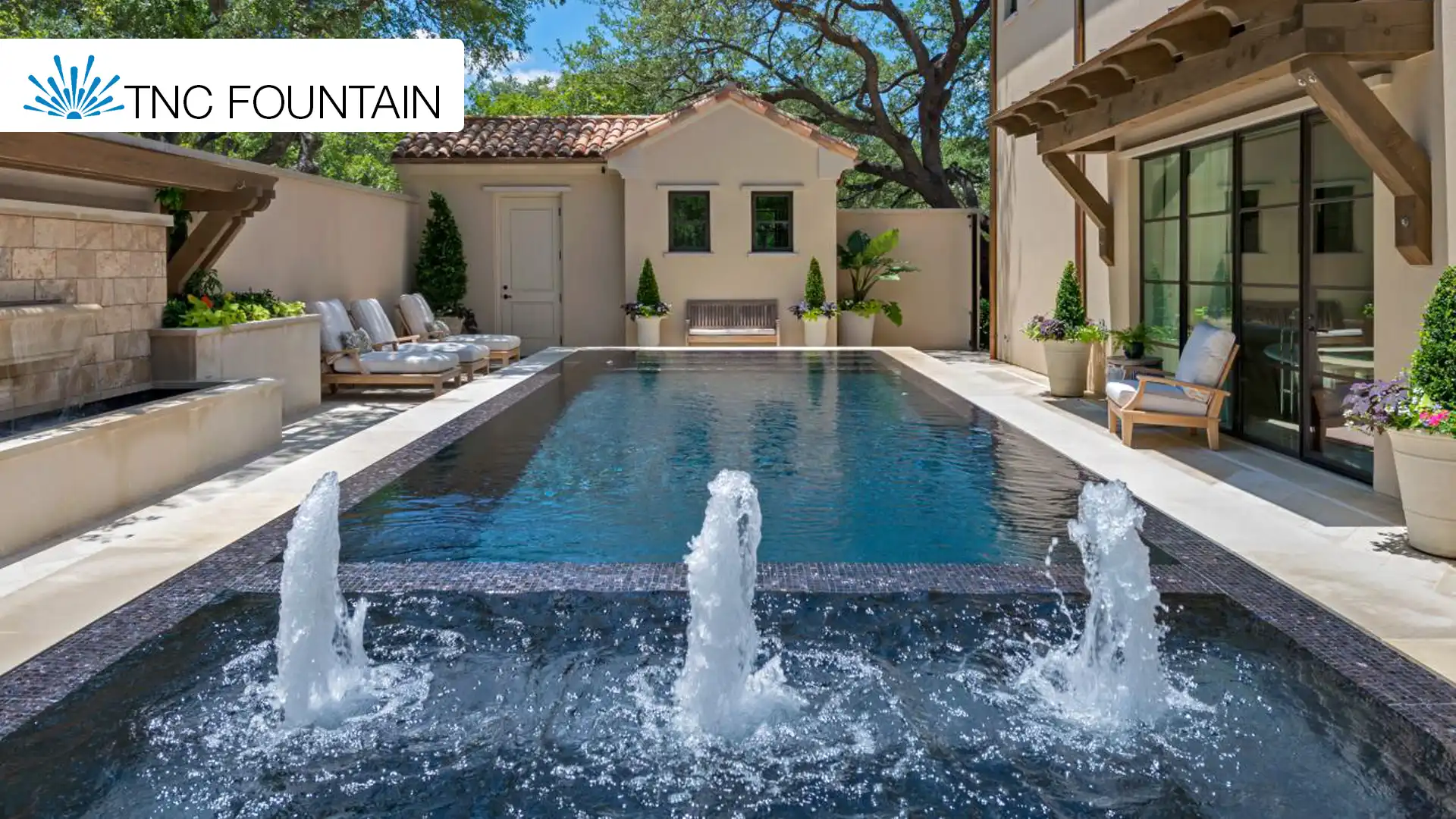
Professional Guide to Environmental and Technical Challenges in Outdoor Fountains
Implementing large-scale outdoor fountains involves navigating a complex array of environmental and structural obstacles that fundamentally differ from interior water feature installations. Business owners and facility managers considering such investments must comprehend the multifaceted challenges arising from direct exposure to climatic variability, including wind forces, solar radiation, particulate matter, and thermal cycling. The financial viability of these projects depends critically on strategic planning, specialized engineering knowledge, and implementation of proven technical solutions that ensure sustained performance and extended asset longevity.
Environmental Factors Affecting Fountain Performance
Wind Dynamics and Water Dispersion
Atmospheric wind patterns present one of the most significant operational challenges for outdoor fountains. Sustained wind velocities can fundamentally alter hydraulic trajectories, causing unintended water spray distribution and diminishing the intended aesthetic presentation. This phenomenon directly impacts visitor experience and increases unproductive water loss beyond the fountain perimeter.
Contemporary engineering solutions incorporate sophisticated wind-resistant nozzle geometries that maintain coherent water streams under variable atmospheric conditions. Advanced installations integrate real-time meteorological sensors that continuously monitor wind velocity and automatically modulate pump pressure to preserve visual integrity during gusty periods. This adaptive control methodology ensures consistent performance while optimizing energy consumption.
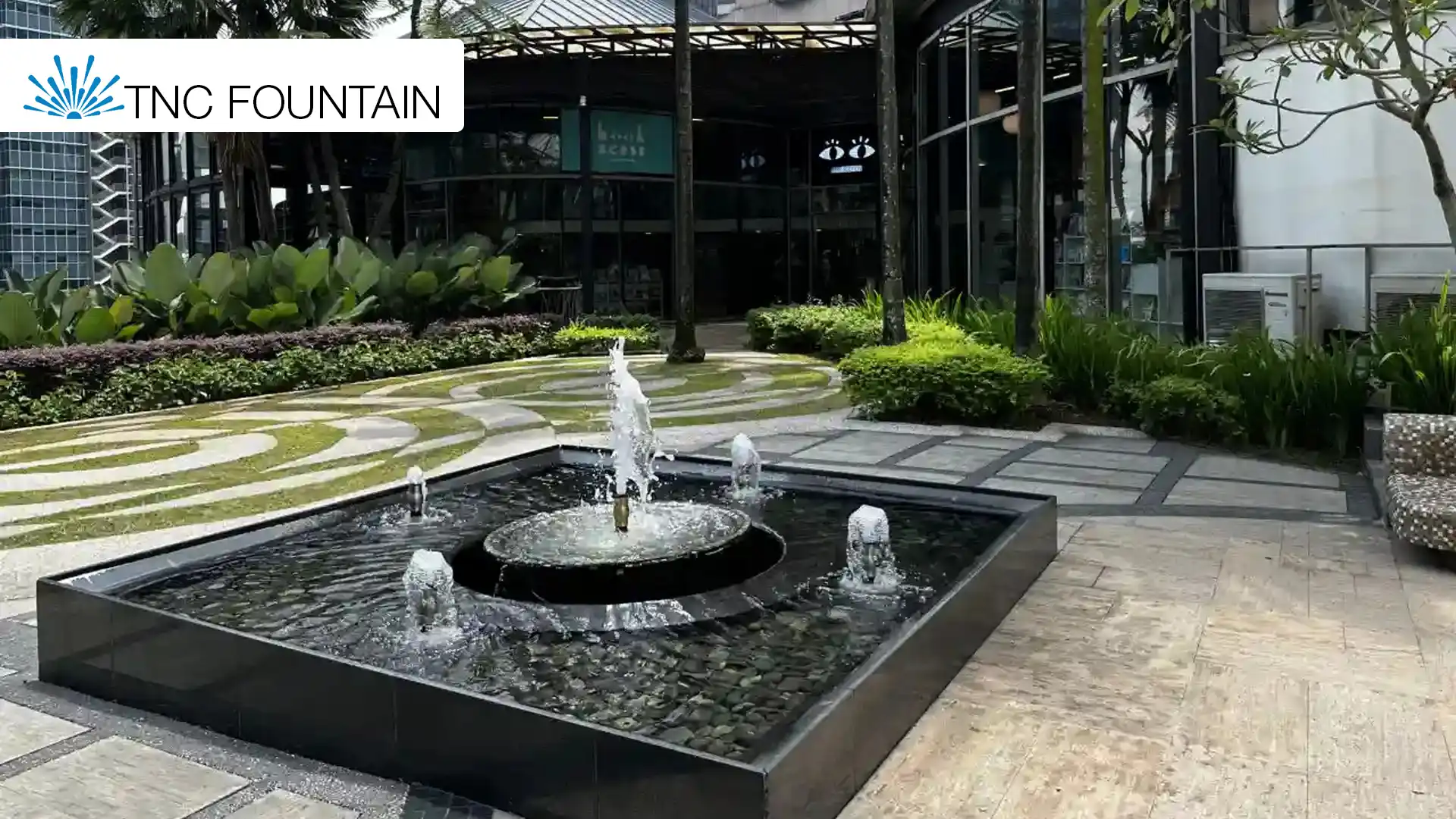
Water Conservation in Arid Climates
Facilities located in hot, arid environments face substantial operational costs due to accelerated evaporation rates. In regions such as the Middle East, daily evaporative losses can reach 5-8 liters per square meter of water surface area, creating significant economic burden for commercial properties.
Strategic water management solutions include:
- Closed-loop recirculation systems with multi-stage filtration
- Covered reservoir designs minimizing direct solar exposure
- Smart monitoring platforms tracking water levels in real-time
- Automated replenishment systems preventing pump cavitation
- Evaporation-reducing surface treatments and chemical additives
These integrated approaches can reduce operational water consumption by 40-60% compared to traditional open-system designs, substantially lowering utility expenses over the installation’s lifecycle.
Particulate Contamination Management
Airborne dust, pollen, and organic debris pose continuous threats to mechanical components in outdoor fountains. Without proper protective measures, particulate accumulation causes progressive degradation of pump efficiency, filter clogging, and nozzle obstruction. These issues translate directly into increased maintenance frequency and premature equipment failure.
Comprehensive filtration architectures typically employ multi-barrier protection: coarse screens removing large debris, cartridge filters capturing medium particles, and fine mesh elements preventing nozzle blockage. Regular maintenance protocols specifying weekly inspection and monthly deep cleaning prevent performance deterioration and extend component service life.
Structural and Technical Engineering Requirements
Foundation Design and Load Distribution
The structural integrity of large water features begins with proper foundation engineering. Installations must support substantial static loads from water volume—often exceeding 50-100 tons for commercial-scale projects—plus dynamic forces from pump vibration and public interaction.
Geotechnical investigation precedes all major installations, with soil bearing capacity analysis determining required foundation depth and reinforcement specifications. Engineers typically design reinforced concrete bases with integrated steel frameworks, ensuring dimensional stability across seasonal ground movement and preventing differential settling that could compromise waterproofing systems.
Material Selection for Longevity
Corrosion resistance represents a critical material selection criterion for components in continuous water contact. Standard carbon steel experiences rapid degradation in aqueous environments, necessitating superior alternatives.
Premium material specifications include:
- Type 304 or 316 stainless steel for all wetted metallic components
- Marine-grade aluminum alloys for structural framework elements
- Polymer-modified concrete with enhanced impermeability
- Epoxy-based protective coatings on reinforced concrete surfaces
- UV-stabilized synthetic materials for decorative elements
While initial material costs may be 30-50% higher than conventional options, total cost of ownership analysis demonstrates substantial savings through eliminated replacement cycles and reduced maintenance interventions.
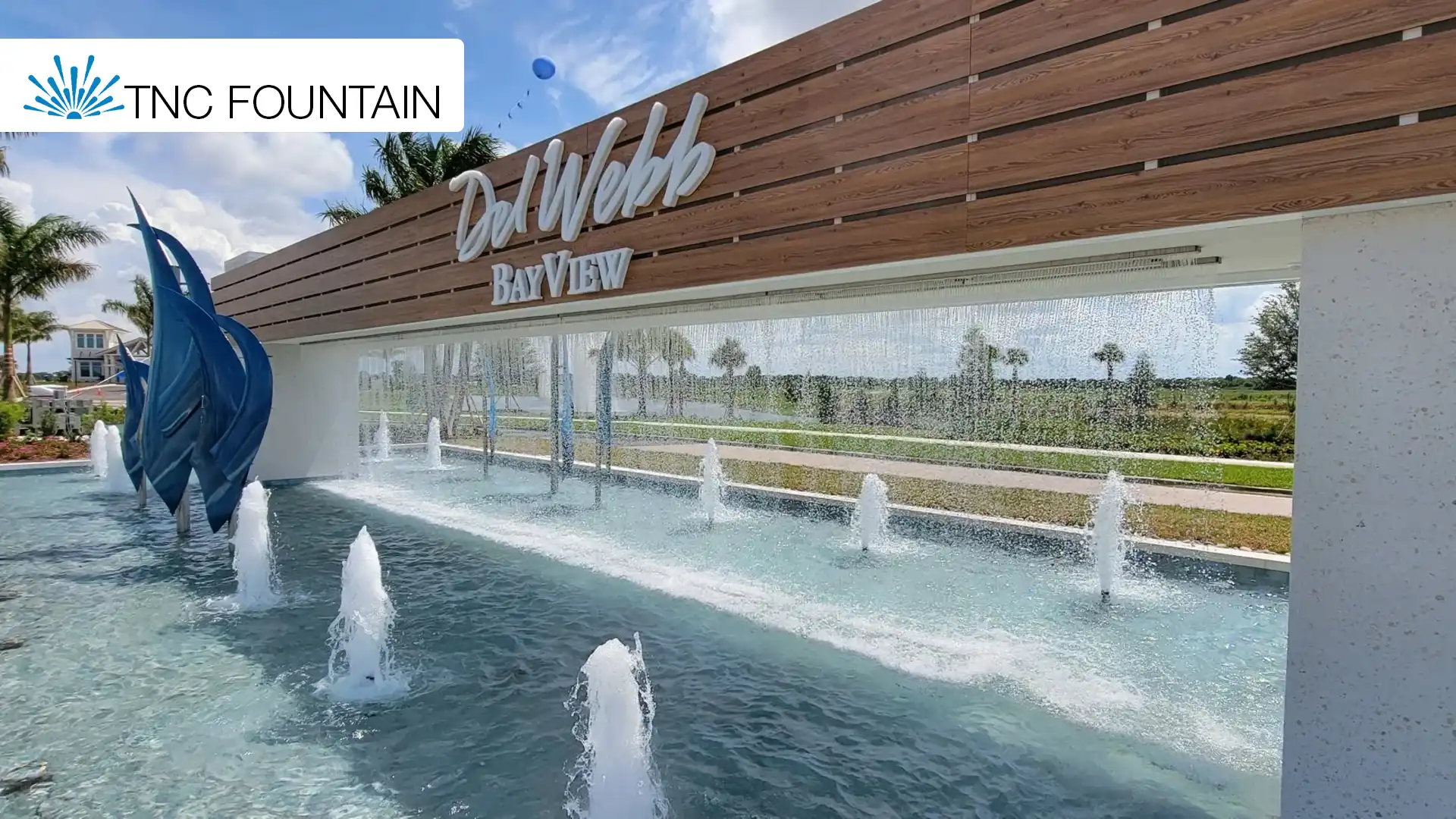
Electrical Safety in Wet Environments
Electrical infrastructure supporting outdoor fountains must adhere to stringent safety standards given the inherent hazards of combining water with power systems. All submersible components require IP68 ingress protection ratings, ensuring complete impermeability under continuous immersion conditions.
Ground fault protection represents mandatory safeguarding for all electrical circuits serving water features. GFCI (Ground Fault Circuit Interrupter) devices detect minute current leakage and instantaneously disconnect power, preventing electrical shock hazards. Control panels must be located in weatherproof enclosures with proper ventilation preventing condensation accumulation.
Low-voltage LED lighting systems (12-24V) minimize risk compared to traditional line-voltage fixtures, providing equivalent illumination with significantly enhanced safety margins. Proper electrical isolation between control systems and public-accessible areas remains paramount in commercial installations.
Maintenance Accessibility and Operational Efficiency
Forward-thinking design incorporates maintenance considerations from the conceptual phase. Modular equipment architecture allows rapid component replacement without extensive system shutdown, minimizing revenue loss in commercial venues.
Access panels, removable grating, and adequate clearances around mechanical equipment facilitate routine inspections and preventive maintenance activities. Equipment rooms should provide sufficient space for technicians to work safely and efficiently, with proper lighting and ventilation. Strategic placement of isolation valves enables selective system shutdown for repairs without total drainage.
Real-World Application: Dubai Case Study
Several prominent installations in Dubai demonstrate successful integration of advanced technologies overcoming extreme environmental conditions. These systems employ automated self-cleaning cycles that periodically flush accumulation from filtration systems, weather-adaptive control algorithms that modify operation based on temperature and humidity, and remote monitoring platforms enabling predictive maintenance intervention before failures occur.
Conclusion: Successfully implementing large outdoor fountains requires comprehensive understanding of environmental stressors, strategic material selection, robust engineering design, and proactive maintenance planning to deliver reliable, visually compelling installations that justify their capital investment.
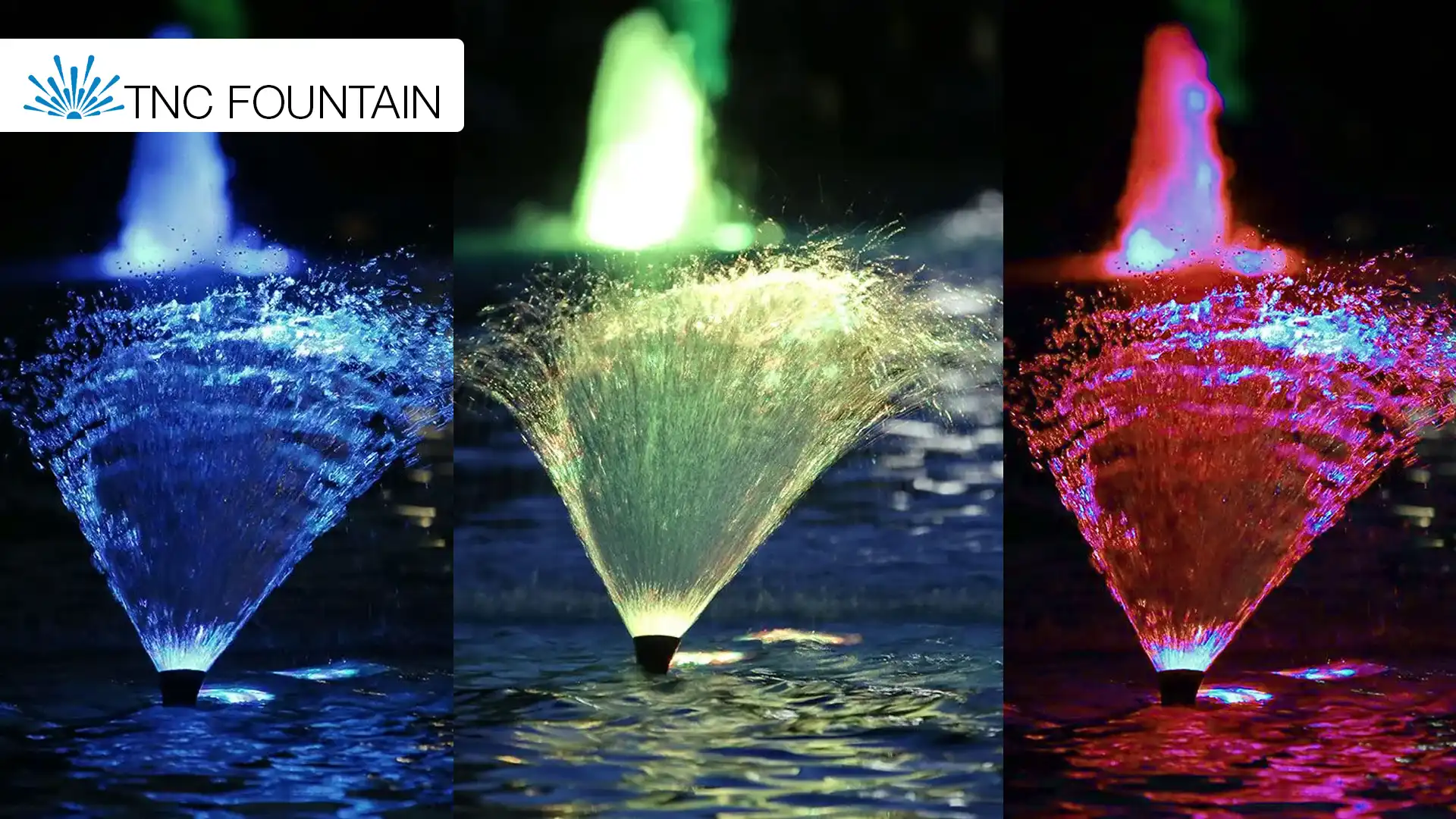
Illumination Engineering: How Fountain Lights Redefine Nighttime Water Displays
Fountain lights represent the transformative element that elevates water installations from daytime attractions into mesmerizing nocturnal experiences. In professional-grade installations, illumination engineering extends beyond mere decoration—it serves as a critical design component that accentuates architectural geometry, amplifies hydraulic motion, and establishes atmospheric character. Strategic lighting implementation converts conventional water features into commanding visual statements that capture attention and generate lasting impressions across commercial landscapes.
The Strategic Function of Illumination Systems
Introducing sophisticated lighting into water features unlocks multiple experiential dimensions that fundamentally alter viewer perception and engagement patterns.
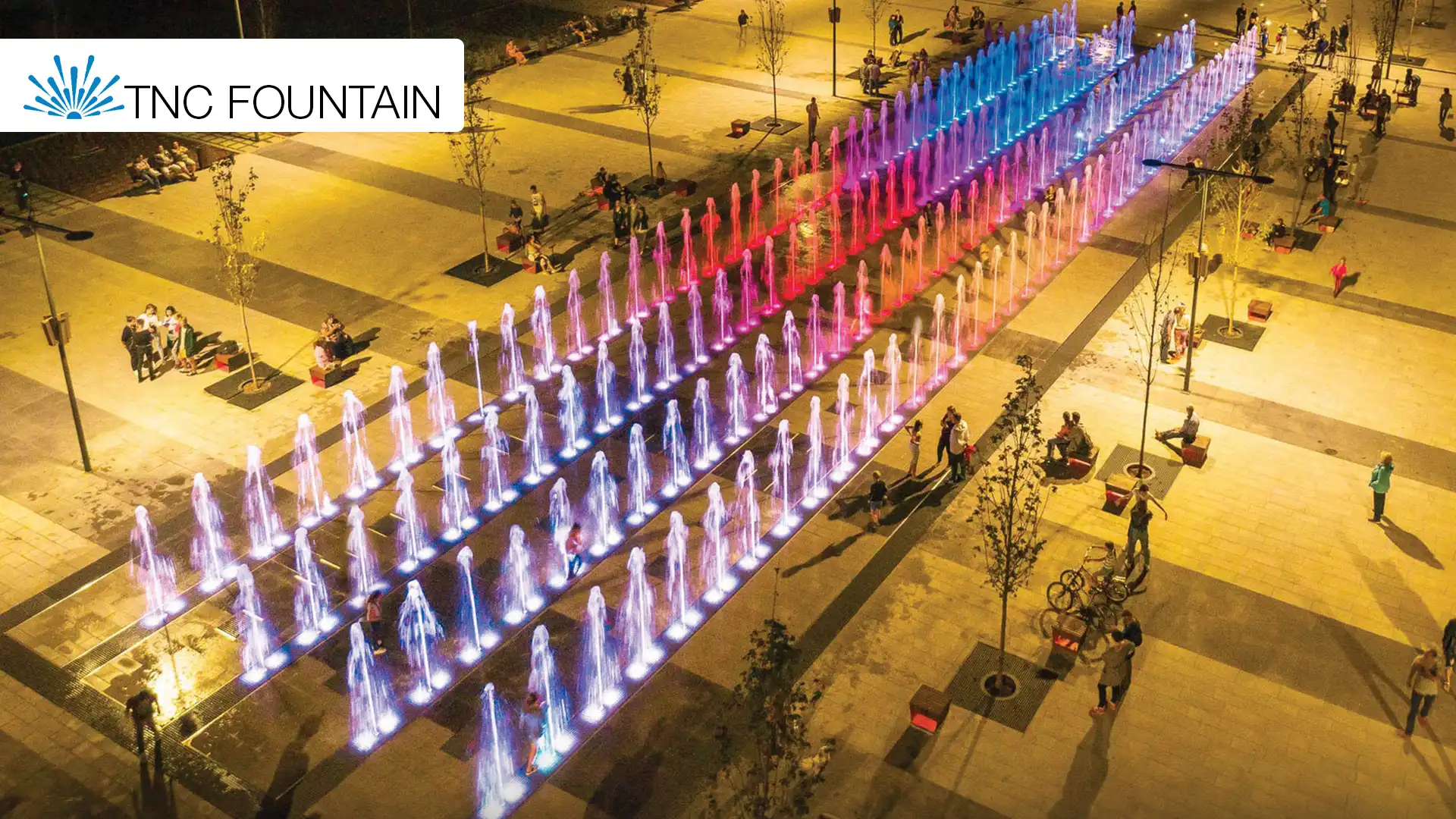
Visual Enhancement: Submerged fountain lights trace water trajectories and volumetric forms, emphasizing the kinetic choreography of jets, cascades, and spray patterns. Illumination reveals structural complexity invisible during daylight hours.
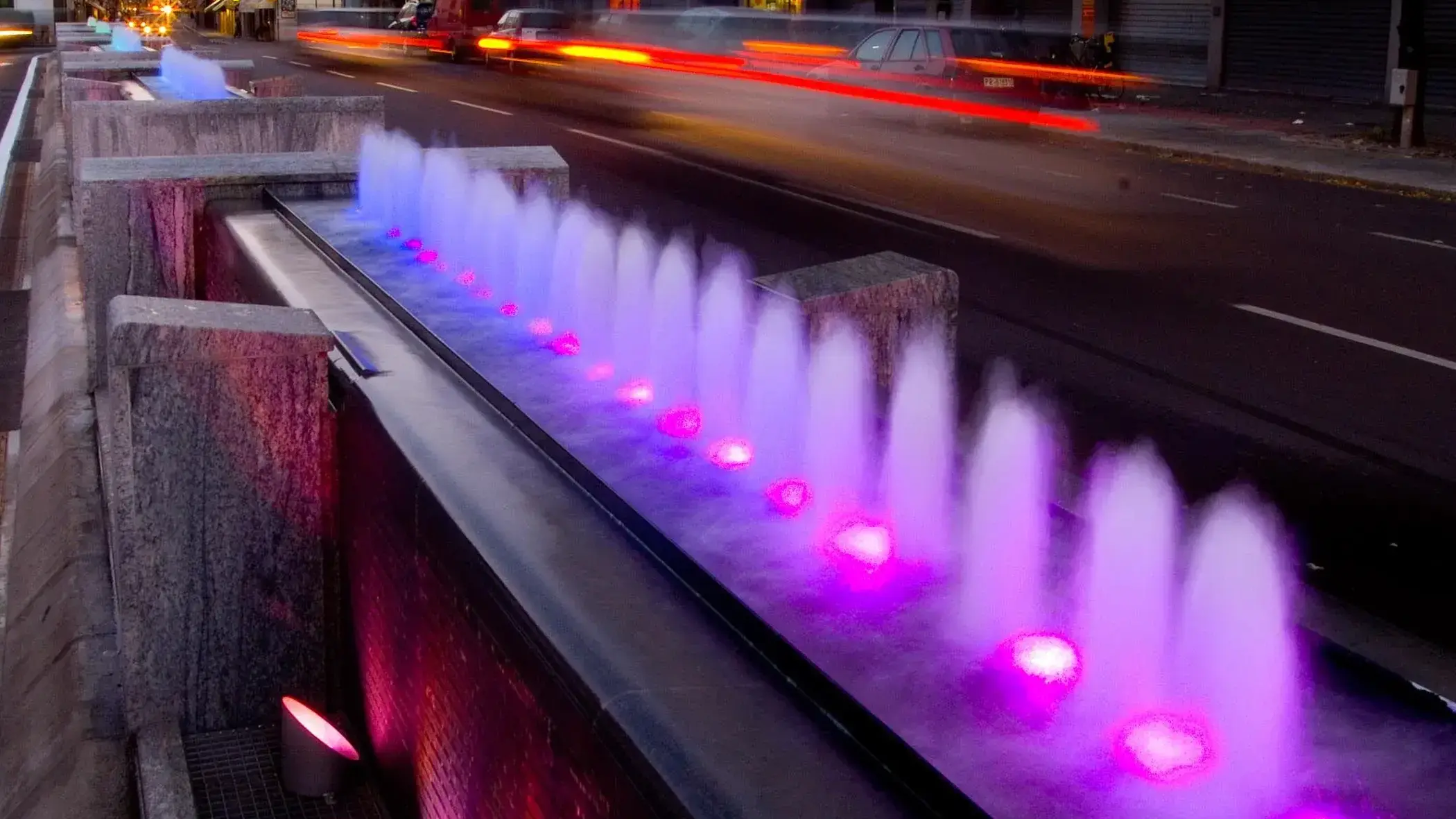
Atmospheric Control: Careful manipulation of color temperature and intensity parameters enables designers to orchestrate emotional responses—serene cyan tones promote tranquility while vibrant magenta sequences inject energetic celebration into urban environments.
Safety and Accessibility: Properly calibrated illumination transforms fountains into secure navigational landmarks after sunset, defining spatial boundaries while creating inviting gathering points for pedestrian activity.
For hospitality properties, corporate campuses, and metropolitan plazas, expertly illuminated fountains function as signature branding elements generating social media engagement and visitor traffic that extends operational hours and commercial value.
Professional Lighting Technologies
Contemporary fountain installations deploy diverse illumination technologies selected for performance characteristics and design objectives:
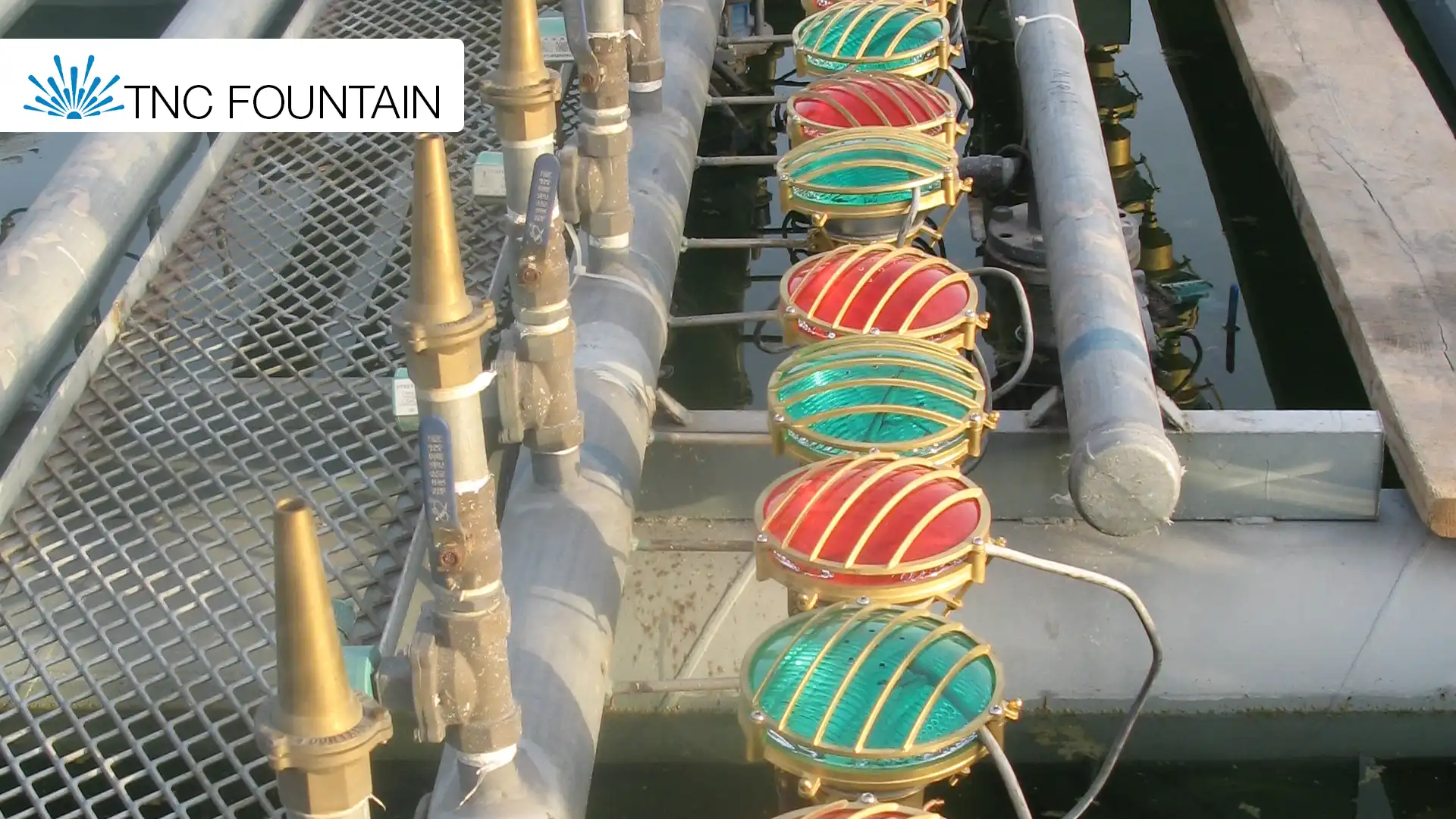
- LED Infrastructure: Solid-state lighting dominates modern applications through exceptional energy efficiency, extended operational lifespans exceeding 50,000 hours, and minimal heat generation protecting aquatic ecosystems
- RGB and RGBW Arrays: Programmable color-mixing systems deliver unlimited chromatic possibilities, enabling dynamic light shows choreographed to musical compositions or seasonal themes
- Architectural Accent Fixtures: Directional spotlights and narrow-beam luminaires emphasize sculptural elements, vertical water walls, and architectural features within complex installations
Fixture placement strategies vary significantly—submersible units installed within basin floors provide upward illumination through water columns, perimeter-mounted fixtures graze horizontal surfaces, while elevated positions on adjacent structures deliver dramatic downlighting effects.
Coordinating Water and Light in Musical Fountain Displays
Achieving visual coherence demands precise integration between hydraulic performance and illumination systems. Musical fountain installations represent the pinnacle of this synchronization, where fountain lights choreograph with water jets and audio compositions to create multisensory performances. Successful implementations require careful engineering:
Temporal Synchronization: Advanced control systems coordinate lighting transitions with jet activation sequences, spray pattern variations, and musical beats, creating unified performances rather than disconnected elements. In musical fountain applications, millisecond-precision timing ensures light color shifts align perfectly with melodic crescendos and rhythmic patterns.
Optical Physics: Designers leverage reflection, refraction, and transmission properties of water to amplify lighting effects while mitigating problematic glare conditions that diminish viewer experience or create light pollution.
Geometric Positioning: Fixture depth, mounting angles, and beam spread calculations determine underwater visibility, color saturation, and illumination coverage across three-dimensional water volumes.
Professional installations utilize sophisticated DMX512 control protocols and proprietary lighting consoles enabling real-time manipulation of individual fixture parameters, complex color transitions, and programmed show sequences stored in digital libraries.
Technical Constraints and Engineering Solutions
Developing compelling illuminated fountain displays requires navigating substantial technical challenges while maintaining artistic vision. Electrical infrastructure serving submerged fountain lights necessitates marine-grade waterproof connectors, GFCI-protected low-voltage distribution networks, and corrosion-resistant junction enclosures meeting stringent safety standards for aquatic environments.
Maintenance accessibility represents another critical consideration—fixture designs must permit underwater lamp replacement, lens cleaning, and seal inspection without complete basin drainage disrupting operational schedules. Modular mounting systems and quick-disconnect fittings facilitate routine servicing.
Environmental durability determines long-term system reliability. Outdoor fountain lights confront relentless exposure to mineral deposits, chemical water treatments, temperature extremes, and physical stress from hydraulic pressure. Specification of IP68-rated housings, tempered glass lenses, and 316-grade stainless steel components ensures sustained performance despite harsh operating conditions.
Contemporary Innovations and Emerging Trends
The fountain lighting industry continues advancing through technological innovation and sustainability initiatives. Interactive illumination systems now respond to human presence via motion sensors or accept user input through mobile applications, transforming passive observation into participatory experiences that increase dwell time and social engagement.
Environmental consciousness drives adoption of photovoltaic-powered fountain lights in remote installations, while intelligent sensors adjust brightness based on ambient conditions, reducing energy consumption without compromising visual impact during peak viewing hours.
Fountain lights constitute far more than supplementary decoration—they define spatial identity and experiential character. Masterfully illuminated installations compel audiences to congregate, interact emotionally, and retain vivid memories of extraordinary water displays that persist long beyond sunset hours.
Engineering Legends: What Iconic Large Fountain Installations Reveal About Design Mastery
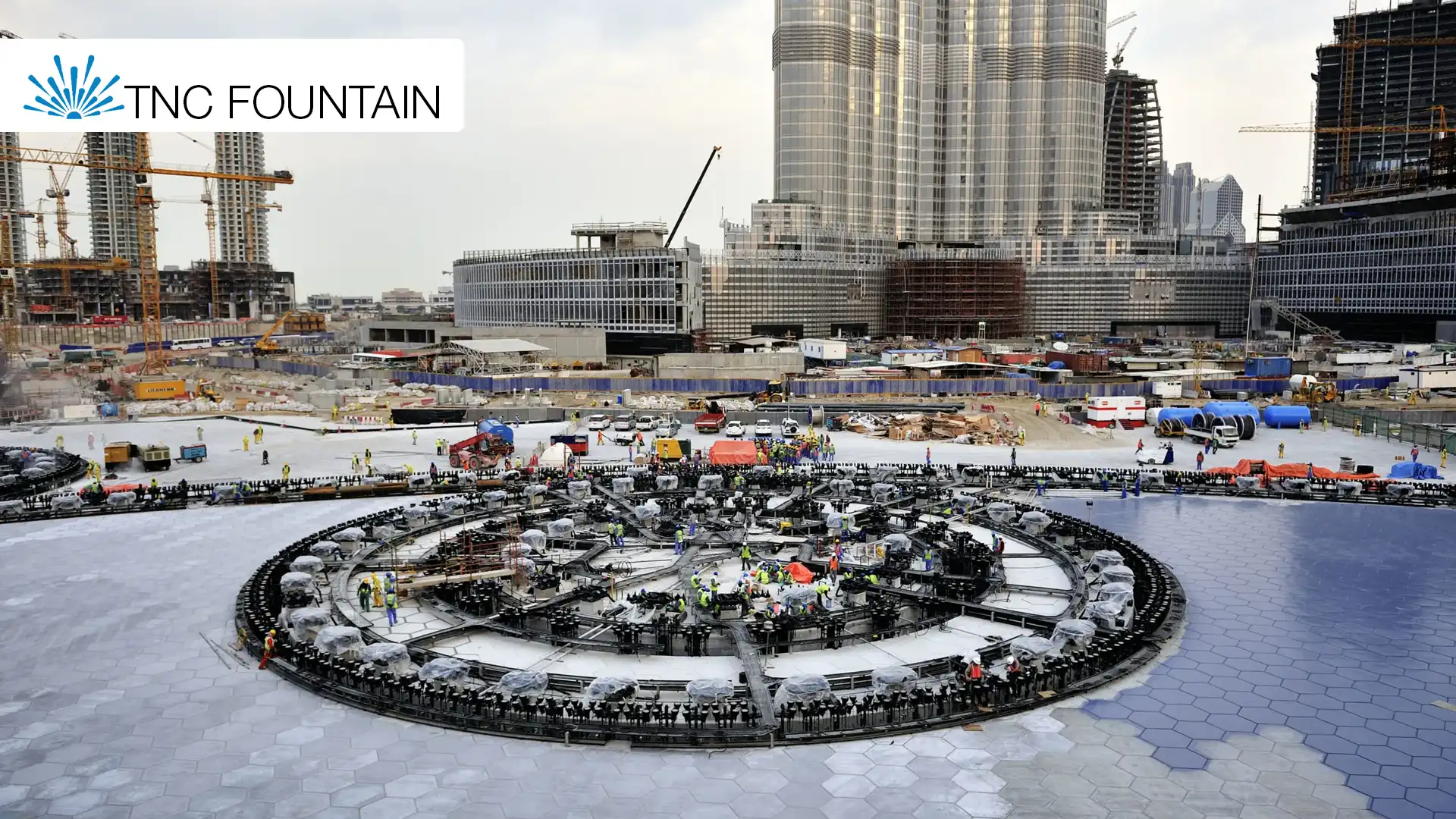
Large Fountain Installations represent extraordinary convergences of architectural ambition, mechanical engineering, and environmental science. These monumental projects demand meticulous coordination across multiple professional disciplines—designers, structural engineers, hydraulic specialists, and construction contractors must operate in precise alignment to deliver installations that function reliably while achieving spectacular visual impact. Examining documented case studies from landmark projects worldwide reveals invaluable lessons about problem-solving approaches, technological innovation, and lasting environmental influence.
World-Renowned Projects Setting Industry Benchmarks
Two installations stand as definitive reference points for professional fountain engineering globally.
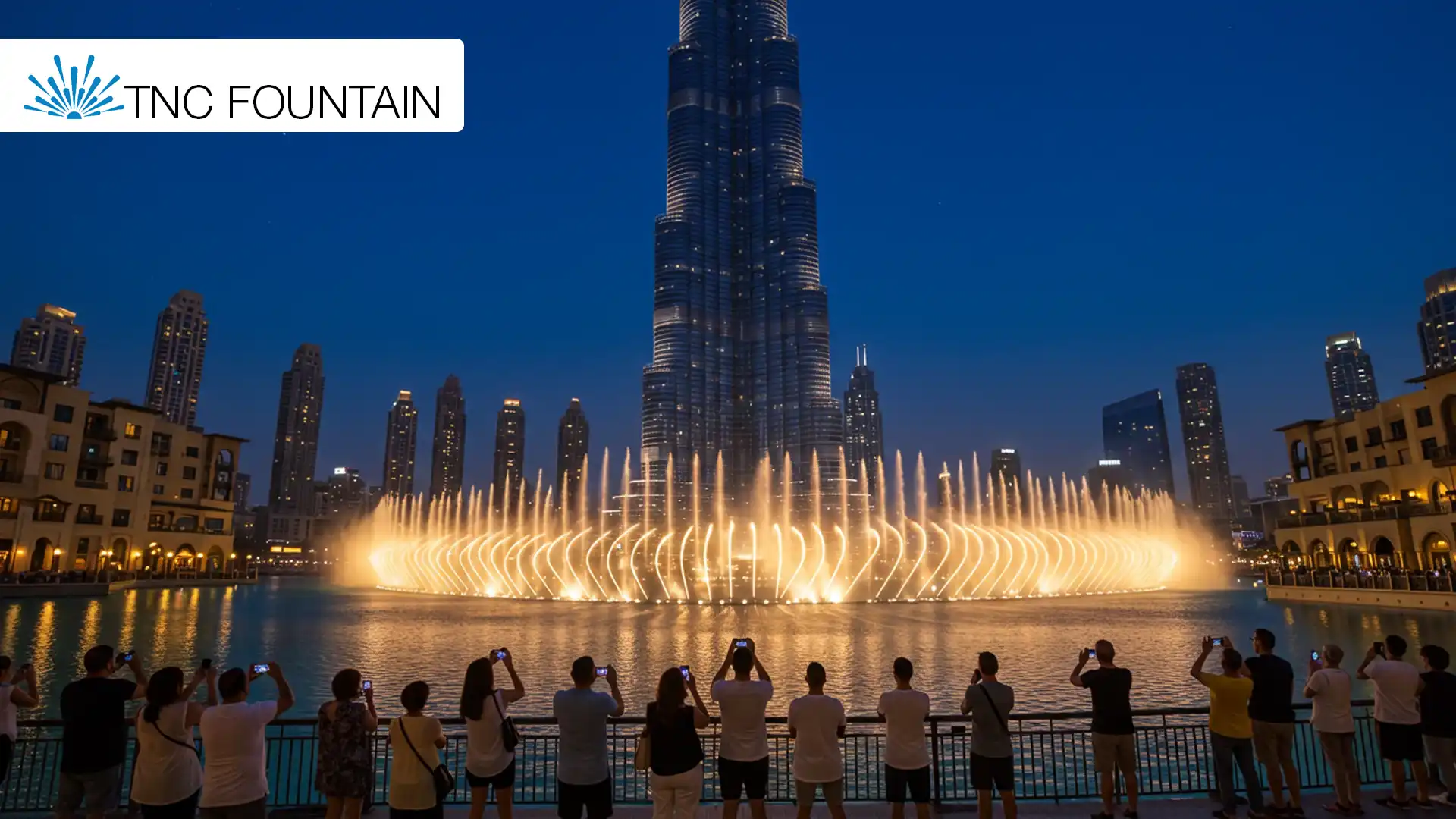
The Dubai Fountain, positioned at the base of Burj Khalifa adjacent to the world’s largest shopping complex, represents perhaps the most technically ambitious musical fountain ever constructed. This installation integrates industrial-grade hydraulic infrastructure, programmable LED arrays, and precision-choreographed audio systems to deliver performances visible from several kilometers distance. Engineers specifically designed its operational systems to maintain consistent performance despite relentless desert environmental pressures including extreme heat, persistent dust accumulation, and significant evaporative water loss.
The Bellagio Fountains in Las Vegas established the contemporary standard for synchronized aquatic performance. An intricate network of over 1,200 individual fountain nozzles and specialized shooter mechanisms generates choreographed water patterns achieving heights exceeding 140 meters. In this iconic musical fountain, precision timing systems coordinate hydraulic sequences with musical programming and dynamic lighting transitions, collectively attracting approximately 30 million visitors annually and generating measurable commercial returns for surrounding properties.
Recurring Challenges in Large Fountain Installations
Professional projects consistently encounter predictable obstacles requiring disciplined engineering responses:
- Site Geometry Constraints: Restricted footprints, irregular terrain profiles, and subsurface infrastructure conflicts demand creative spatial solutions that preserve design intent without compromising mechanical accessibility or structural integrity
- Environmental Performance Demands: Wind loading calculations, thermal expansion coefficients, and freeze-thaw cycle considerations directly influence material specifications, fountain nozzle positioning, and hydraulic pressure parameters across different geographic contexts
- Maintenance Infrastructure: Strategic placement of access points, modular component design, and underwater service provisions determine long-term operational costs and system downtime frequency throughout the installation’s lifespan
- Water Conservation Engineering: High-evaporation environments characteristic of Middle Eastern and desert climates necessitate advanced recirculation systems, chemical treatment protocols, and automated level compensation mechanisms maintaining consistent water volumes
Interdisciplinary Collaboration Driving Innovation
Successful large fountain installations emerge from seamless professional collaboration rather than isolated departmental contributions. Architectural teams establish experiential vision and spatial relationships, hydraulic engineers translate creative concepts into mechanical reality, electrical specialists integrate control systems and illumination infrastructure, while construction contractors manage phased site execution against compressed delivery schedules.
Contemporary projects leverage sophisticated digital workflows—computational fluid dynamics simulation, parametric 3D modeling, and virtual reality visualization enable multidisciplinary teams to identify design conflicts, optimize hydraulic performance, and validate aesthetic outcomes before physical construction commences. For musical fountain projects specifically, acoustic modeling is incorporated alongside hydraulic simulation to ensure audio synchronization systems perform with millisecond precision across large open-air environments. This front-loaded technical investment substantially reduces costly on-site modifications and accelerates commissioning timelines.
Transformative Impact on Urban and Commercial Environments
Documented case studies consistently demonstrate that professionally executed fountain installations generate measurable value extending well beyond visual aesthetics. Large fountain installations function as urban catalysts, activating surrounding public spaces and fundamentally altering pedestrian behavior patterns.
Property valuations within proximity to landmark fountain installations demonstrate statistically significant premiums in multiple international markets. Tourism metrics reveal fountains among the highest-ranked visitor attractions in their respective cities, generating substantial ancillary economic activity for adjacent hospitality, retail, and entertainment businesses. Musical fountain installations in particular command extended visitor dwell times, as synchronized water-and-sound performances create compelling reasons for audiences to remain and return repeatedly.
The precision engineering behind each fountain nozzle configuration directly influences the spatial reach and visual drama of water displays, determining whether an installation becomes a forgettable feature or a defining urban landmark. Careful nozzle selection—from laminar flow jets to aerated fan sprays—shapes the tonal vocabulary of the entire composition.
Climatically, large water features introduce meaningful ambient cooling effects in urban heat island environments—a consideration gaining increasing relevance as metropolitan temperatures rise globally. The evaporative cooling contribution of major installations measurably reduces localized thermal discomfort during peak summer conditions, extending outdoor occupancy periods and enhancing commercial activation of surrounding spaces.
These case studies collectively confirm that large fountain installations, when engineered with precision and maintained consistently, transcend decorative function to become defining elements of urban identity and commercial vitality.
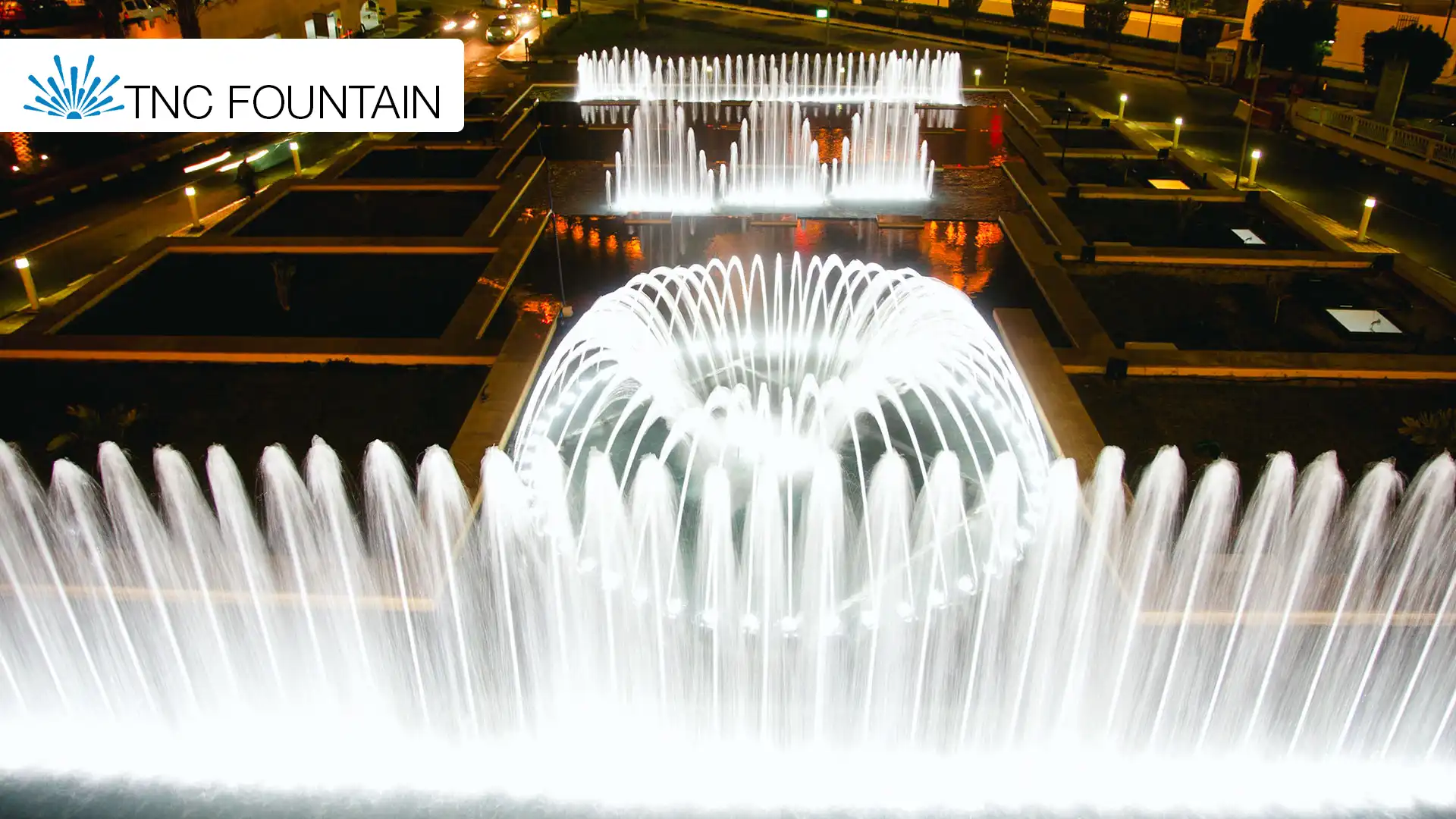
The Hidden Infrastructure: Engineering Systems Powering Contemporary Water Features
Water Features at monumental scale represent sophisticated integrations of mechanical engineering, hydraulic science, and digital control technology. Beyond their aesthetic grandeur lies comprehensive infrastructure comprising precision-engineered pumping networks, specialized distribution systems, and intelligent automation platforms that orchestrate every water movement with exactitude. Examining the technical foundations supporting these installations illuminates how engineering discipline transforms creative vision into reliable, captivating aquatic performances that operate consistently across diverse environmental conditions.
Hydraulic Infrastructure and Pumping Architecture
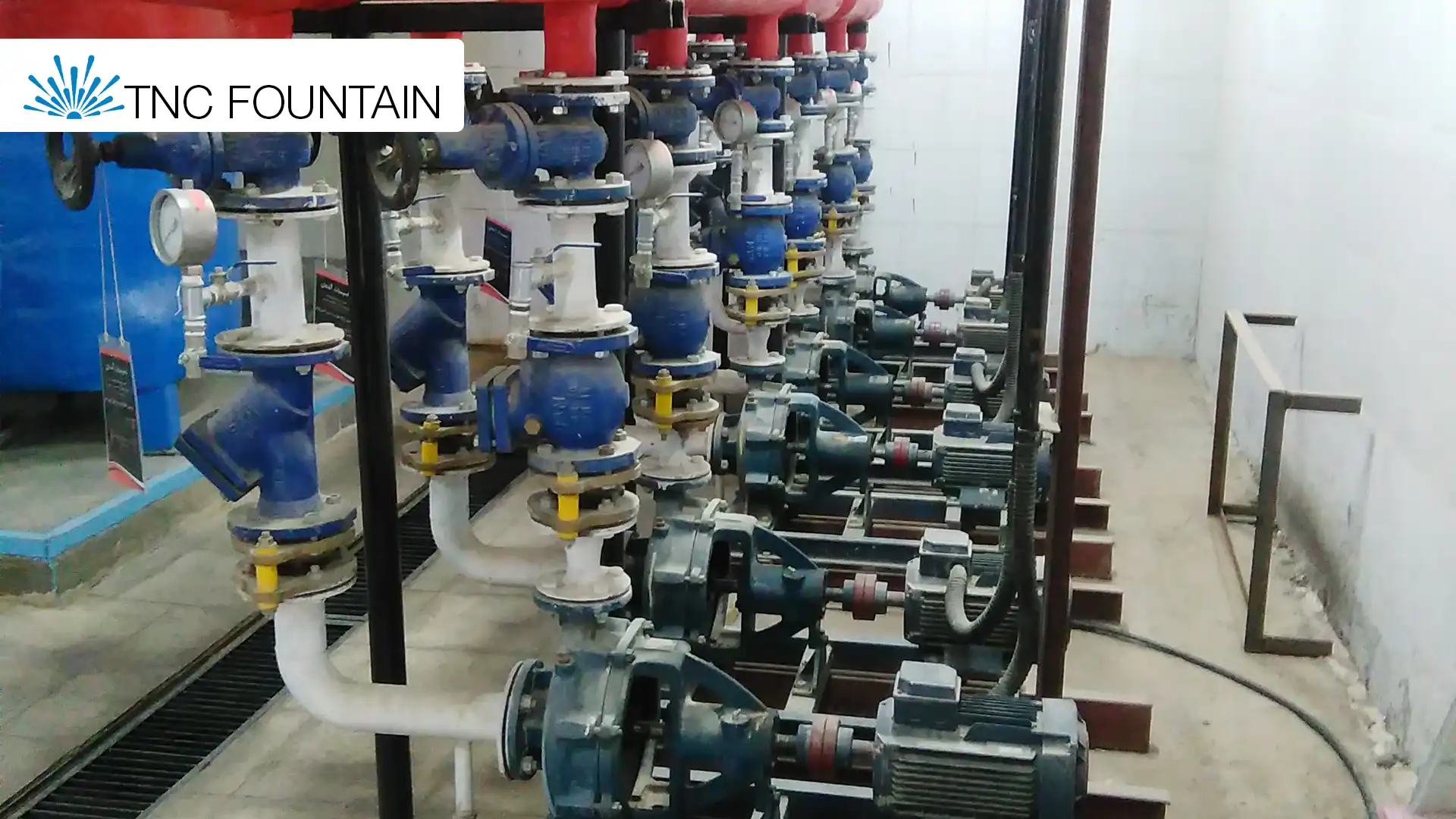
Every professional water feature installation depends fundamentally upon robust hydraulic systems engineered to circulate massive water volumes through complex distribution networks. Industrial-grade centrifugal pumps generate the enormous pressures required to propel water jets dozens of meters vertically while maintaining flow consistency across hundreds of simultaneous discharge points.
Pump selection represents a critical engineering decision balancing multiple competing requirements:
- Performance Specifications: Flow rates measured in thousands of liters per minute combined with discharge pressures exceeding several bar determine jet height capabilities and volumetric coverage
- Energy Efficiency: Variable frequency drive technology enables dynamic speed modulation, reducing electrical consumption during partial-load operation while maintaining hydraulic performance
- Operational Reliability: Commercial-grade mechanical seals, corrosion-resistant impeller materials, and redundant pump configurations ensure continuous operation despite demanding duty cycles
- Acoustic Considerations: Vibration isolation mounts and acoustic enclosures minimize operational noise pollution affecting surrounding environments
Engineers must additionally account for suction lift limitations, net positive suction head requirements, and cavitation prevention when positioning pumps relative to water surface elevations within basin configurations.
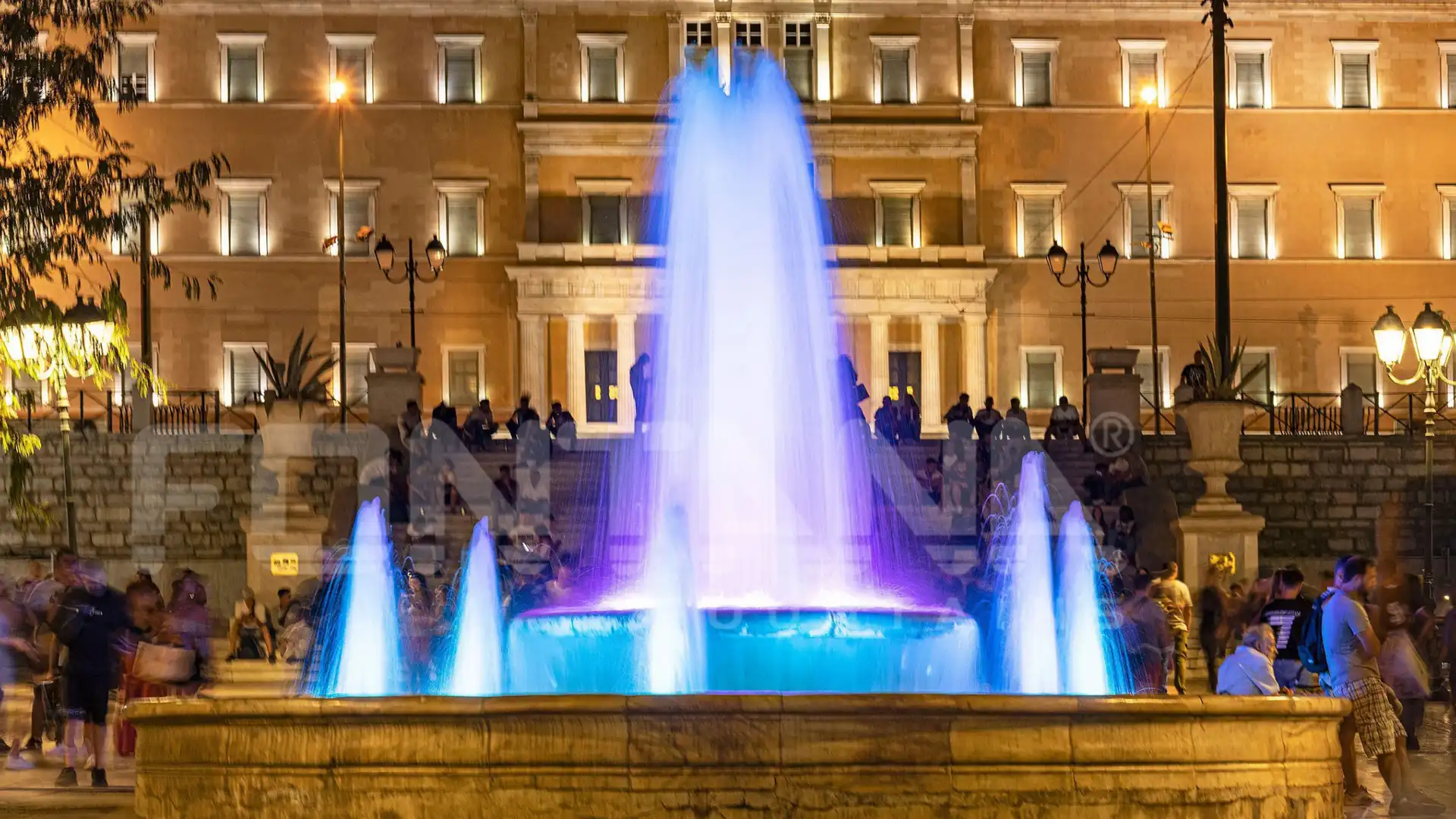
Nozzle Engineering and Hydraulic Choreography
Fountain nozzles function as the artistic interface between raw hydraulic power and refined visual expression. These precision-machined components transform pressurized water flow into diverse aesthetic effects through carefully engineered orifice geometries and internal flow conditioning passages.
Contemporary water features deploy specialized nozzle typologies selected for specific performance characteristics:
Laminar Flow Nozzles: Produce transparent, glass-like water columns through precise flow straightening and turbulence elimination, creating architecturally clean vertical elements reaching considerable heights without aerosol dispersion.
Aerating Nozzles: Introduce controlled air entrainment generating voluminous, white, frothy plumes that maximize visual impact while reducing actual water consumption through apparent volume enhancement.
Mist Generation Systems: Employ high-pressure atomization creating ultra-fine droplets suspended in air, producing ethereal fog effects for atmospheric installations or evaporative cooling applications.
Dynamic Articulation Mechanisms: Incorporate motorized positioning actuators enabling real-time nozzle rotation, elevation adjustment, and oscillation patterns synchronized with musical compositions in musical fountain installations.
Nozzle placement geometry directly influences hydraulic interference patterns, wind susceptibility, and overall compositional balance—requiring computational fluid dynamics analysis during design development phases.
Automation Architecture and Digital Control
Modern water features depend entirely upon sophisticated programmable control infrastructure coordinating mechanical, hydraulic, and illumination subsystems into unified performances. These systems utilize industrial automation protocols managing thousands of discrete control points simultaneously.
Programmable Logic Controllers (PLCs): Serve as central processing units executing complex sequencing logic, monitoring sensor feedback, and commanding actuator responses with millisecond precision across distributed input/output networks.
DMX512 Lighting Integration: Synchronizes RGB LED fixture parameters with hydraulic events, enabling color transitions choreographed precisely with water movement phases throughout programmed show sequences.
Remote Monitoring Platforms: Provide real-time operational visibility through networked dashboards displaying pump status, water chemistry parameters, electrical consumption metrics, and fault condition alerts accessible from any internet-connected device.
Automation enables both artistic sophistication and operational efficiency—complex performances execute flawlessly without human intervention while diagnostic systems identify maintenance requirements proactively before component failures occur.
Structural Engineering and Electrical Safety
Supporting infrastructure must accommodate substantial static and dynamic loads generated by equipment masses, water volumes, and hydraulic forces during operation. Reinforced concrete basins incorporate structural steel reinforcement designed against hydrostatic pressure, thermal expansion stresses, and seismic loading appropriate to regional building codes.
Electrical systems serving water features face uniquely challenging environments requiring specialized protection measures. Submersible junction boxes rated to IP68 standards, ground fault circuit interrupters on all wet-location circuits, and low-voltage distribution networks minimize electrocution hazards while ensuring code compliance across international electrical safety standards.
Sustainable Engineering Practices
Contemporary water features increasingly prioritize environmental responsibility through resource conservation strategies. Variable-speed pump drives reduce energy consumption by 40-60% compared to fixed-speed alternatives while maintaining hydraulic performance. Closed-loop recirculation systems combined with advanced filtration minimize freshwater replenishment requirements. Automated chemistry controllers optimize treatment chemical dosing, preventing waste while maintaining water quality standards.
These engineering systems collectively represent the invisible foundation enabling water features to deliver consistent, spectacular performances captivating global audiences while meeting demanding operational, safety, and sustainability requirements.
Architectural Excellence: Designing Transformative Water Features for Premium Environments
Water Features have functioned as defining architectural elements for millennia, representing cultural sophistication, technological advancement, and aesthetic ambition across civilizations. Within contemporary public spaces, metropolitan developments, and luxury hospitality environments, fountain architecture transcends mere visual decoration—it demands seamless integration of artistic vision, structural engineering precision, and environmental responsiveness to elevate experiential quality and spatial identity.
The Architectural Function of Water Features
Fountains establish visual hierarchy within plazas, municipal parks, and urban centers, functioning as magnetic gathering points that organize pedestrian circulation and social interaction. Their architectural expression must achieve delicate balance—harmonizing with surrounding built context while asserting sufficient presence to command attention and define spatial character. Designers evaluate proportional relationships, materiality palettes, and stylistic vocabularies to generate water features that simultaneously complement existing architectural language and communicate cultural narratives specific to their contexts.
Fundamental Design Principles
Professional fountain architecture relies upon carefully orchestrated design considerations that collectively determine installation success and longevity.
Formal Geometry and Spatial Composition: Fountain silhouettes establish immediate character recognition. Classical installations typically employ symmetrical geometries and Euclidean proportions reflecting historical architectural traditions, while contemporary water features increasingly embrace asymmetrical configurations and biomorphic forms inspired by natural hydrological phenomena like rivers, waterfalls, and ocean waves.
Material Specification and Durability: Material selection fundamentally impacts both structural performance and aesthetic expression. Premium installations specify granite for sculptural permanence, marine-grade stainless steel for corrosion resistance, tempered glass for transparency effects, and high-performance concrete composites engineered against freeze-thaw cycling and chemical exposure. Material decisions influence maintenance requirements, lifecycle costs, and visual aging characteristics across decades of operation.
Hydraulic Choreography and Water Dynamics: The kinetic vocabulary of water movement generates emotional resonance and visual drama. Designers manipulate hydraulic pressure parameters, nozzle configurations, and timing sequences to orchestrate diverse effects—from delicate misting clouds providing evaporative cooling to powerful vertical jets achieving dramatic heights exceeding thirty meters. Water Features in musical fountain applications additionally synchronize hydraulic sequences with audio compositions, transforming static installations into dynamic performances.
Contextual Integration and Experiential Design: Successful water features exist within comprehensive landscape architectures incorporating vegetation design, ambient illumination systems, seating infrastructure, and pedestrian circulation networks. Thoughtful spatial planning encourages prolonged visitor engagement, social congregation, and multisensory immersion beyond passive observation.
Design Challenges in Premium Installations
Developing water features for luxury hospitality properties and high-visibility urban locations presents distinct professional challenges demanding specialized expertise:
- Aesthetic-Functional Balance: Installations must satisfy rigorous visual standards while maintaining operational reliability, minimizing maintenance burdens, and achieving sustainable resource consumption targets
- Climate Adaptation: Arid environments characteristic of Middle Eastern and desert regions experience extreme evaporative losses requiring advanced water recycling infrastructure, automated replenishment systems, and chemical treatment protocols preventing algae proliferation under intense solar exposure
- Public Safety Integration: High-traffic installations necessitate comprehensive risk mitigation—including slip-resistant decking surfaces, perimeter barriers preventing accidental water entry, and electrical systems meeting stringent aquatic environment safety codes protecting both visitors and maintenance personnel
- Acoustic Considerations: Water noise generation requires careful management—desirable in some contexts for masking urban sound pollution, potentially problematic in others where conversational intelligibility matters
Landmark Architectural Examples
Several globally recognized installations demonstrate design excellence across different programmatic contexts and cultural settings.
The Dubai Fountain positioned within Downtown Dubai represents contemporary luxury water feature design at monumental scale. Its sophisticated choreographic system integrates precision hydraulics, programmable LED arrays, and multichannel audio infrastructure to deliver nightly performances visible across several kilometers, establishing the installation as Dubai’s signature architectural landmark.
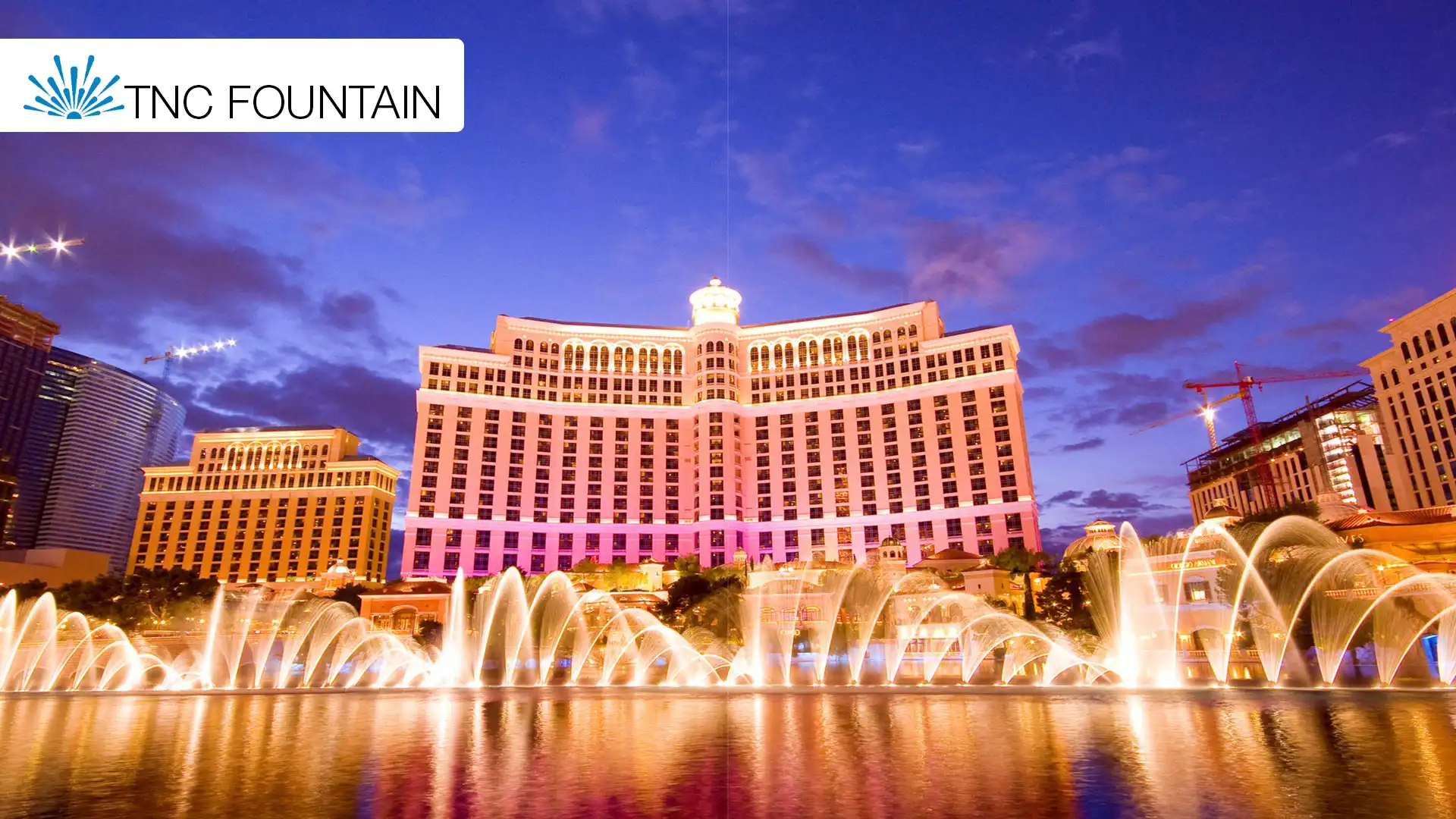
The Bellagio Fountains in Las Vegas exemplify theatrical water features engineered for entertainment-district contexts. Over 1,200 individual nozzles generate choreographed sequences synchronized with popular musical compositions, attracting millions of visitors annually while generating measurable commercial returns for surrounding casino and retail properties.
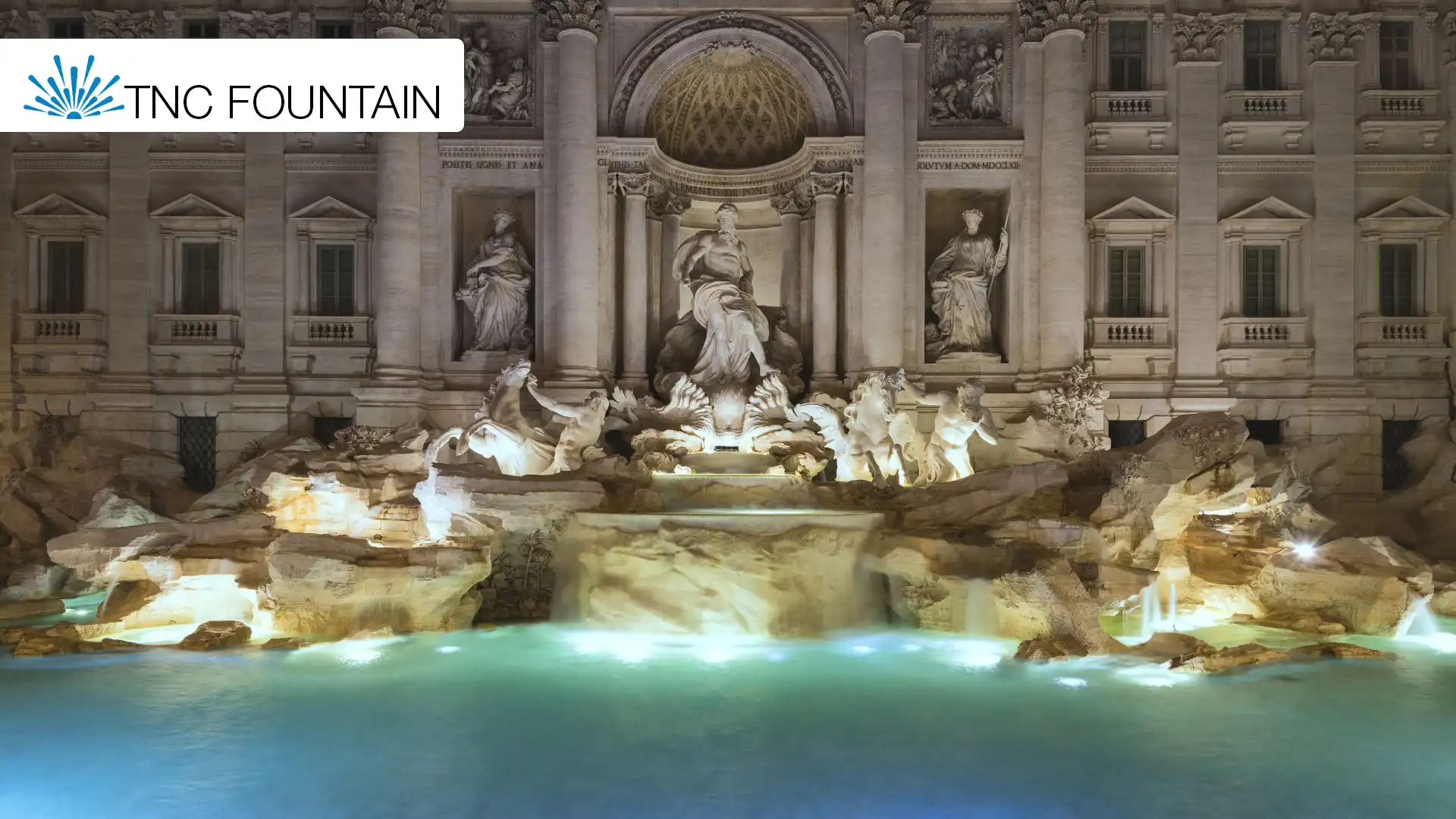
The Trevi Fountain in Rome demonstrates enduring historical architecture where Baroque sculptural tradition merges with symbolic water imagery, creating cultural monuments that transcend functional purpose to embody civic identity across centuries.
Emerging Design Trajectories
Contemporary water feature architecture increasingly incorporates digital technologies, sustainable methodologies, and participatory design strategies. Interactive installations respond to visitor movements through sensor arrays, programmable lighting systems adapt color palettes to seasonal events or real-time data feeds, and water recycling infrastructure achieves near-zero freshwater consumption rates. Designers pursue immersive multisensory experiences engaging visual, auditory, and tactile perception simultaneously, merging timeless aesthetic principles with innovative technical capabilities.
Water Features continue defining architectural identity and experiential quality across premium public and private developments worldwide, demonstrating that thoughtfully designed fountain installations remain culturally relevant and commercially valuable in contemporary built environments.