


wall waterfall fountain
Optimal Integration for Diverse Architectural Spaces
Flexibility is the key feature of our custom-made Outdoor Water Fountains, and hereby allows it to adapt itself to a wide variety of environments:
Commercial Spaces: In intense design details of any attractive restaurant or big hotels.
Corporate Sites: Corporative buildings and headquarters.
External Areas: Sky gardens or general exterior landscape designing.
Internal Spaces: High-grade residential or any kind of commercial interior space.
Key Features of Our Custom Wall Waterfall Fountains:
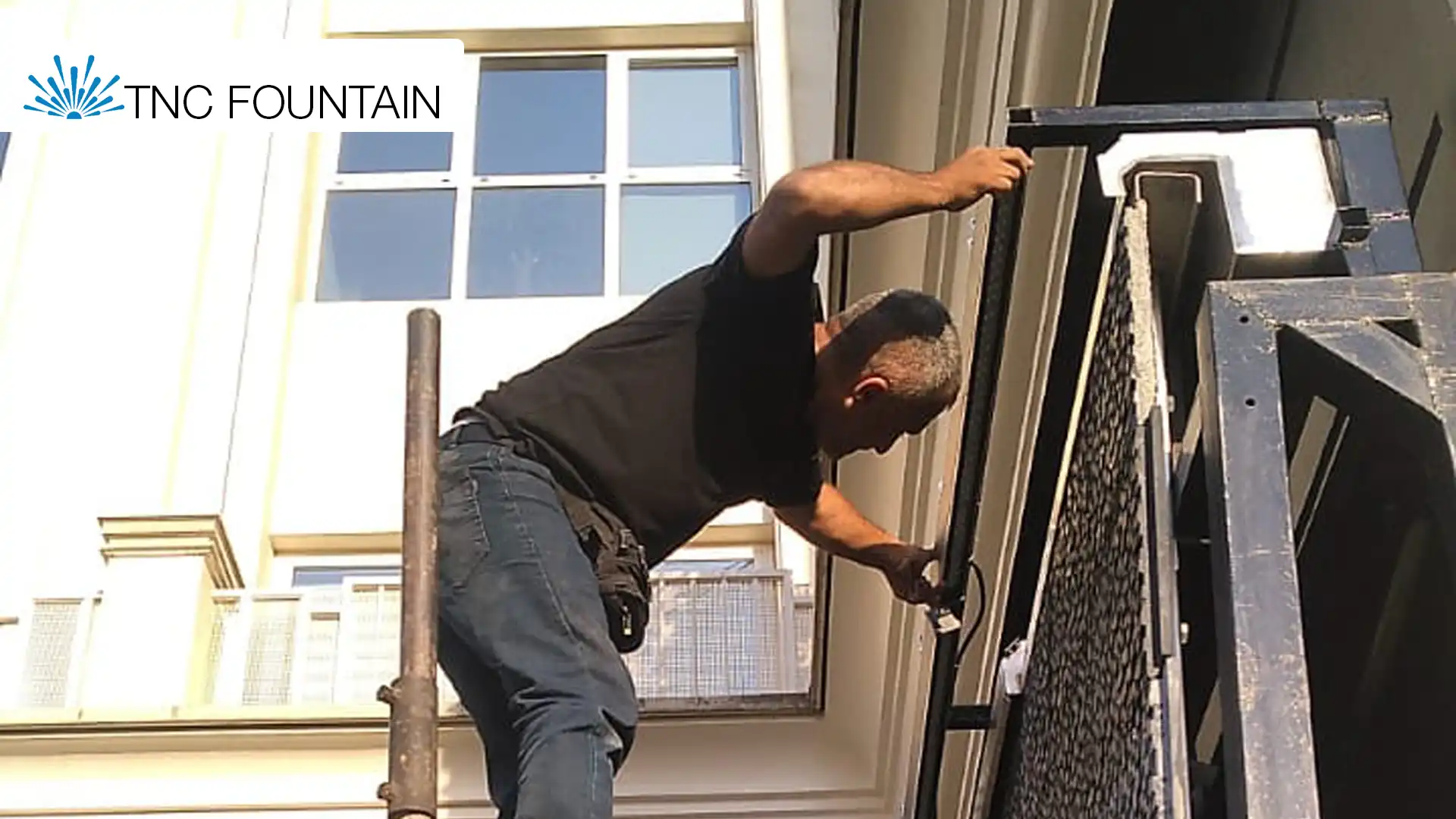
The construction allows one to choose the best assembly and fixing method:
Installation Options:
Pre-assembled packages to take a disciplined project through the quickest route possible: to being a fully functional Wall Waterfall in no time at all.
On-site construction and assembly: A necessary requirement in order to address large-scale custom builds.
Mounting Alternatives:
Surface-mounted nozzles are for easy installations with less intervention.
Recessed nozzle systems will create a beautiful flush to the wall, with the nozzles completely concealed from view.
Custom Sizing: Allows for almost infinite dimension customization to fit it to the desired space.
Design Variants:
Standard Wet Wall design (a complete sheet flow).
Aria Wall design (the dynamic water flow creates aerated effects).
The Ultimate Guide for Wall Waterfall Fountain Nozzles and Models
The smooth functioning and beauty of a wall waterfall fountain depends on the selections between the two fundamental nozzle types that the specifying architect makes according to the constraints of the project and the desired visual finish.
Comparing Nozzle Types: Concealed vs. Exposed Systems
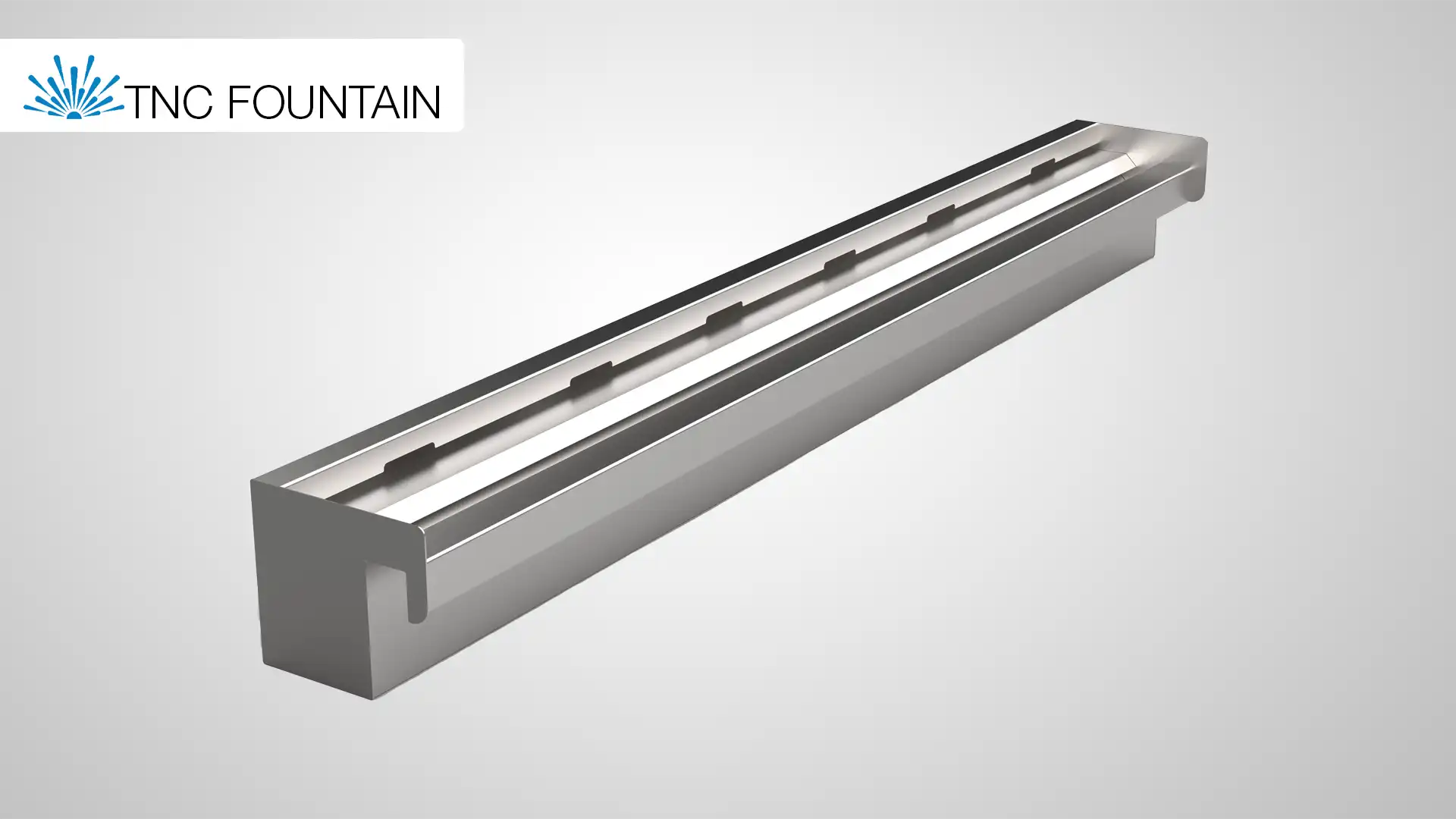
1. Recessed Wall Waterfall Fountain Nozzle (Architectural Preference):
This is the choice of architects for the fabrication of self-contained wall waterfall fountains, as the built system offers design elegance and, over time, greatly reduced maintenance needs.
Design Mechanics:
The nozzle remains completely concealed behind the stone or panel cladding.
Water flows almost at the edge of the surface in an easy and clear manner.
The system has always been a good solution for the prevention of exterior silt formation.
What It Demands: This design demands a clear space of about 30 cm behind the vertical wall structure in order to meet the standard.
Ideal For: First-time constructions, high-end luxury projects, and minimal architectural design.
2. Surface-Mounted Wall Waterfall Fountain Nozzle (Renovation/Constraint Solution):
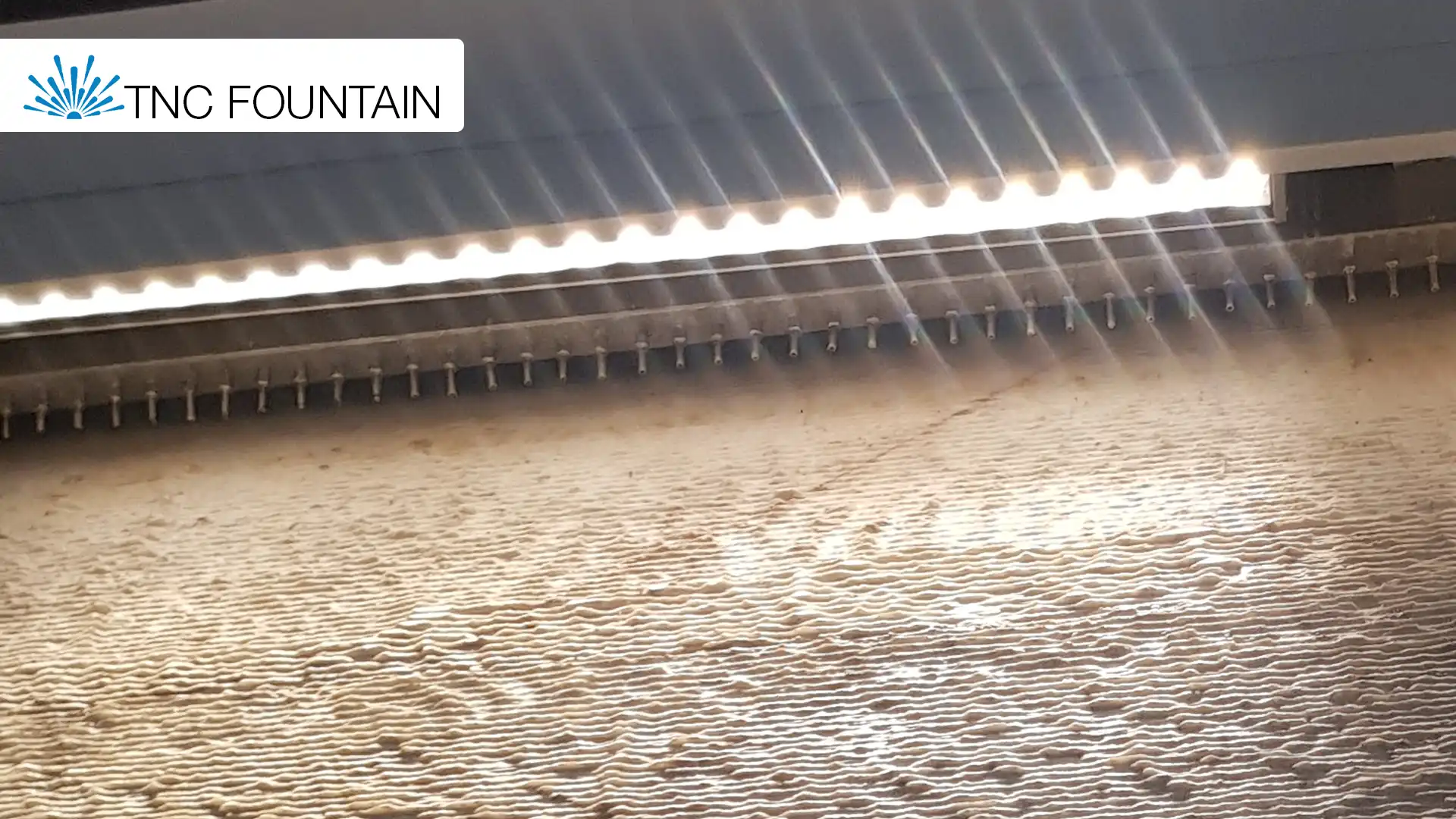
Usually, retreading or retrofitting projects will indulge in using such a mechanism if structural and depth constraints engulf their projects.
Design Mechanics:
The nozzle is mounted externally on the wall face. (1 Line Rain Water Curtain)
Water is directed to the vertical surface at a slight angle.
Installation is easy and does not throw any structural constraints in its way (no major demolitions needed).
Pros & Cons Summary:
| Advantages | Disadvantages |
| Quick setup | Requires frequent descaling (visible mineral buildup) |
| No structural changes | Visible nozzle (less sleek and minimalist) |
Ideal For: Renovation scenarios with existing walls and projects mindful of their budget.
Wall Waterfall Fountain Models: Visual Effects
When looking at the models of the wall waterfall fountain, effects would come up with a view in their own design philosophies that adopt different water flow mechanisms and thus give respective visual effects.
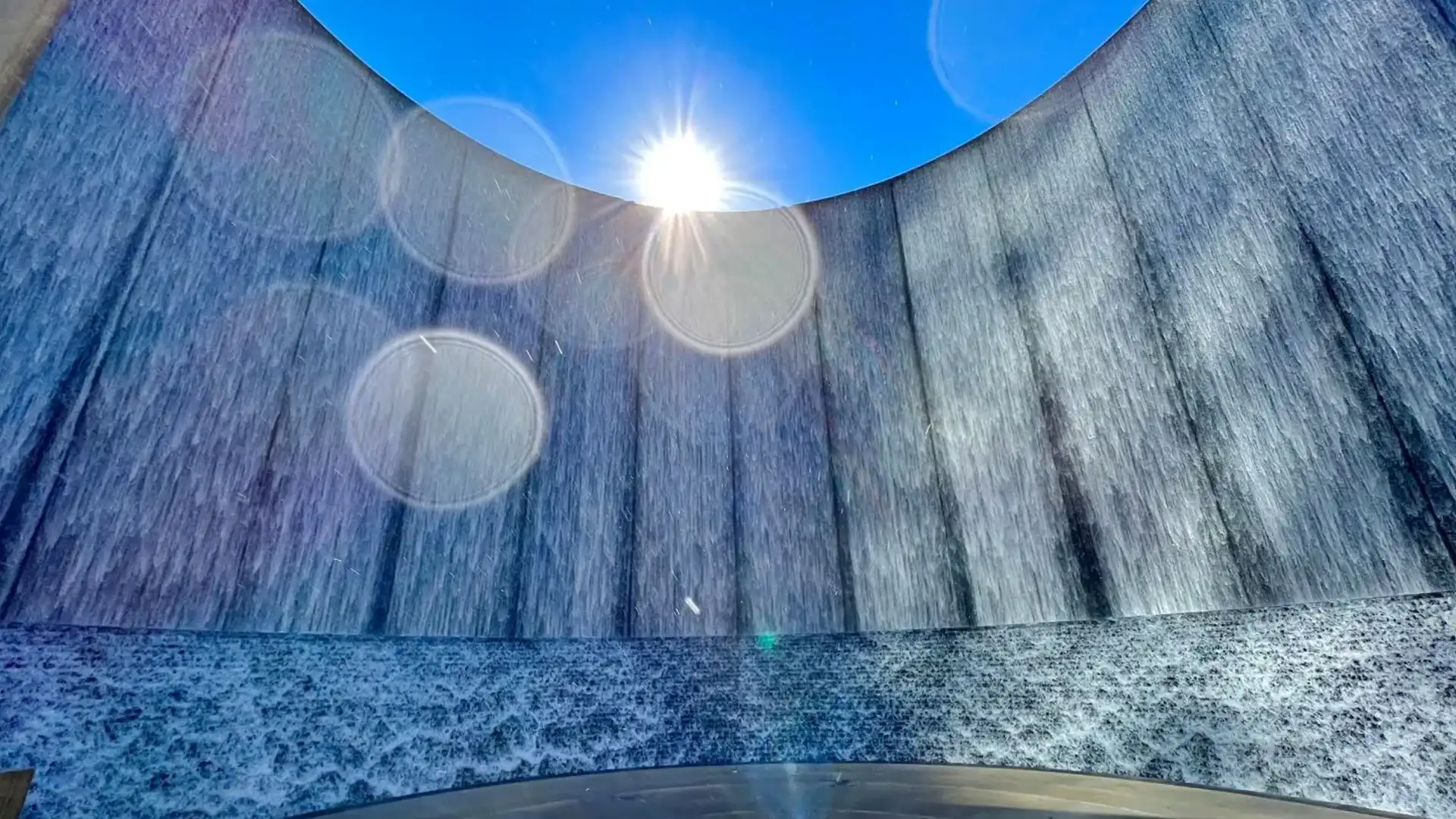
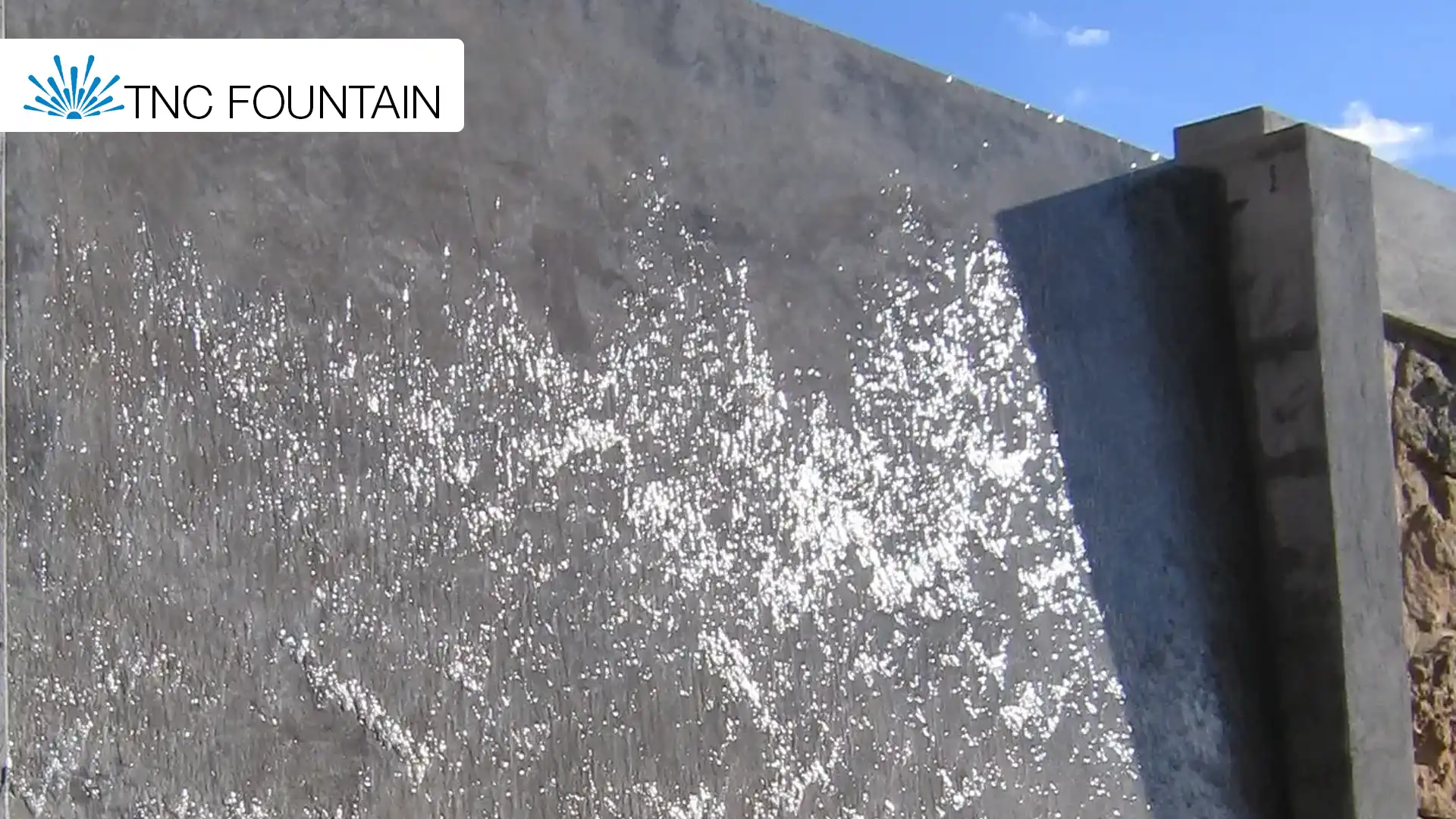
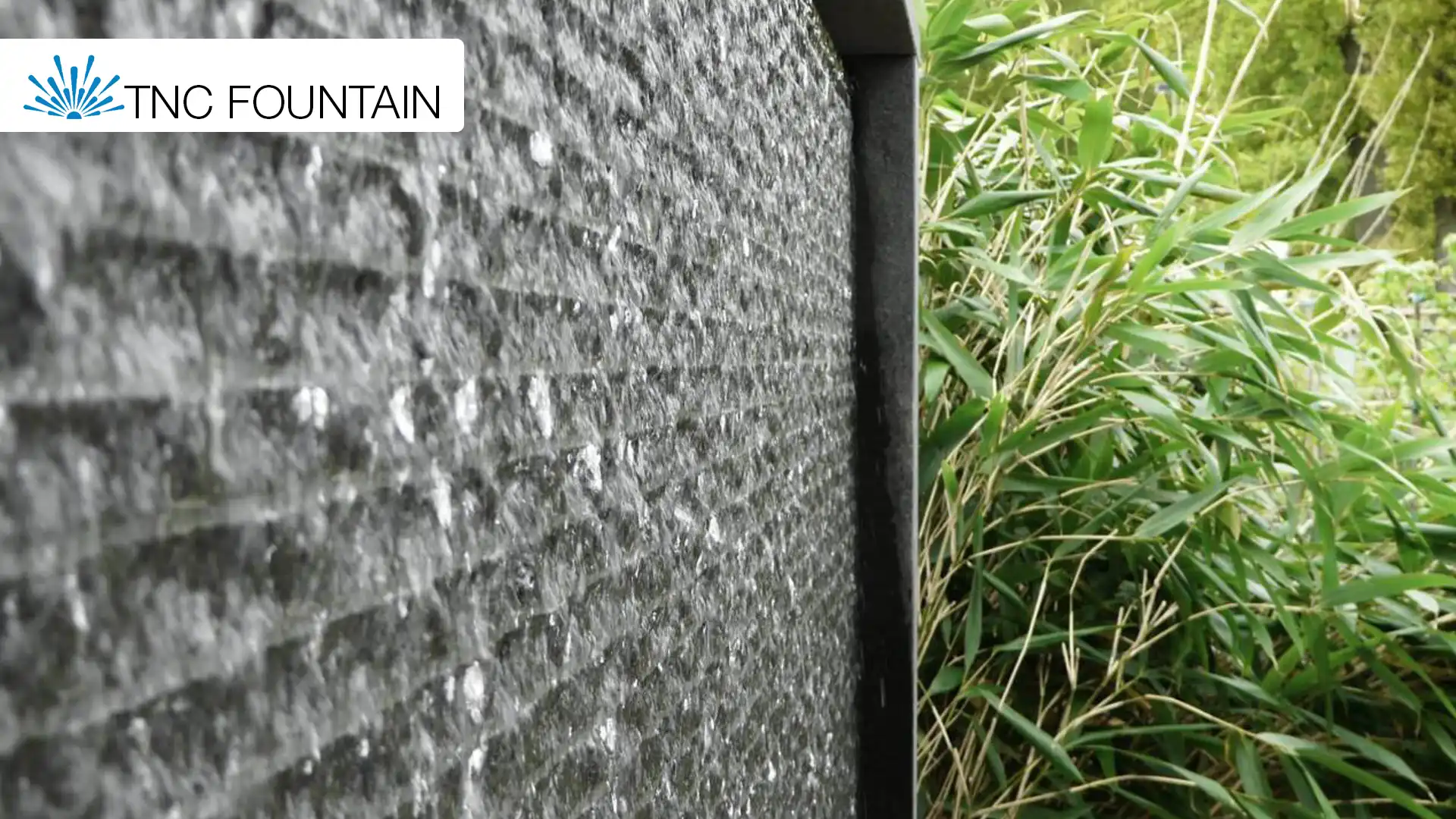
1. A Wet Wall Fountain (Quiet and Elegant):
Flow: Smooth and uniform sheet flow that highly reflects below the knife edge.
Nozzle placement: It should be best associated with very white colors of cladding e.g., highly polished natural stones like duly gloss-elegant slate, granite, or nonporous glass/metal.
Sound: Does not make a lot of fuss in splashing, so good for indoor settings in residential and commercial spaces.
2. Aria Wall Fountain (Dynamic and Dramatic):
Flow: Have a very dynamic effect on the aerated water flow with visible thick foam effect.
Nozzle placement: Should, exclusively and always, be employed whilst using decorative finish or other impacter stones with generally heavy texture to thus enable much water aesthetic effects of the said air.
Sound/Height: Delivers a lot of splash and consequently a lot of noise, so well outside only.
Minimum Height: Minimum height to be 300 cm to get the right visual foam effect.
| Location | Recommended Water Feature Model | Why? |
| Homes, Offices, Clinics | Wet Wall | Quiet operation, elegant aesthetic. |
| Hotel Lobbies, Corporate HQ | Large Wet Wall | Customizable scale, suitable for branding. |
| Outdoor Facades, Urban Centers | Aria Wall | High dramatic visual and acoustic impact. |
Stone Selection Guide for the Wall Waterfall Fountain
The material cladding apart from aesthetics plays a very lively and crucial role in the proper functioning of the wall waterfall fountain; do remember, if it falls in the beauty section, it also falls directly into any functional topic.
Crucial Material Selection for Service Life
Aesthetic Considerations:
Pattern Avoidance: Avoid any very veined or busy stones as these may block some of the water clarity through reflection.
Techno-Limitations (materials to be avoided):
Porosity : Avoid porous stone types (some limestones) due to heavy absorption of water causing efflorescence and damage to internal walls.
Softness: Avoid soft stones that are likely to erode or wear down visibly throughout the life of the structure.
Seal: Proper joint sealing between cladding panels is absolutely critical for water penetration with associated structural leaks.
Next Steps: Building a Water Feature Perfectly
For personalized technical assistance with designs including respective detailing on recess nozzle go-down and stone permeability guidance in your wall waterfall fountain project, contact our design team without delay.