


Comet Fountain Nozzle
Comet Fountain Nozzle
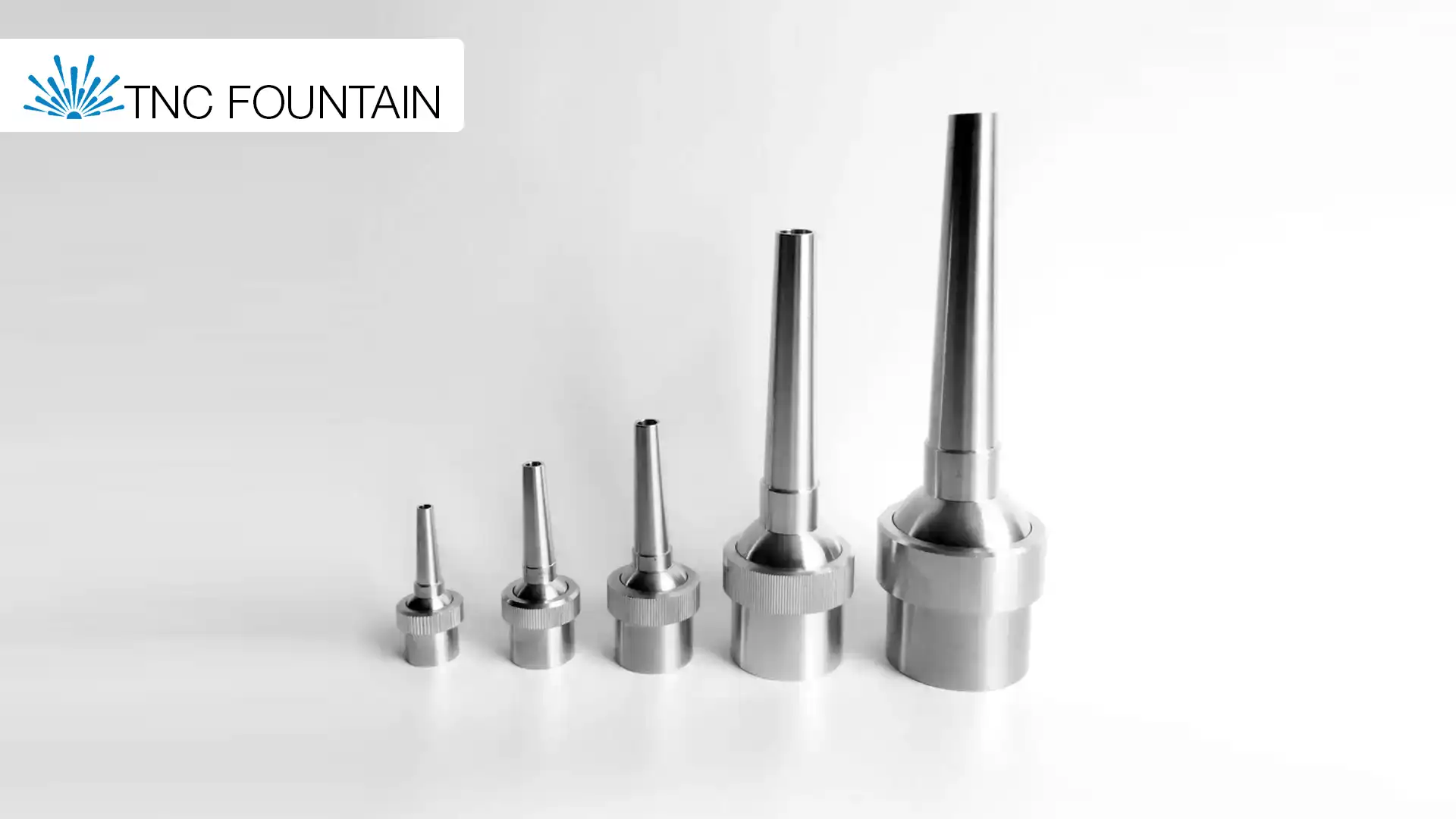
General specifications of the Comet Fountain Nozzle
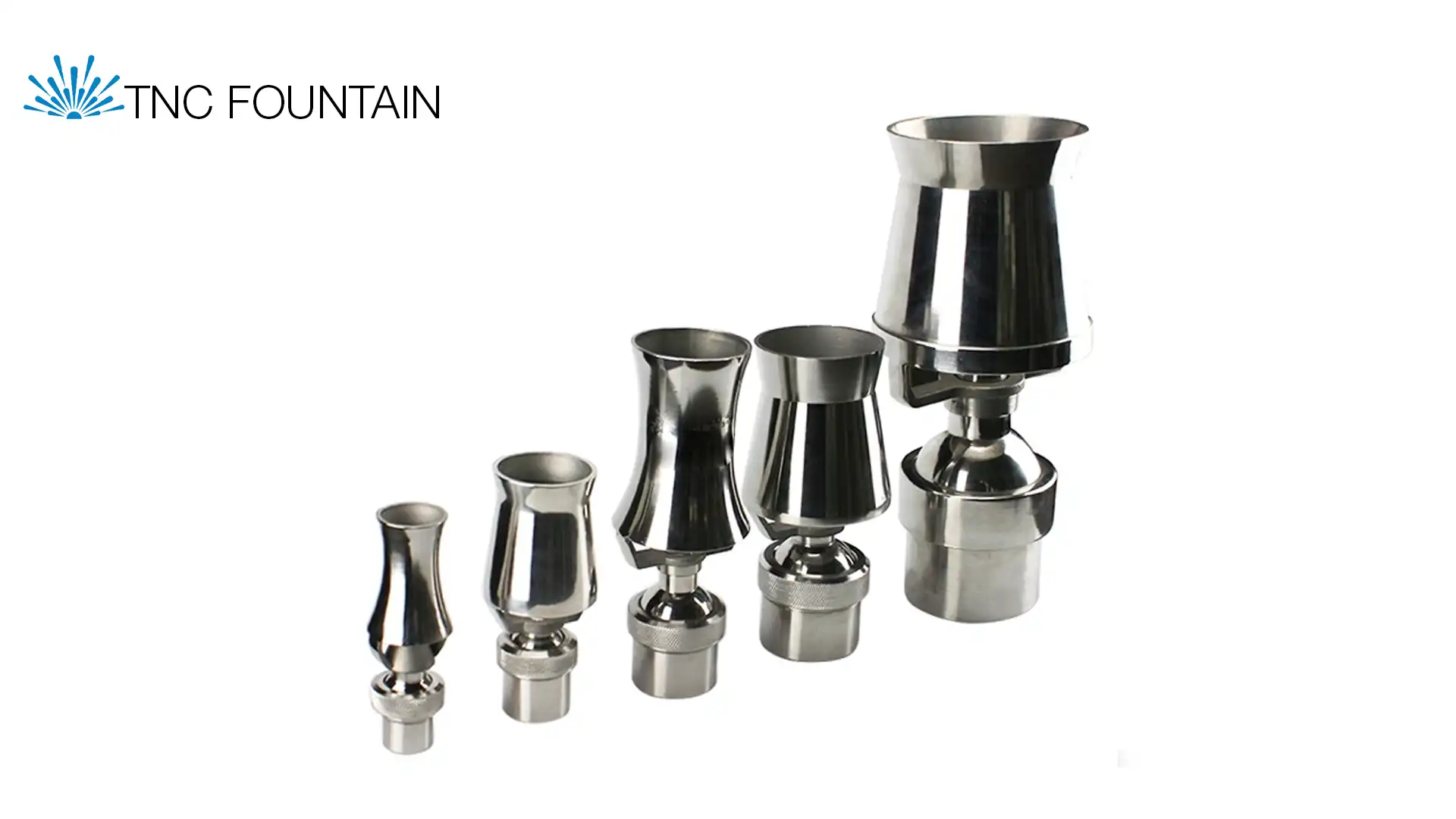
The main feature of this fountain nozzle is that it works independently of the water level. This helps the designer adjust the water height they want without worrying about the pond depth, creating more attractive effects.
The Comet Fountain Nozzle is usually made from brass or 304 and 316 stainless steel, which increases its resistance against corrosion and rust when in contact with water.
Different models:
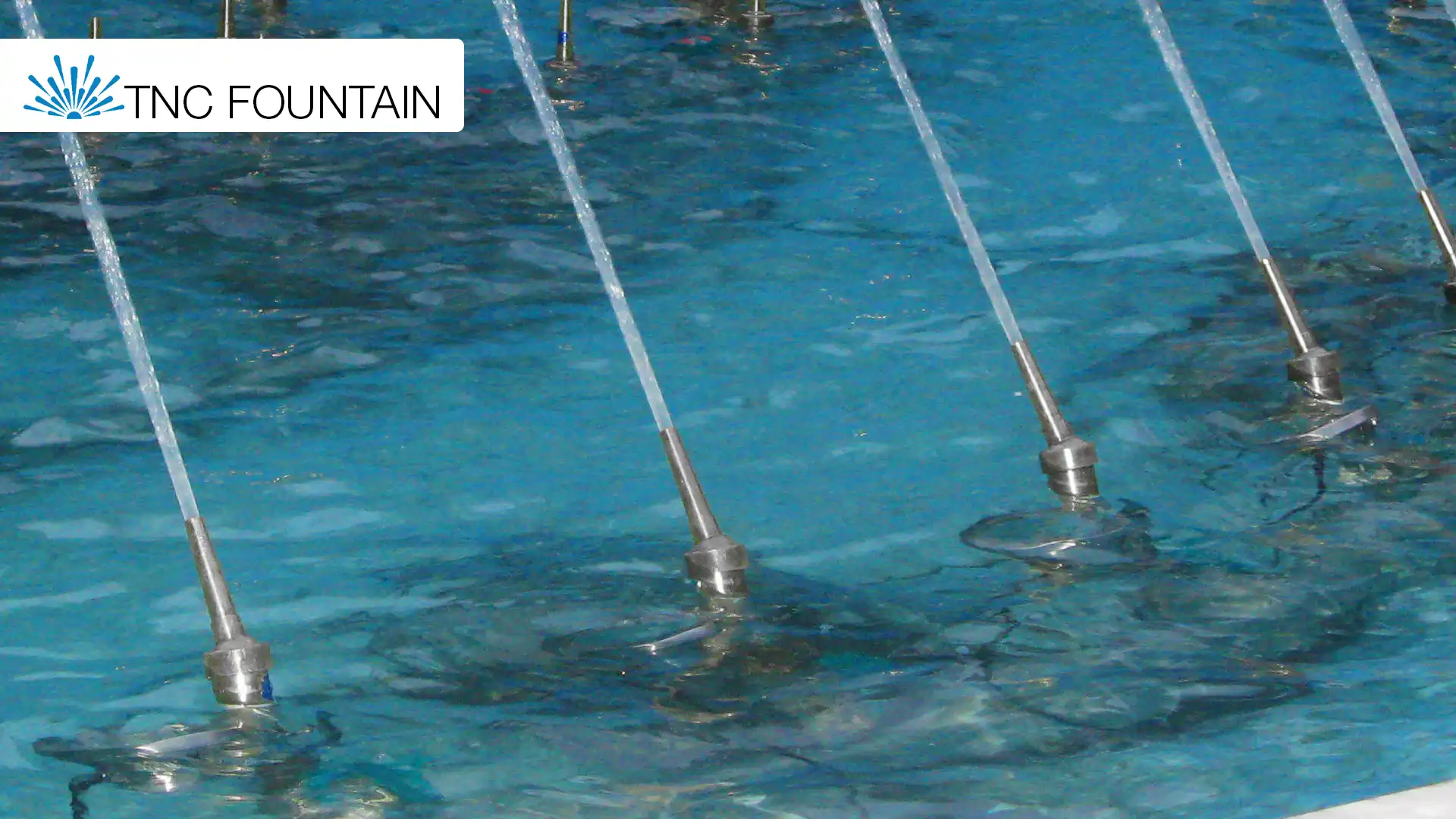
Generally, the Comet Nozzle comes in 3 types, and you can choose one based on your project needs:
Fixed model: This model is made with a default vertical angle, and it’s really important to set the right angle on the collector pipe during installation.
Vertical angle adjustable model: In this model, a special nut frees up the ball joint base, so you can set the Comet Nozzle at any angle you want and then tighten the nut to lock it there. With this setup, you can make small adjustments and manage small slopes.
With pressure control screw: This model is used when you’ve connected several nozzles to one collector and need to split the water pressure evenly between all nozzles. You can do this by loosening or tightening a screw at the bottom of the body to reach your desired pressure.
Using the Comet Nozzle in musical fountains
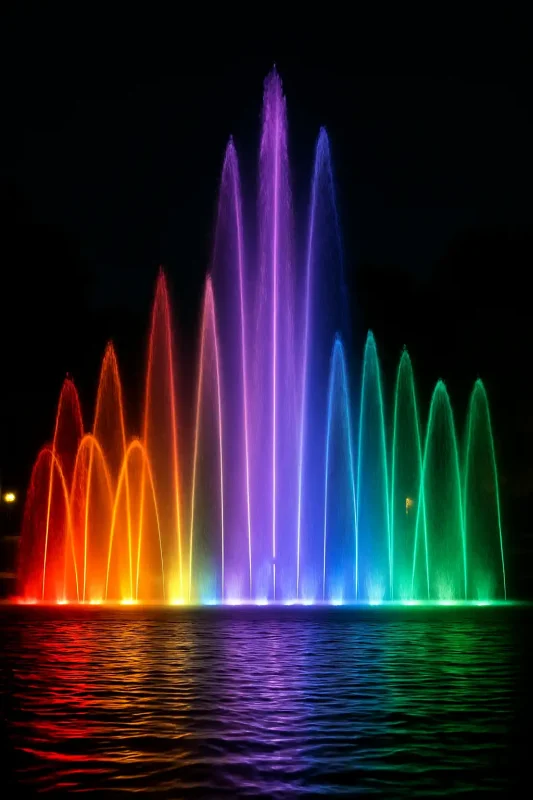
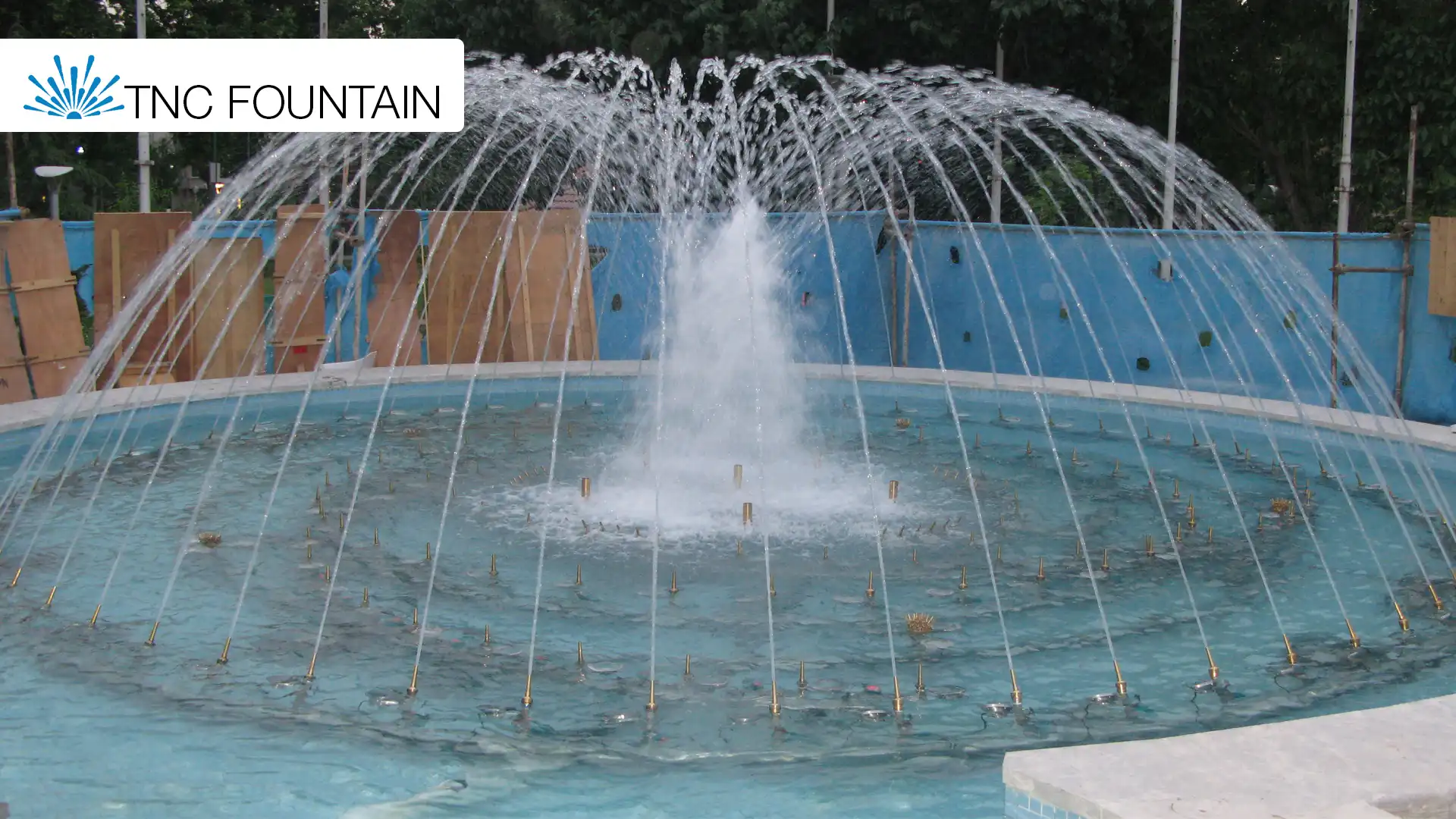
In musical fountains or what they call dancing fountains, the Comet Nozzle is used as the main core of the nozzles. The ability to install them in groups and respond quickly to pressure changes in DMX or PLC systems makes it an ideal choice for these fountains.
For this, they usually use a solenoid valve for each nozzle, giving engineers the ability to control each nozzle individually and create beautiful, attractive shows with water jets. Using lighting underneath the nozzle doubles the beauty of the show at night, and light passing through the water jet gives you the feeling of a line of light shooting into the sky.
Benefits for engineers
Water feature engineers, especially fountain designers, can optimize the design and building process using the Comet Fountain Nozzle:
Hydraulic Efficiency: The nozzle’s inlet being larger than its outlet creates internal pressure, making the water jet come out with more force.
Easy installation: To install this nozzle, just screw it onto the outlet installed on the collector using its internal threads and tighten it in place.
Strong and impact resistant: Its structure gives it decent strength against environmental damage.
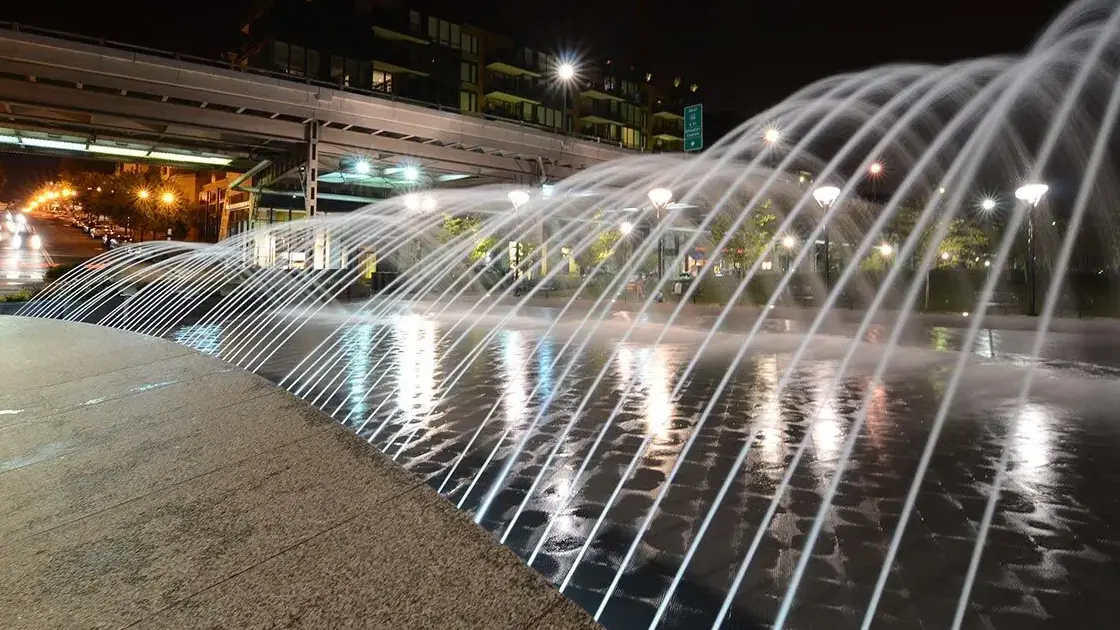
Freedom and flexibility: You can use this nozzle on its own as a tall, single water jet with a 100-meter height, or in smaller arrangements as a group for a musical fountain.
Technical Specifications
| Parameter | Specification Range |
| Material Composition | Stainless Steel (SS316) or Industrial Brass |
| Connection Sizes | 1/2″ to 2″ BSP/NPT |
| Operating Pressure | 1.0 to 3.5 bar |
| Flow Rate | From 5 to 25 liters per minute (model dependent) |
| Projection Height | 0.5 meters to 150 meters (for industrial versions) |
| Internal Mechanism | Directional water guide and flow straightener |
Comet Nozzle maintenance service
It’s true that the Comet Nozzle is strong, but that doesn’t mean you don’t need regular maintenance and upkeep or Filtrations. Depending on the water quality and the size of the outlet opening, this nozzle can build up sediment at the water outlet. If you don’t pay attention to this, over time it’ll affect the water flow and cause the water column to scatter. In smaller models, sediment can lead to complete blockage, meaning no water comes out of the Comet Nozzle opening.
Summary of key points
In the end, I gotta say that the features and hydraulic system of the Comet Fountain Nozzle mean it can be used in all kinds of modern and classic projects. You can pick the right type and size of this nozzle for any project and put on a beautiful water show in your space.
Cascaded Fountain Nozzle
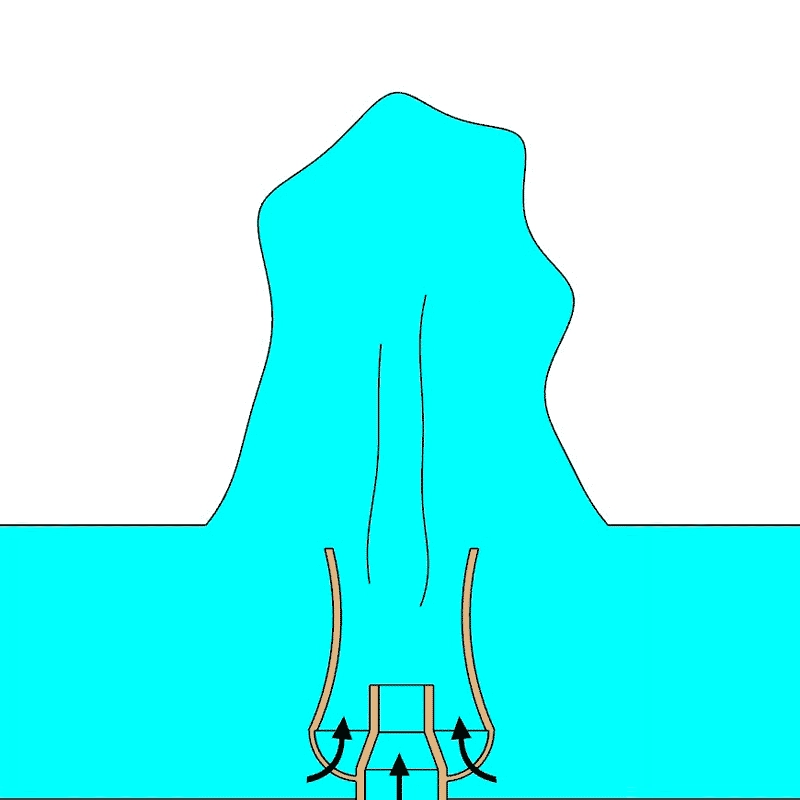
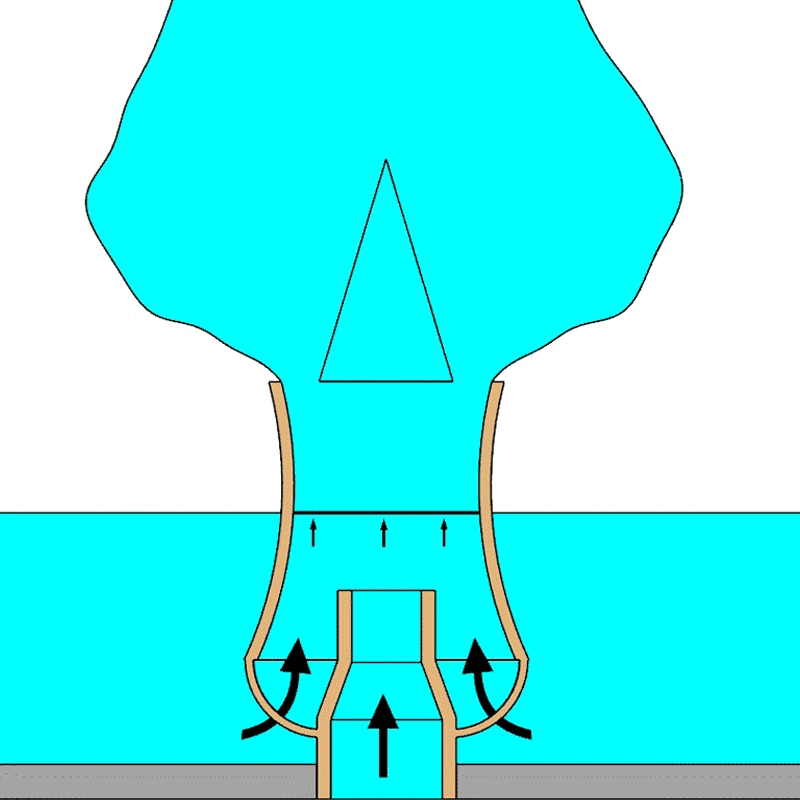
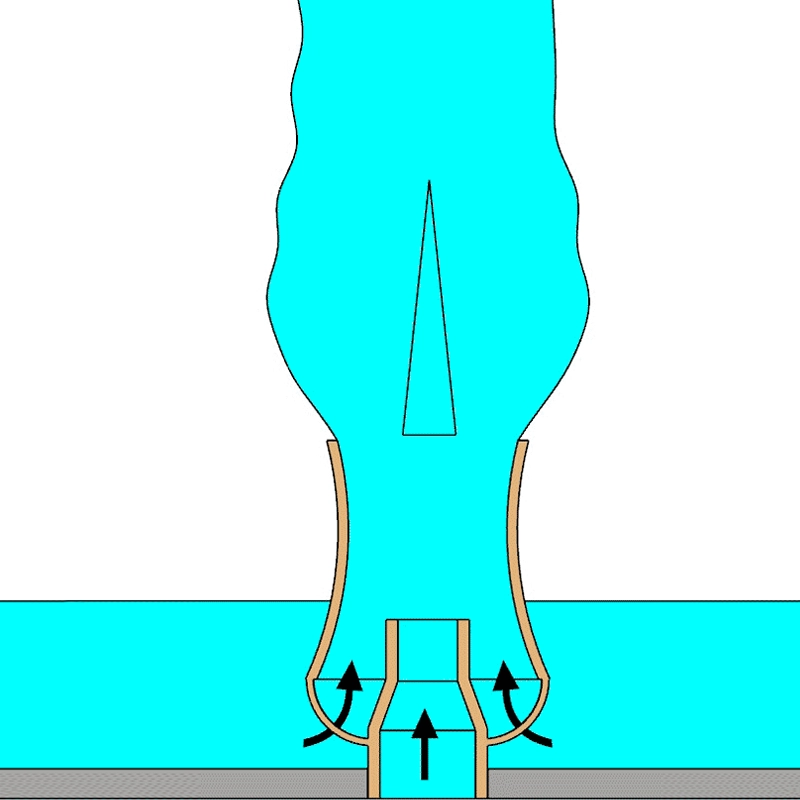
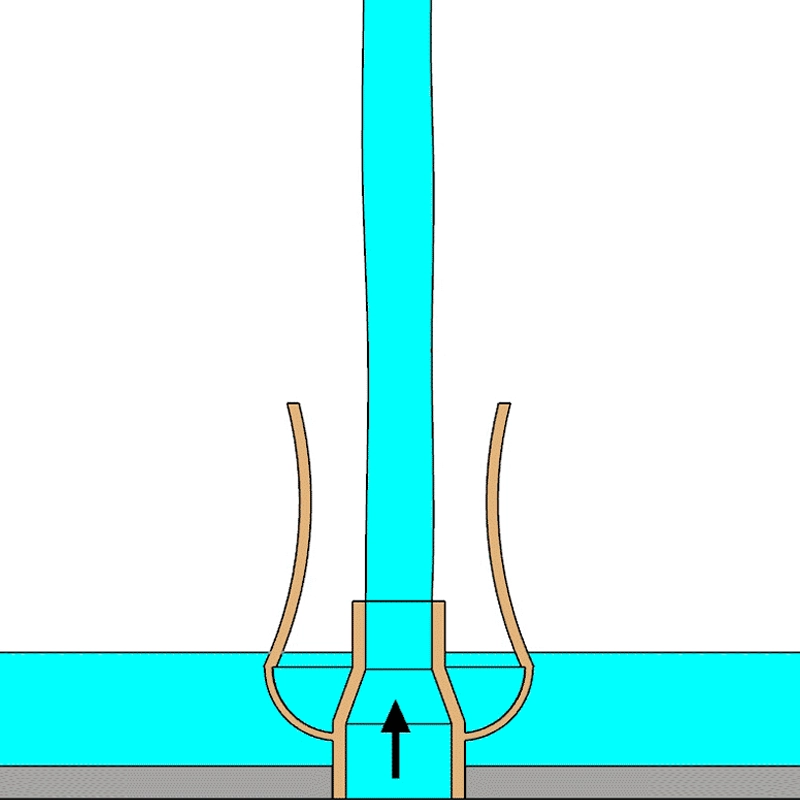
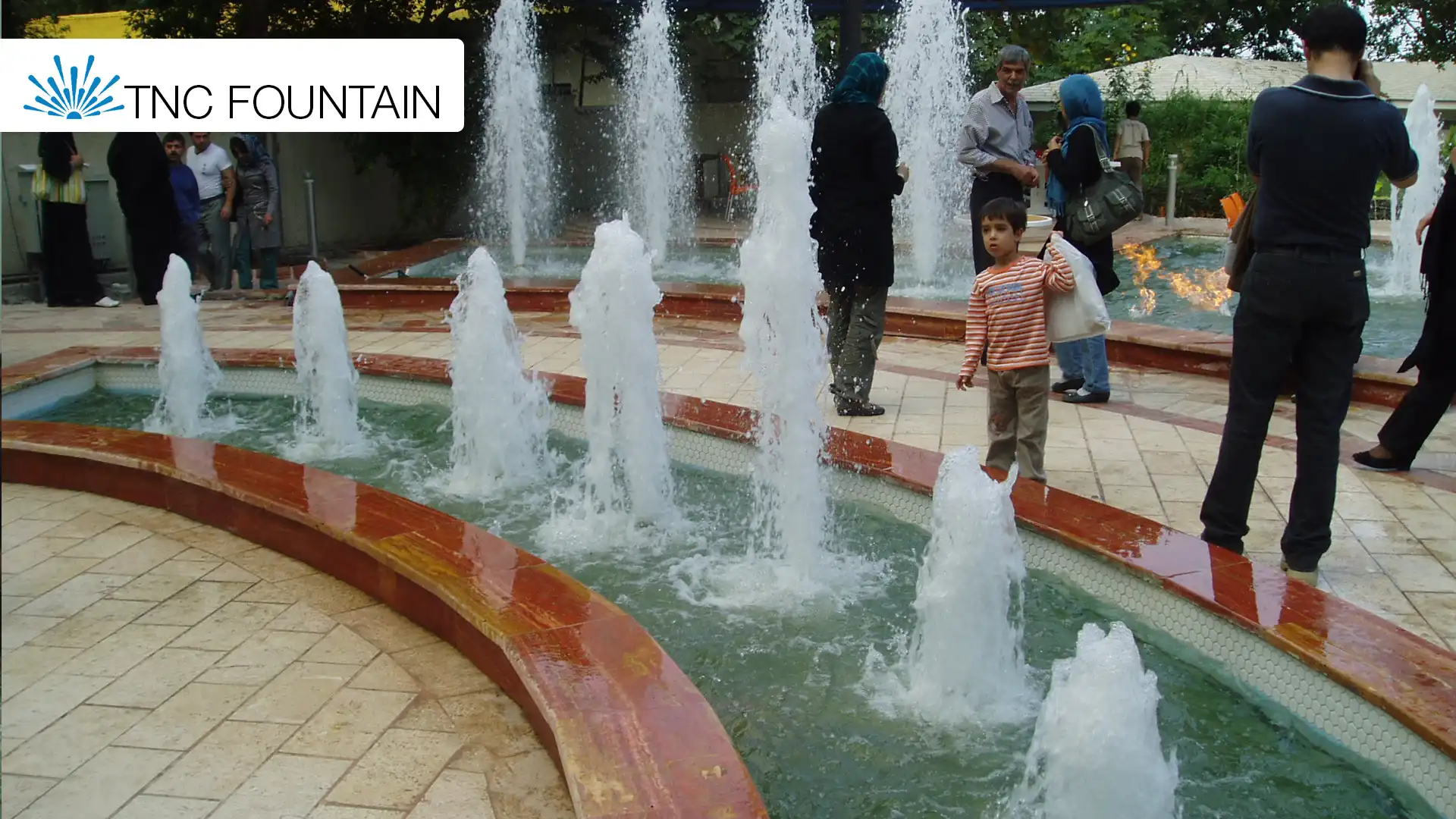
The most important merit of the Cascaded Fountain Nozzle is its effective volume. By injecting air through the Venturi principle, the nozzle creates an impression of a huge water feature with a rather low flow rate. This instead allows for the creation of monumental landmarks where water conservation and pump energy efficiency are the priorities. The foamy nature is also the right medium for light refraction, thus always keeping the fountain as a fascinating focal point to be admired all night.
Technological Innovation: How Does the Cascaded Fountain Nozzle Enhance Water Structures?
The operation of the Cascaded Fountain Nozzle is uniquely dependent on its environmental set-up. Adaptable in application to many different fountain environments, the cascade jet responds to water-level conditions; thus, the very interaction between the nozzle and surrounding basin level determines the final height and diameter of the spray. Incorporated with a precise water-level control system, the engineers can actually go ahead and change the parameters to obtain different architectural effects.
Key Engineering Features and Material Specifications
Performance-wise few fountain nozzles shine or more readily spring to mind than the Cascaded Fountain Nozzle when specification items are required for a high-end landscape project. The desired set of features term by no means exhaustive; any professional would at least consider:
Alloy Resilience: The very best construction with Stainless Steel (316) or best-grade Brass guarantees that the system cannot pit whilst vying against chemically treated or mineral-rich water. (Note: The high polish of most stainless steel—stainless steel—components enhances light reflectance).
Sound Masking Capability: Nature generates a white noise while mixing air with water, which is an effective means of masking urban traffic noise.
Hydraulic Versatility: Thread sizes ranging from 1/2″ until 2″ BSP are available, catering both to intimate indoor features and monumental outdoor displays.
Environmental Stability: A thick aerated column is more rejective to wind deflection than thin jet-types.
Oxygenation Benefits: Continuous mixing of air to the water supply maintains higher oxygen levels, thus preventing anaerobic bacteria from building up.
Strategic Applications in Contemporary Urban Planning
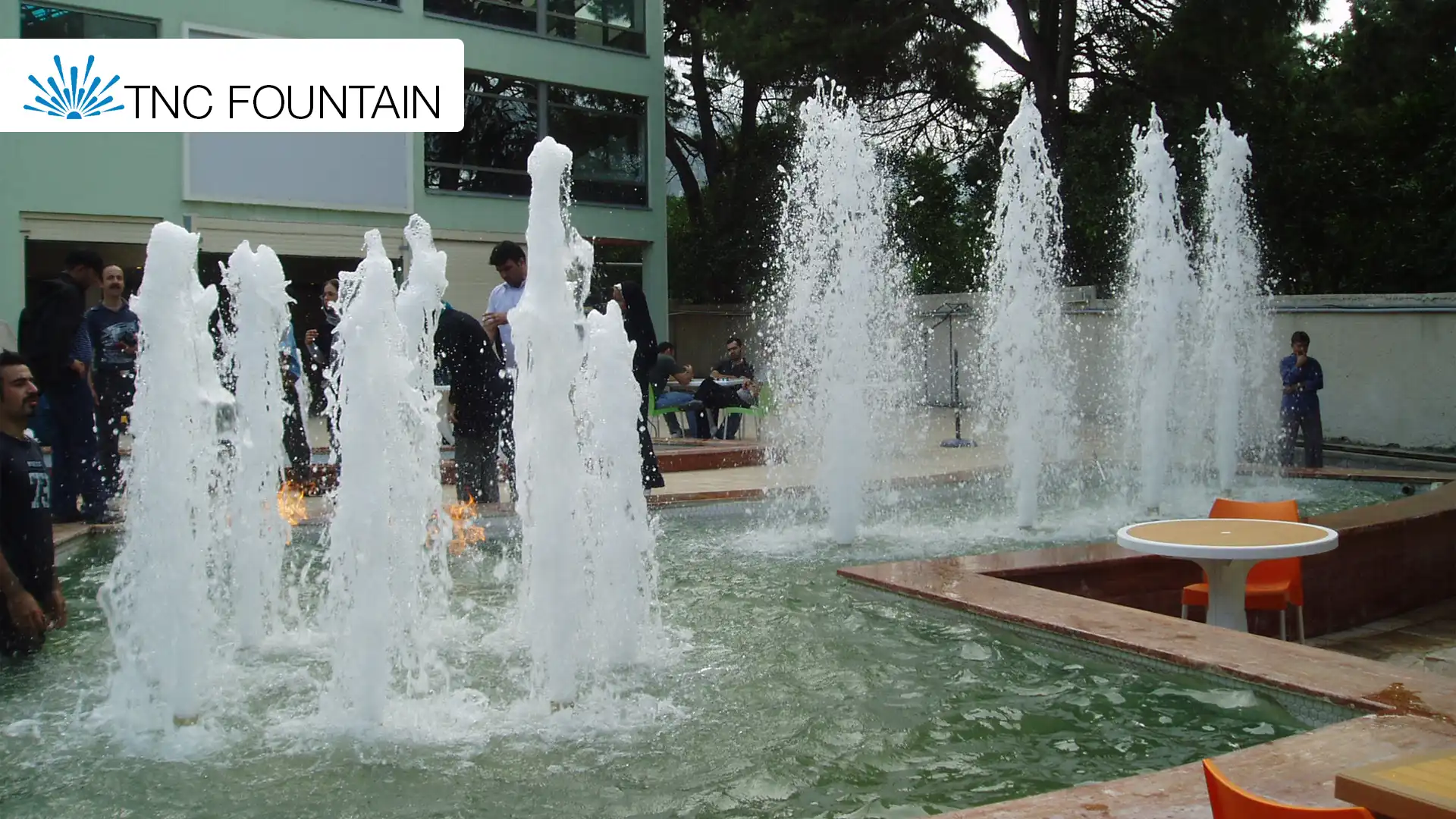
Owing to the flexibility of the Cascaded Fountain Nozzle, it can be employed very efficiently in many different forms of architecture. Be it a minimalist reflecting pool or a grand tiered municipal show, this nozzle adapts itself to whatever scale is in vogue in the environment. Among myriad kinds of fountain nozzle types, the cascades are uniquely favored at lower pressures or deeper basin submergence for generating a “boiled spring” or “bubbler” appearance.
Why is Material Integrity Crucial for These Fountain Nozzle Types?
Selection of the correct material is not merely an aesthetic choice but a long-term maintenance strategy. For most professional applications, Grade 316 Stainless Steel is the mandatory standard in coastal settings or projects employing saline chlorination. It protects from operational degradation, while the continuous friction with aerated water slowly erodes other metals.
Standard Operational Guidelines for Civil Engineers:
Pressure Calibration: Applicative pressures between 0.5 and 2.0 bar according to plume thickness required.
Flow Rate Management: Most units use between 10 and 35 liters per minute and need pumps to provide this head pressure consistently.
Filtration Requirements: Due to the internal aeration vanes, secondary fine-mesh straining is suggested to avoid blockage of air intake by floating debris.
Basin Depth Optimization: For maximum stability of the column-like effect, the exit orifice of the nozzle should be slightly above the water surface.
Is the Cascaded Fountain Nozzle Compatible with Musical Systems?
While the Cascaded Fountain Nozzle is suited for static or rhythmic fountains, its inertia, “largely owing to the air-water mass,” renders it less responsive than clear-stream jets in high-speed DMX musical choreographies. The air-water mix’s massive presence on the other hand provides an unparalleled sense of gravity to the fountain that undergirds every other feature as a “grand finale” on its own.
By choosing the Cascaded Fountain Nozzle, designers ensure an application that is technically sound as well as visually stunning. The interleaving of the hydraulic system and the sculptural delight continues to define the benchmark for present-day water architecture around the world.
Foam Fountain Nozzle
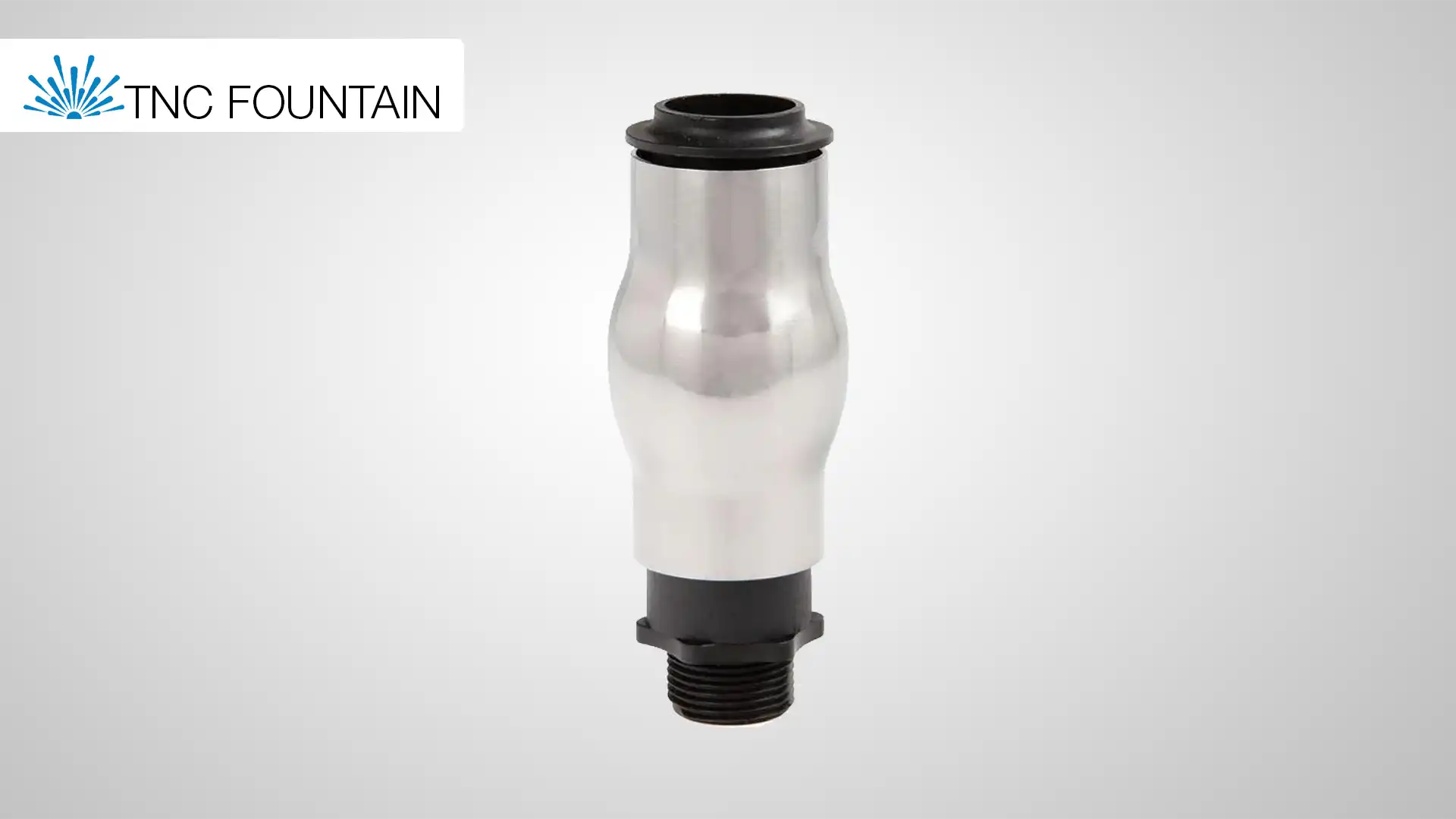
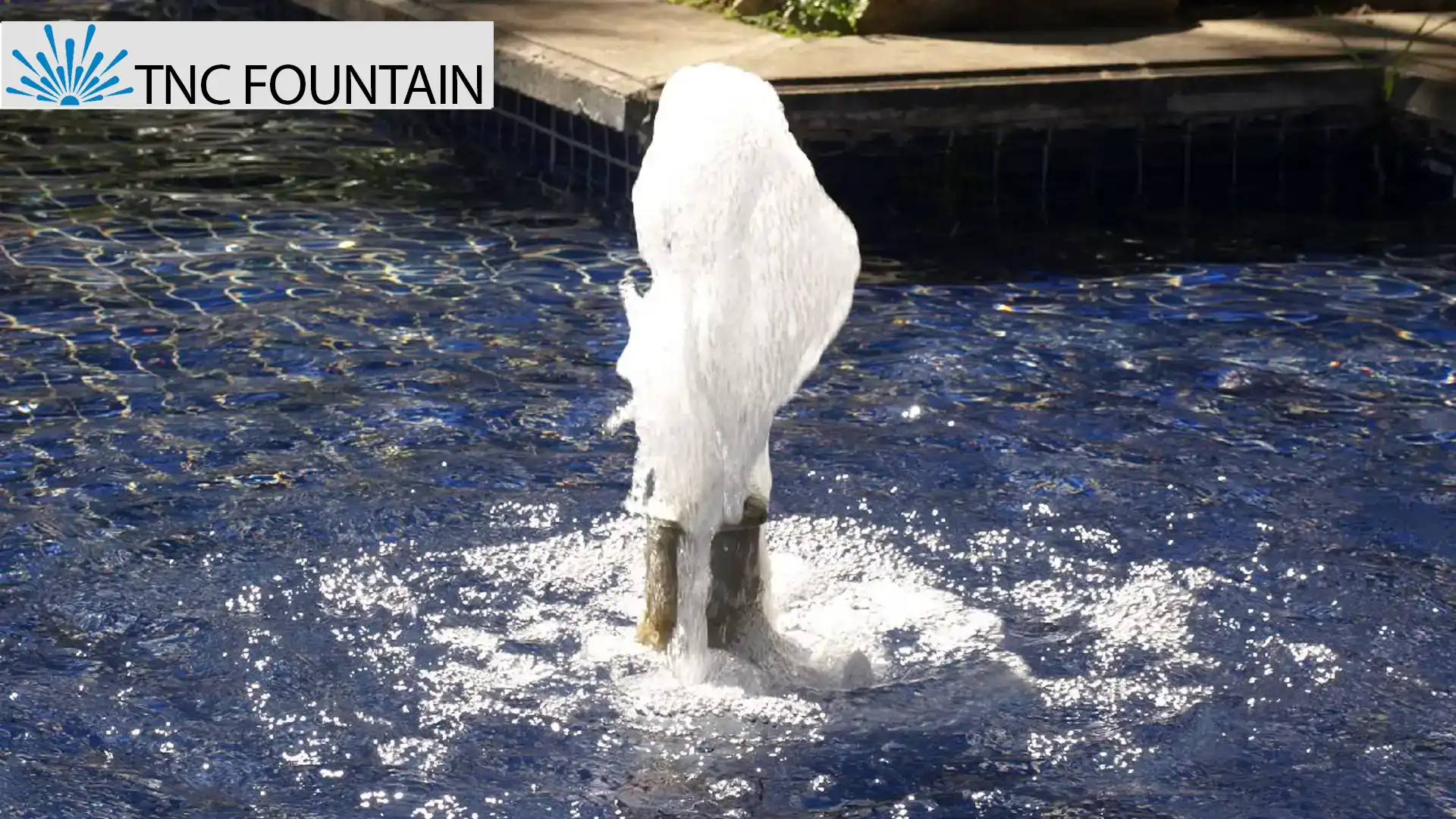
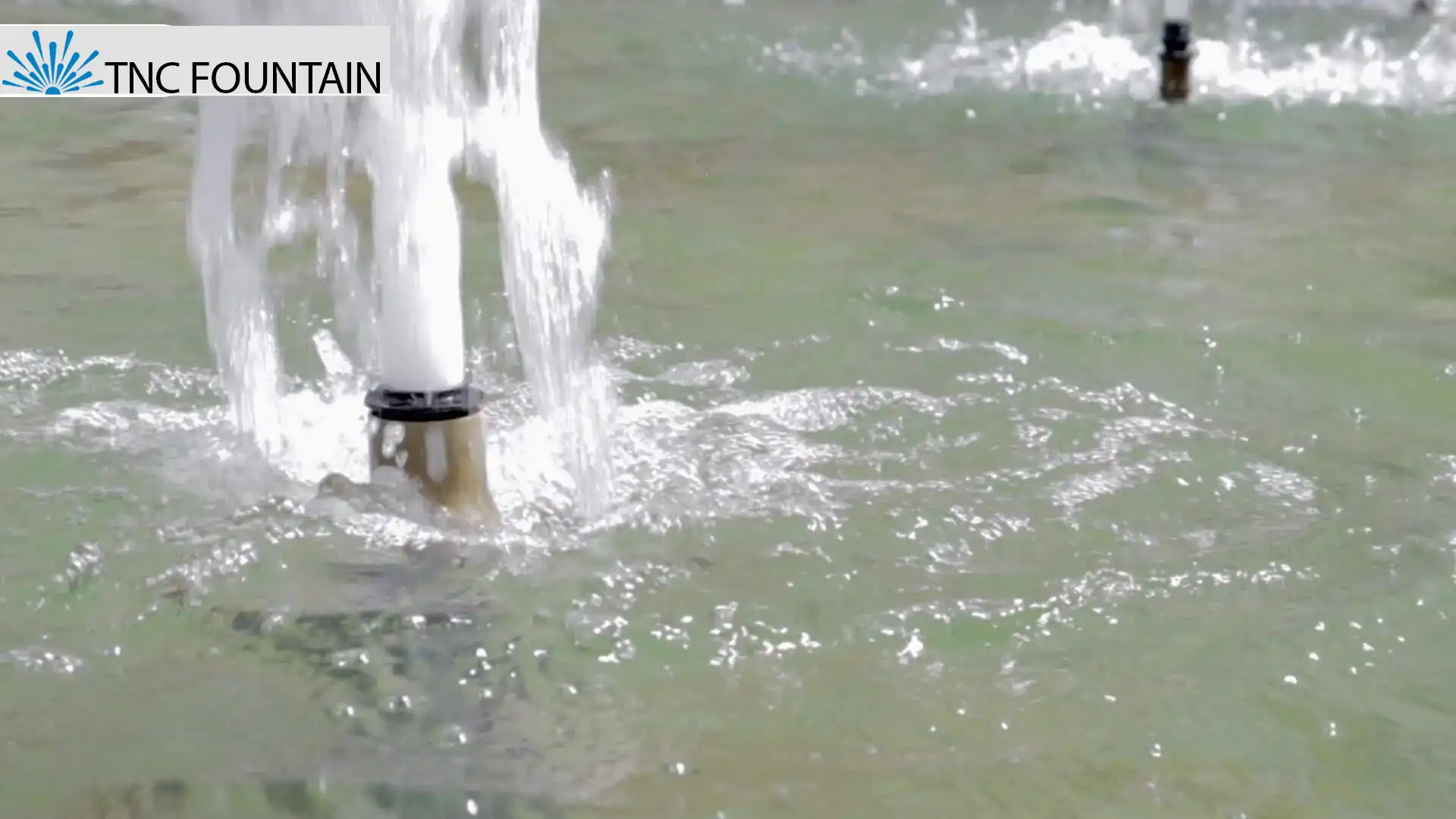
One of Foam Fountain Nozzle’s great technical advantages is that its performance is unaffected by the elevation of ambient water levels. Unlike many other types of fountain nozzles, which require a specific submergence depth for proper operation, the foam jet remains unaffected by fluctuating levels in the fountain basin. This degree of independence opens a world of design possibilities, allowing for the installation of these units in very shallow reflecting pools, tiered basins, or even dry deck fountains, where water is drained away into the sub-floor drainage system below.
Why the Foam Fountain Nozzle Suits Constricted Urban Spaces?
The choice of hydraulic considerations is dependent on spatial and environmental constraints in the city. Some unique advantages come with the foam jet’s aeration:
Small Splash Diameter: Air mixed in with the water column means that it is less able to shatter when impacting the basin, thereby substantially reducing the splash zone. This makes it suitable for indoor lobbies or tight pedestrian walkways.
Immunity to Wind: The density of foam columns allows them to better withstand the effects of the wind as opposed to the clear-stream nozzles. This mass ensures that the water stays within the basin, where it is intended to be.
Surface for High-Impact Lighting: The opaque texture and white color of the foam create a perfect target for RGB LED lighting. The foam absorbs and scatters light rays while propagating radiant light from its surface, creating a glowing pillar of visible bright light from afar.
Natural Noise Masking: The soft sound of bubbling achieved during the fusion of air and water acts as a white-noise-like mechanism to cover heavy traffic sounds in public plazas.
Technical Specification and Hydraulic Performance Parameters
Specifications of the Foam Fountain Nozzle are, however, geared by a knowledge of pressure and flow. To attain the characteristic frothy texture, the pump must maintain flow consistently so that adequate aeration can take place within the nozzle housing.
Does the Material Selection Affect the System Lifetime?
Material integrity is paramount in water feature engineering. Most professional-grade foam nozzles are made from the following alloys:
Stainless Steel (Grade 316): The literal standard for use in high-end projects. Grade 316 manifests great resistance to chloride pitting corrossion, which is necessary for fountains using saline chlorination systems.
Marine Brass: Good durability with an ageless aesthetic. It is highly resistant to corrosion, but extreme pH conditions may necessitate its coating with extra layers.
Nickel-Plated Bronze: Usually used for decorative work where surface hardness and mirror-like finish are required to blend modern architecture.
Typical Operating Data:
Inlet Diameter: Range from 1″ to 1.5″ for standard urban installs.
Working Pressure: Generally tuned to 1.0 to 2.5 bar to attain heights from 0.5m to 2.0m.
Volumetric Flow Rate: Somewhere between 8 to 25 liters/min depending on the thickness of the column required.
Strategic Integration in Multi-Sensory Architectural Projects
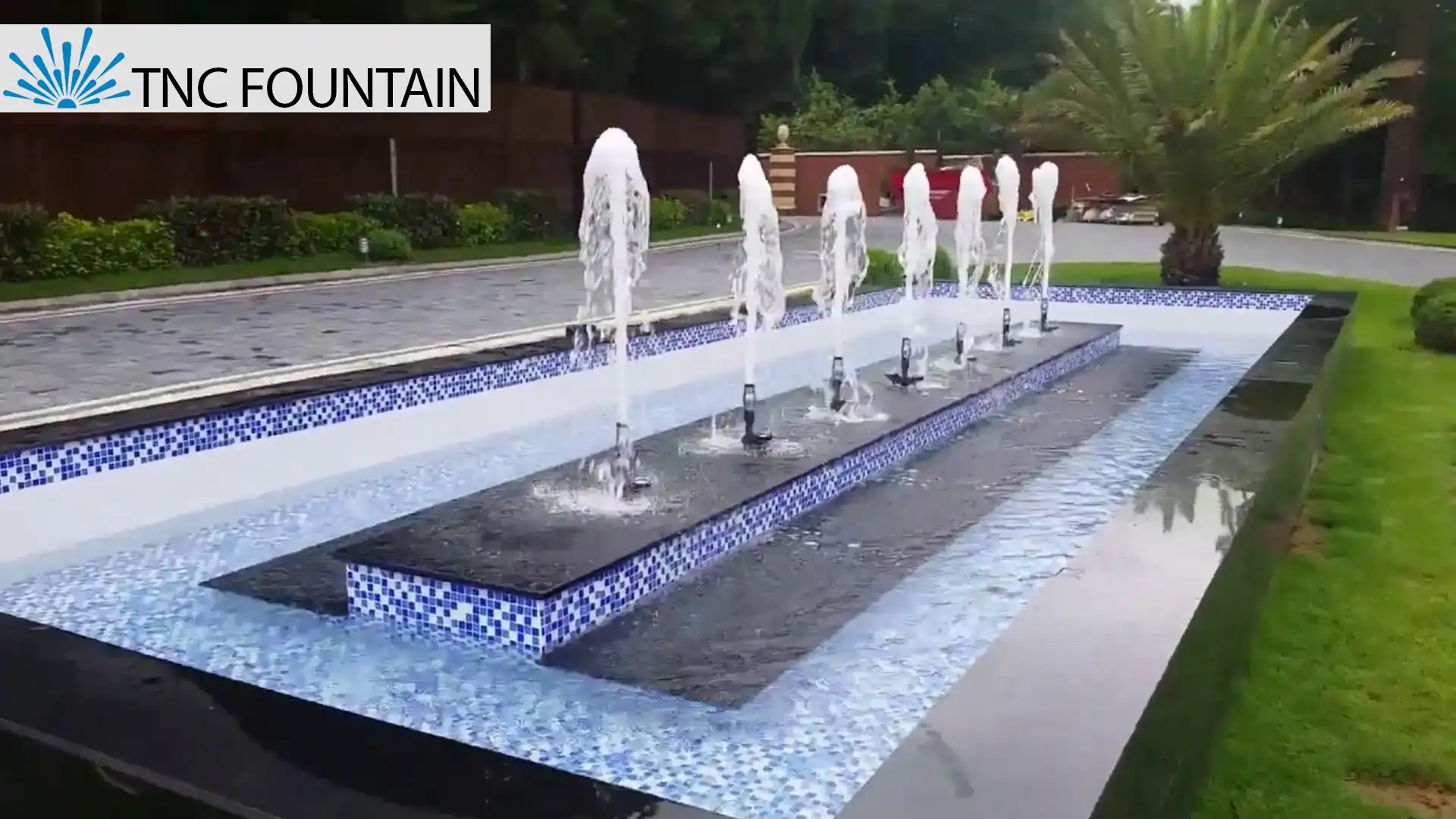
Beyond visual appeal, the Foam Fountain Nozzle also serves as a tool for creating immersive environments. When clustered together, multiple nozzles create a “forest” of foam that gives considerable sense of space to a landscape. This technique is applied often in musical water features that demand quick on/off responses of the aerated jet to achieve instant synchronization with rhythmic soundtracks.
Moreover, the aeration process quickly oxygenates the water. This offers the architect a functional benefit in an indoor application: oxygenated water prevents anaerobic bacteria and algae build-up, enhancing water clarity and reducing maintenance chemicals. Beauty and biological use come together like this in a rare way.
Installation and Maintenance Considerations
Foam Fountain Nozzles are rugged installations, but utmost diligence must be maintained to ensure that the internal aeration vanes are kept free from any debris that might impair the “snowy” effect. A common downfall during project execution is that people don’t specify a filtration scheme for the source water. Small particles can block the Venturi air inlet, resulting in the foam turning “watery” and losing its distinctive opacity. Hence, engineers should always specify secondary fine-mesh filter systems protecting the nozzle’s internal geometry.
The Foam Fountain Nozzles thus represent a rare blend of hydraulic science and artistic vision in that choosing any one of a myriad of fountain nozzle types guarantees the designer that their project will be breathtakingly beautiful, technically correct, and sustainable for yet more decades of incessant use.
Mushroom Fountain Nozzle
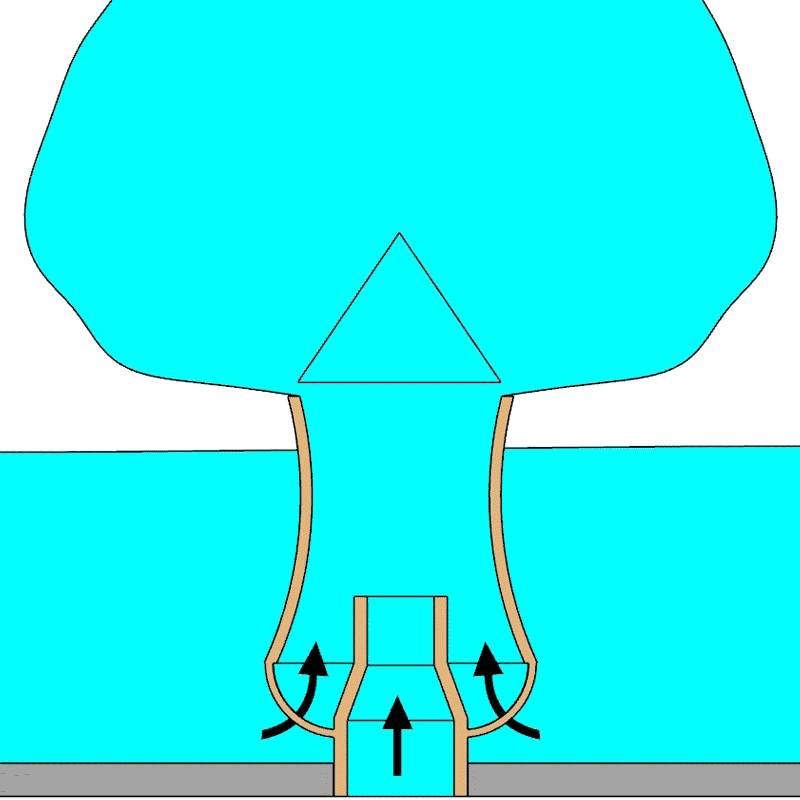
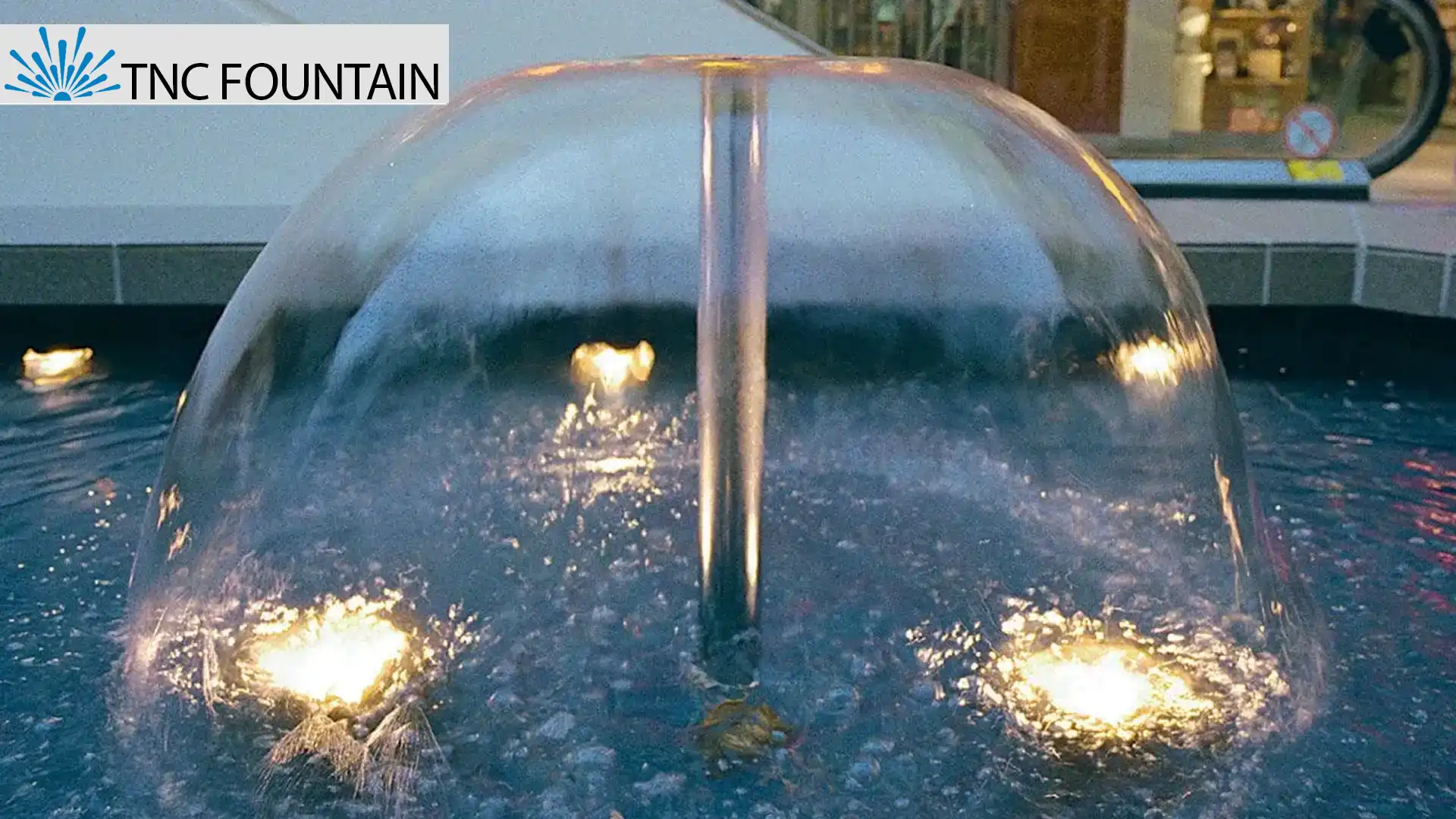
An apparent distinctive characteristic of the Mushroom Fountain Nozzle as compared to other fountain nozzles is independence in operation. Since it does not depend on the water level that surrounds it, this nozzle can be installed into reservoirs irrespective of their depth without compromising its visual integrity. However, such slenderness of the water film requires a highly purged water supply. A single suspended particle or very fine sediments can easily block the outlet orifice, thus causing the water curtain to misbehave. Therefore, integration of professional filtration systems should necessarily be put in place to ensure performance sustainability.
Core Characteristics of Professional Grade Units
The technical merit of these nozzles lies in their versatility and material resilience. When selecting these components for large-scale projects, engineers often prioritize the following features:
-
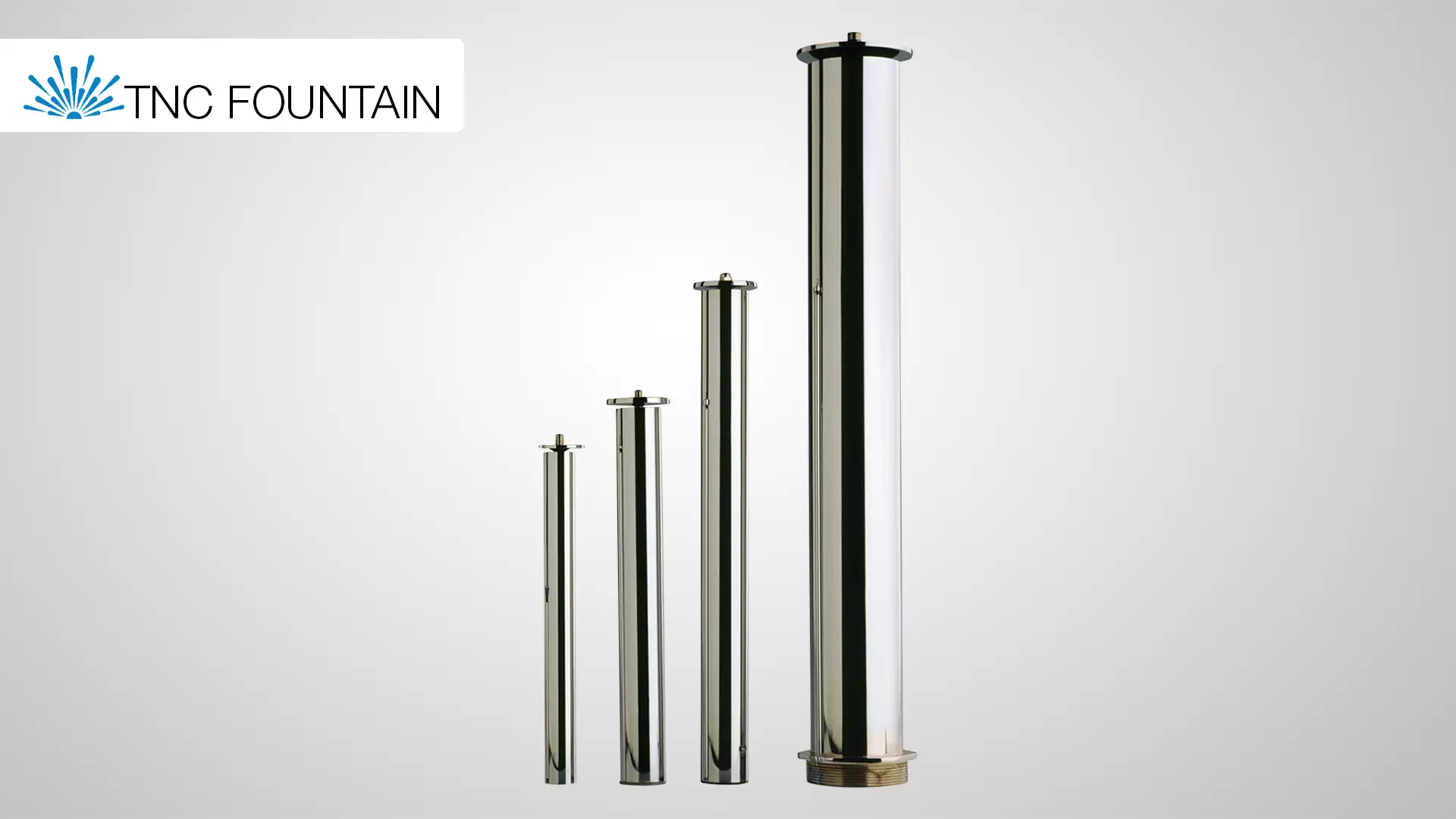
Material Composition: Typically fabricated from high-grade 304 or 316 stainless steel and industrial brass for superior corrosion resistance.
-
Scale Flexibility: Available in dimensions ranging from 1/2 inch to larger industrial sizes, catering to both intimate indoor features and expansive urban displays.
-
Acoustic Management: Produces a gentle “white noise” effect, ideal for noise mitigation in busy commercial spaces.
-
Environmental Stability: Despite its delicate appearance, it offers moderate resistance to wind, though it performs best in sheltered or indoor environments.
-
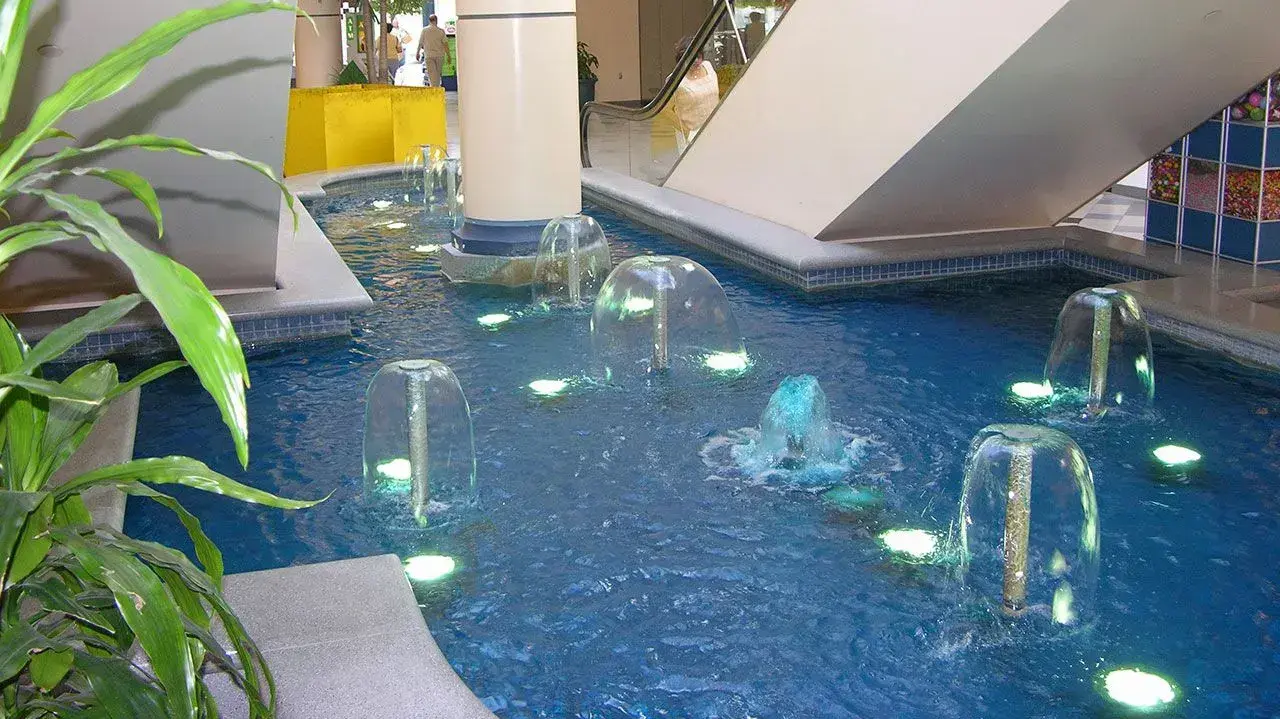
Modular Potential: Well-suited for group installations where multiple nozzles create a rhythmic “forest” of water bells.
Technical Specifications: A Guide for Mechanical Engineers
To ensure the Mushroom Fountain Nozzle operates at peak efficiency, precise hydraulic calibration is required. Most professional-grade units are engineered to operate within the following parameters:
| Nozzle diameter [mm] |
G 1/2″ – H 290 | G 1″ – h 338 | G 1″ – h 488 | G 1″ – h 636 | G 1-1/2 – h 166 | |||||
|---|---|---|---|---|---|---|---|---|---|---|
| NWR l/min |
NPR bar |
NWR l/min |
NPR bar |
NWR l/min |
NPR bar |
NWR l/min |
NPR bar |
NWR l/min |
NPR bar |
|
| 200 | 17 | 0.09 | – | – | – | – | – | – | – | – |
| 300 | 21 | 0.11 | 35 | 0.11 | – | – | – | – | – | – |
| 400 | 25 | 0.14 | 43 | 0.13 | 43 | 0.14 | – | – | – | – |
| 500 | 29 | 0.17 | 51 | 0.16 | 51 | 0.17 | 51 | 0.18 | – | – |
| 600 | 33 | 0.21 | 59 | 0.20 | 59 | 0.21 | 59 | 0.22 | – | – |
| 700 | – | – | 67 | 0.25 | 67 | 0.26 | 67 | 0.27 | – | – |
| 900 | – | – | – | – | 75 | 0.32 | 75 | 0.33 | 86 | 0.21 |
| 1100 | – | – | – | – | – | – | 83 | 0.40 | 108 | 0.24 |
| 1300 | – | – | – | – | – | – | – | – | 130 | 0.28 |
The Mushroom Fountain Nozzle features a tubular housing capped with an adjustable plate. By rotating the central adjustment screw, engineers can fine-tune the height of the plate, thereby controlling the thickness and diameter of the circular water curtain. This precision allows for a customized visual effect that can be matched to the scale of the surrounding architecture.
Dandelion Fountain Nozzle
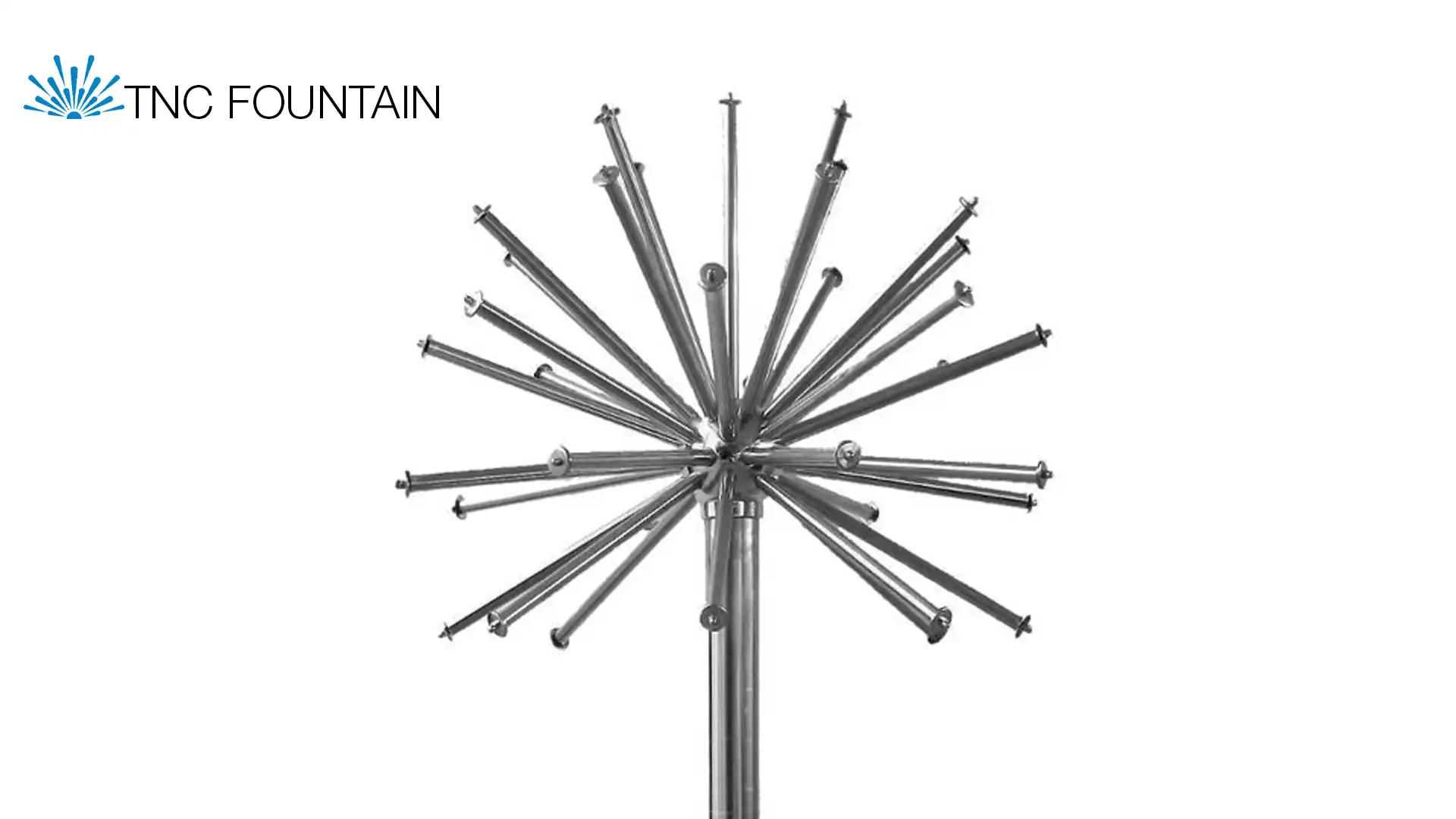
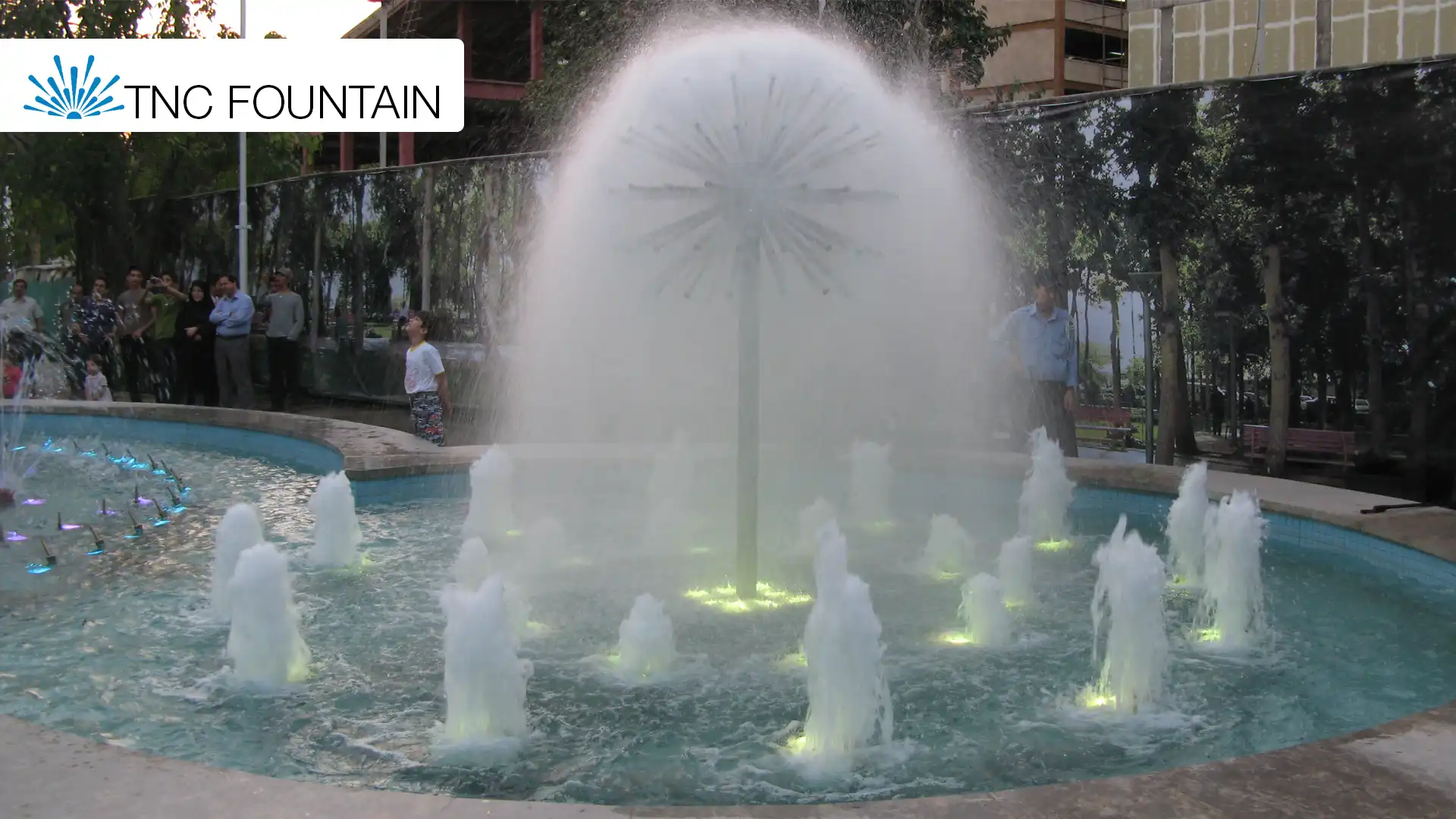
Maintaining the mechanical integrity of the Dandelion Fountain Nozzle will thereby sustain water flow at specific angles, achieving a symmetrical profile withstanding the lightest of environmental changes. Once coupled with luminaires based on the latest LED systems, the sphere becomes a huge illuminated ball and further captivates audiences at night.
Key Structural and Operational Features
For architects and MEP engineers, the operation of greatest significance to them of this system possess the following features:
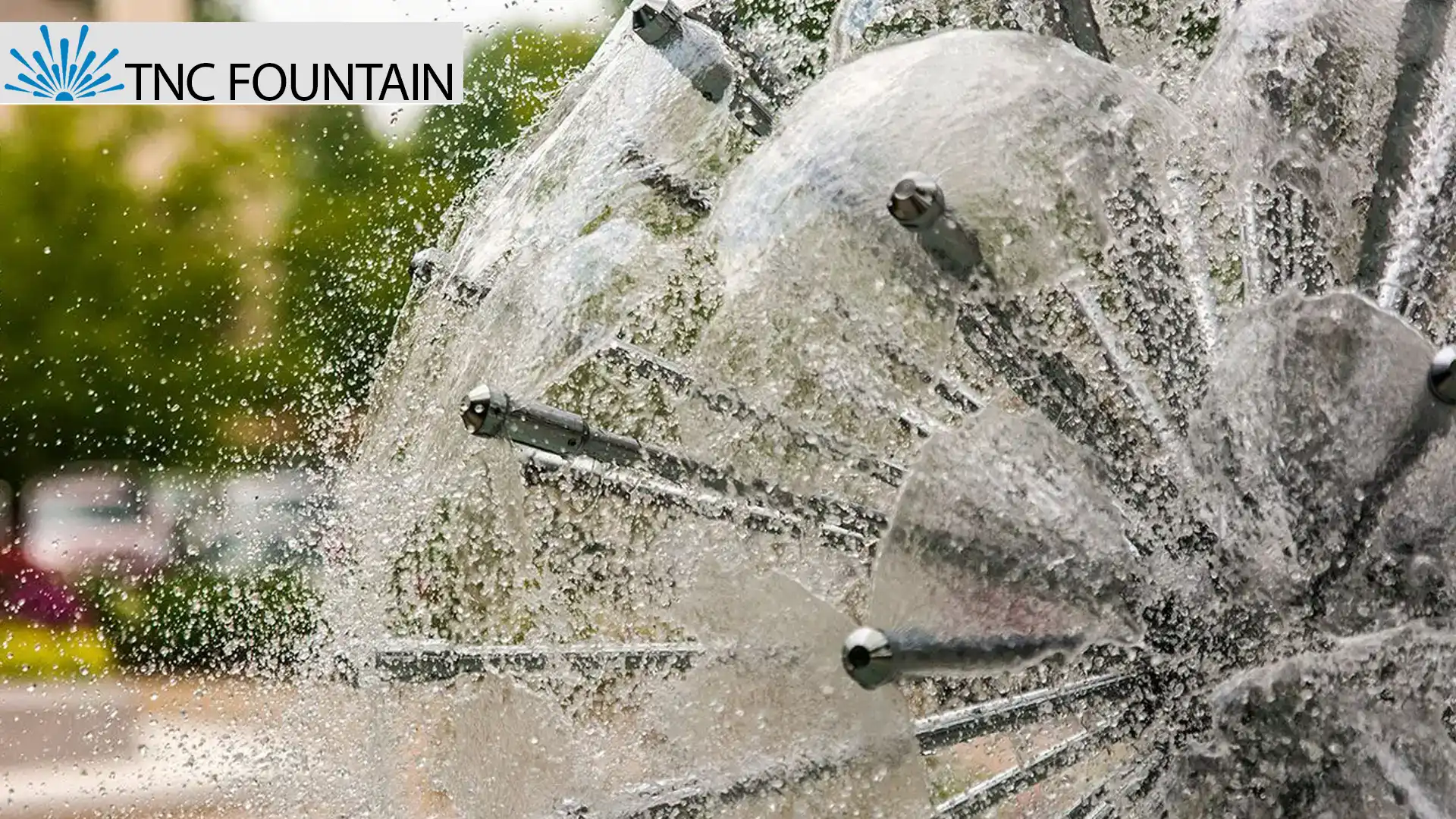
Geometric Symmetry: Water discharged through dozens of precision-angled tubes creates a perfectly balanced and pleasingly spherical form.
Dual Visual Impact: By day, it shows grand volumetric presence; at night, illuminated just right, creating a glowing, supernatural image.
Hydraulic Adaptability: Most good models provide an adjustable spray angle, allowing a tuning of sphere density and overall diameter.
Shallow Basin Compatibility: The dandelion variety works nicely in shallow decorative basins, thereby lowering civil engineering costs, unlike other, more turbulent fountain nozzles.
Dandelion Fountain Nozzle Specifications for Hydraulic Engineers
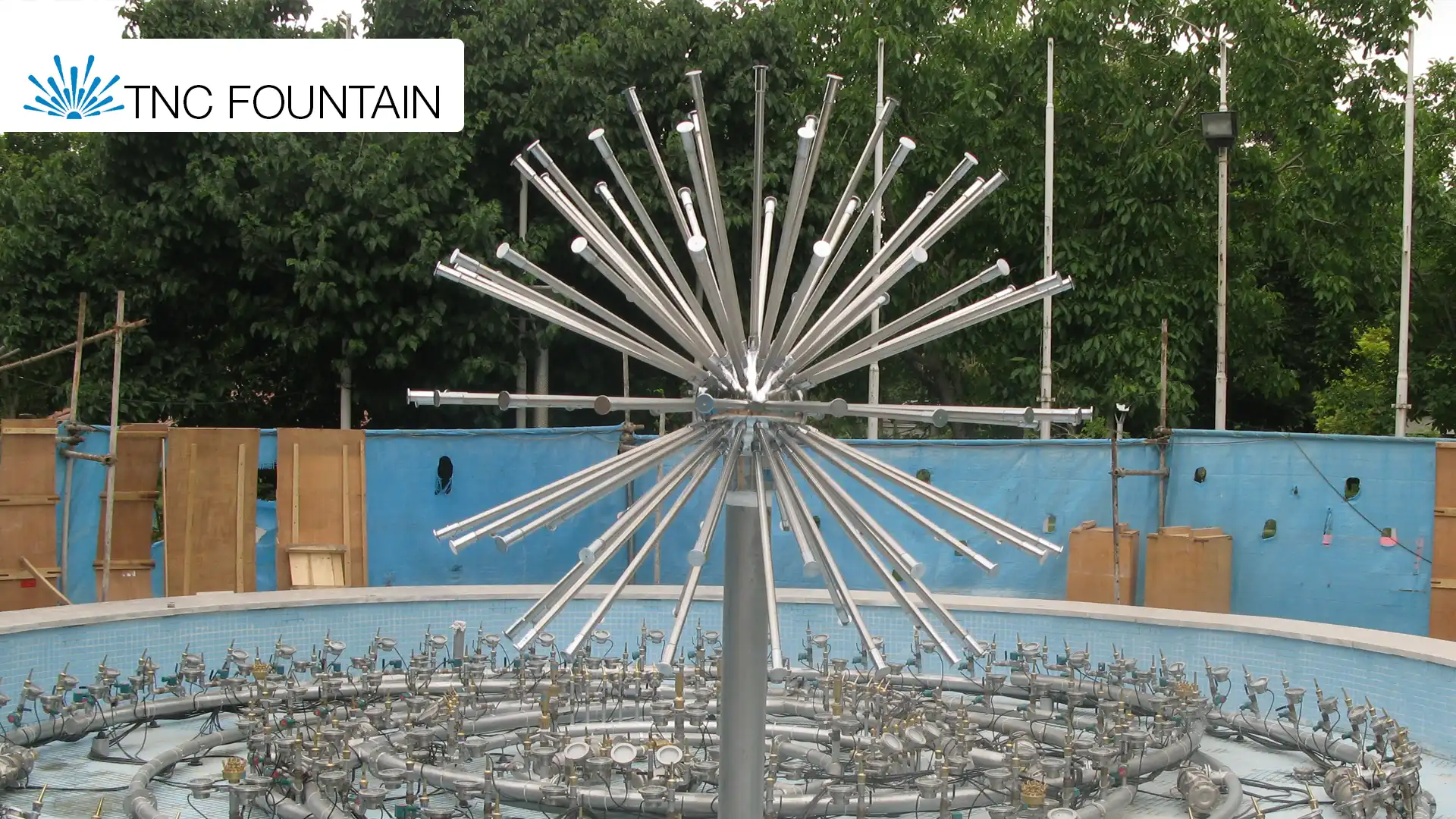
To properly specify a Dandelion Fountain Nozzle, an engineer should have an in-depth knowledge of the hydraulic characteristics involved. Under normal circumstances, the diameter of a Dandelion Fountain Nozzle falls within the range of 50 cm to 200 cm, dependent upon the number of tubes and the volume of water it is to be expected to discharge. The quantity of water outlet will vary in this case from 60, upwards of 200; this will impose a great deal of control over the resultant flow rate.
Why Material Choice Is Important: SS304 Vs SS316
The service life of a dandelion fountain depends upon its alloy composition. In most professional settings, stainless steel 304 or 316 is specified. While 304 is suitable for deployment in fresh water under normal circumstances, Grade 316 is a must in cases of either saline applications or industrially polluted areas as it possesses high resistance to rust and chemical corrosion. The polished surface finish of these metals not only enhances their longevity but also aids in boosting light reflection while display is on at night.
Fan Jet Nozzle
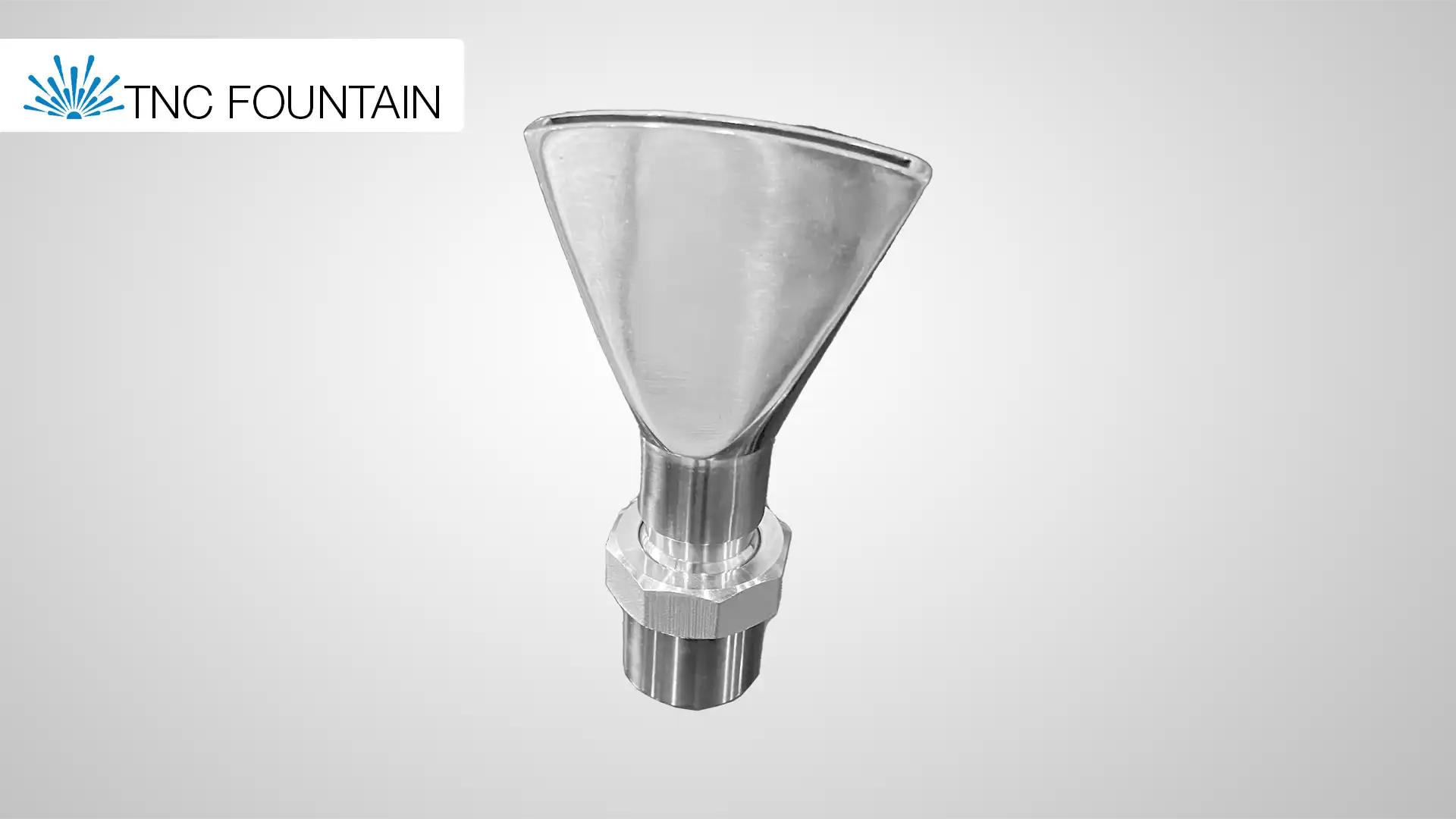
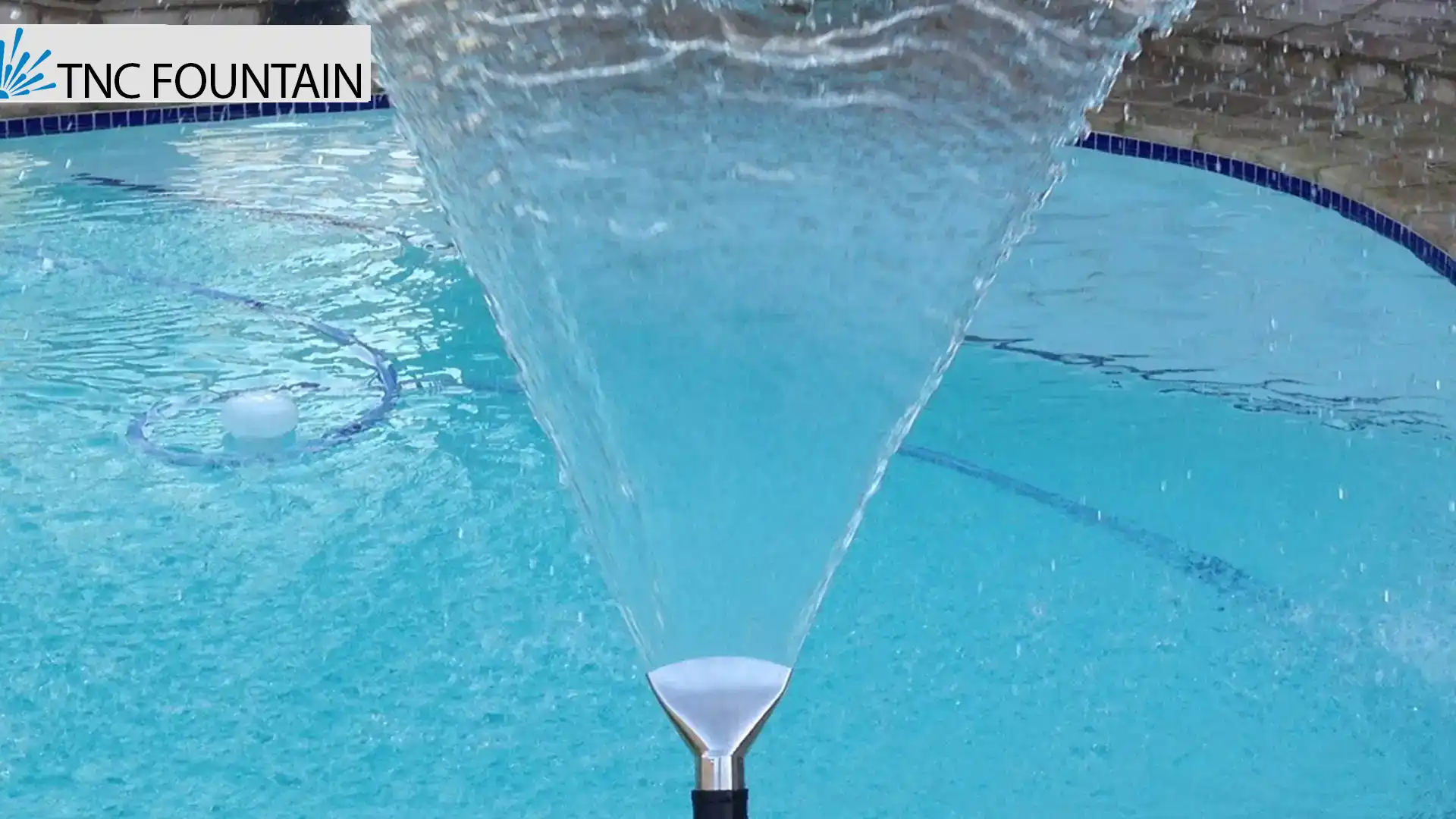
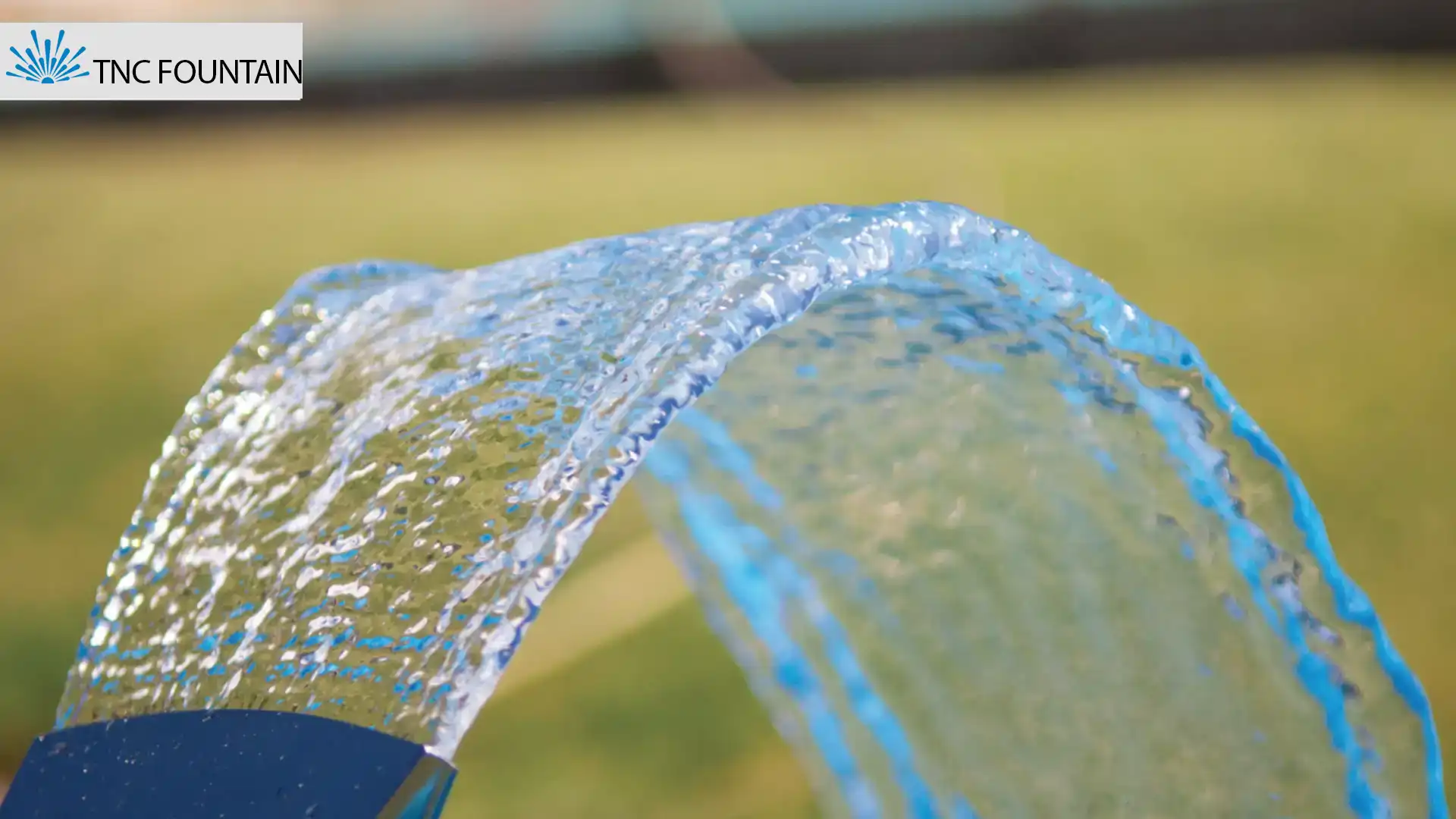
With laminar flow, the Fan Jet Nozzle engineers create an environment that is soothing. During displays in the evening, the laminar flow causes the water sheet of the leaf nozzle to appear to be a smooth and mirror-like surface optimally reflecting color light.
Core Engineering Features and Advantages
When selecting components for a project, engineers often consider the Fan Jet Nozzle the first choice because of its peculiar performance factors.
-
Laminar Curtain Projection: The water is projected in a wide-but-thin laminar curtain with minimal yet clear visibility.
-
Dynamic Adjustability: The adjustable internal housing will allow you to alter the spray angle to match water patterning along the specific site geometry.
-
Hydraulic Efficiency: The efficient construction makes an optimum usage of water and energy with comparatively low pressure requirements, unlike many other Fountain Nozzles providing the same throw.
-
Environmental Resilience: The nozzle is made of good alloys that maintain their integrity in constant exposure to the environment.
-
Lighting Synergies: The flat water surface provides an excellent interface for IP68-RGB LED systems, which adds to the sensory experience.
Technical Specifications: A Specialist Insight
Stabilizing a water curtain requires precise pressure-flow calibration. Although these specifications differ between manufacturers, the following generally represent industrial standards for the Fan Jet Nozzle:
-
Inlet Diameter: Generally from 1/2″ to 2″, in proportion to the required volumetric flow.
-
Operational Pressure: Preset at 0.5 just to 3 bars to make sure that the ‘leaf’ sustains its shape without spilling away into mist.
-
Water Flow Rate: Needs generally range between 5 and 50 liters a minute, basically dependent on the size of the nozzle orifice and pump head.
-
Spray Geometry: Controlled spray angle from 30 up to 120 degrees, providing either wide panorama or narrow accent.
-
Material Integrity: Predominantly Stainless Steel (Grades 304 or 316) or high-grade Brass to prevent corrosion by chlorinated or mineral-rich water.
Aqua Jet Nozzle
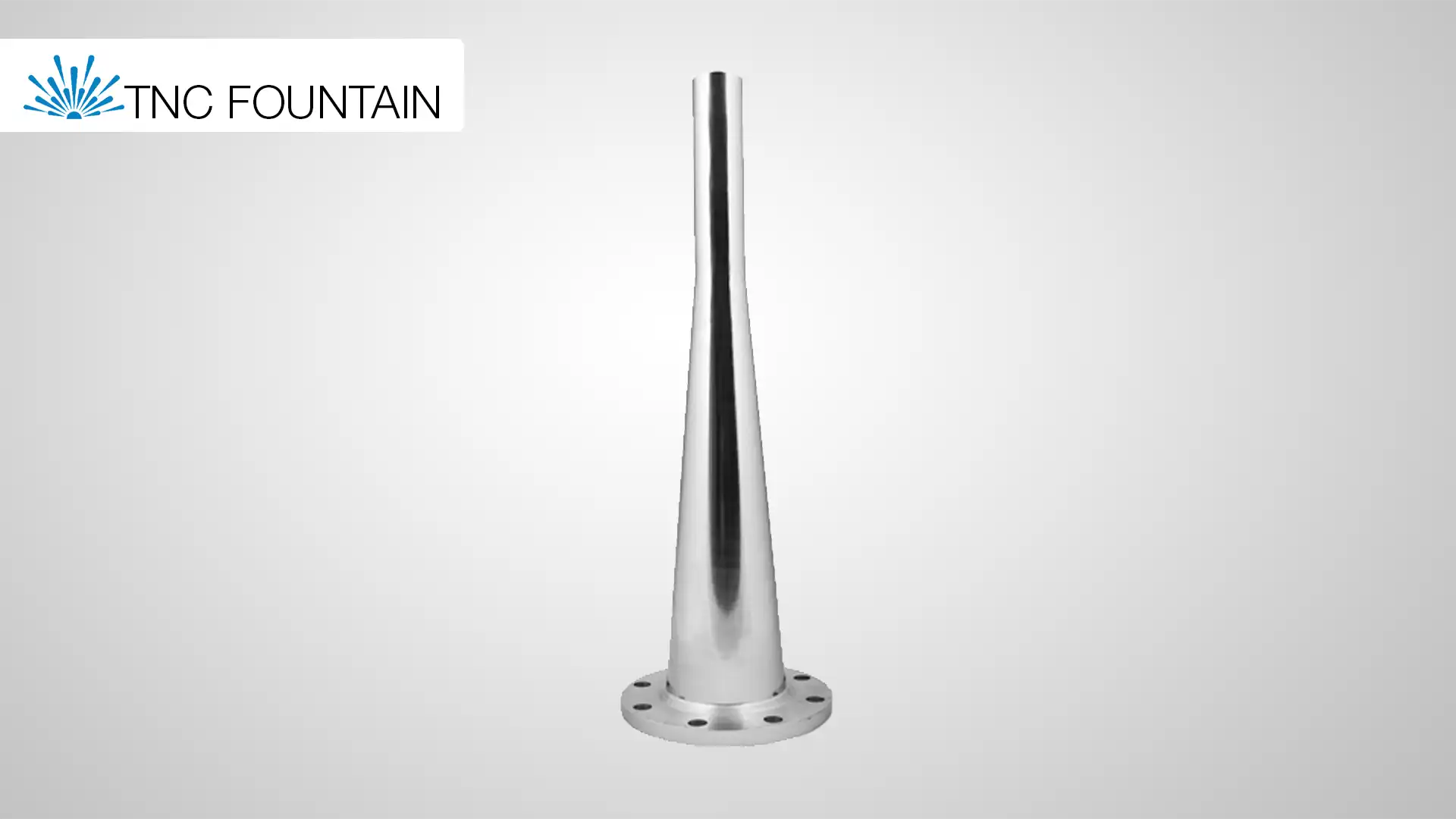
Technical advantages of the Aquajet nozzle:
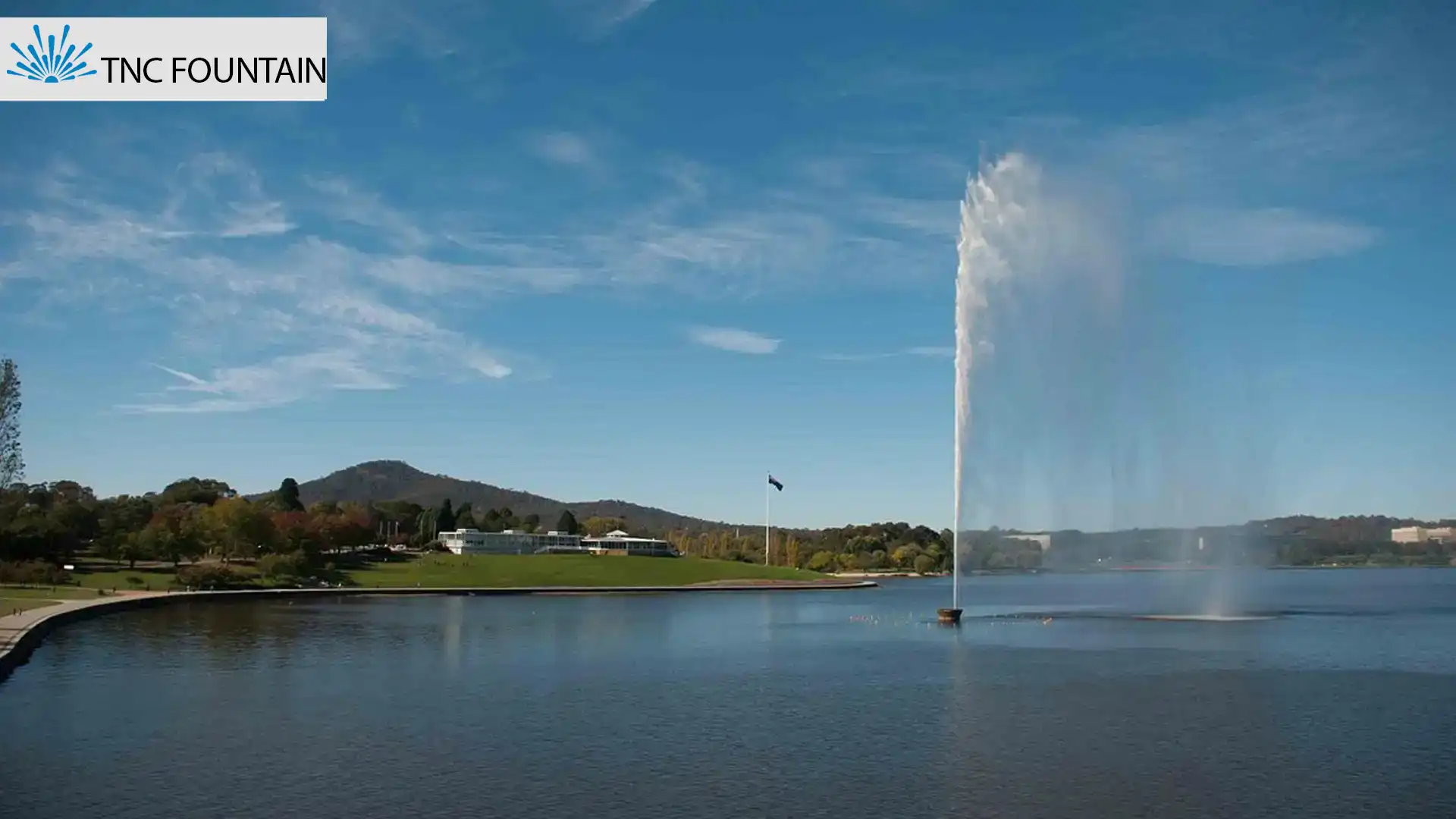
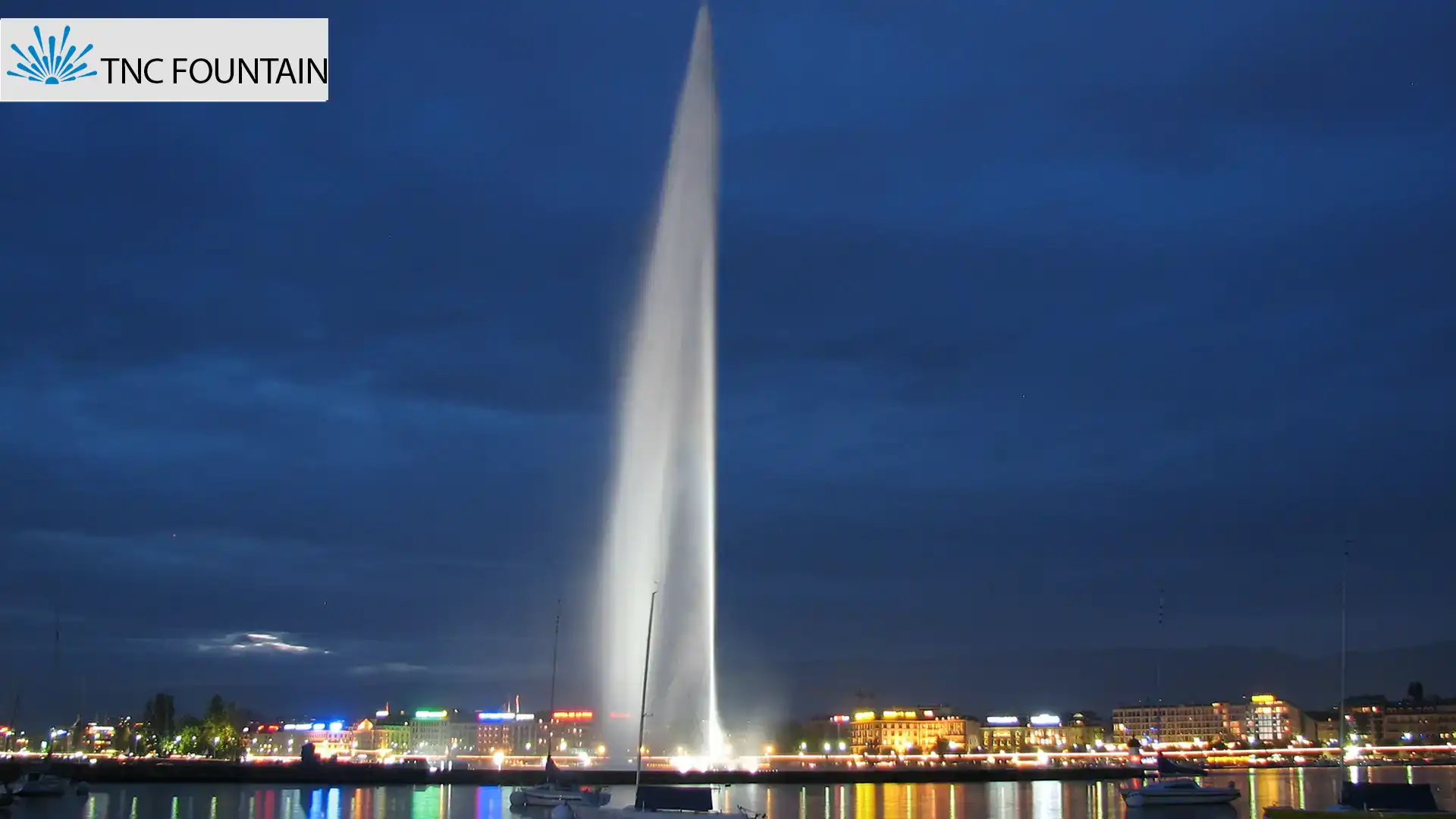
Capable of focused water jets up to high altitudes. Aquajet nozzles come in different sizes, each capable of shooting water to different heights.
The aerodynamic design of this nozzle allows the water to stay unified and not break apart or splash after leaving the nozzle, even at high altitudes.
The unified water column created by the Aquajet nozzle also makes lighting look completely uniform, creating a stunning and magnificent display of water and light.
Technical specifications of the Aquajet nozzle to consider:
Architects and facility engineers planning to use this nozzle in their designs and projects should consider these hydraulic specifications:
The inlet diameter of the Aquajet nozzle is usually between 1 and 3 inches. For special projects requiring very high altitudes, or for example, high-altitude fountains in the sea, custom and larger sizes can also be manufactured.
The right pressure for vertical jets above 20 meters is up to 10 bar.
The output flow rate of this nozzle can supply up to 200 liters per minute or more, which can achieve heights above 20 meters. In larger sizes, heights of 100 meters or more can also be achieved.
The material used in manufacturing this nozzle is very important. It’s best to use stainless steel for the nozzle. Nozzles are made from 304 stainless steel for freshwater and 316 stainless steel for saltwater.
Economic and optimal uses of the Aquajet nozzle:
Its high altitude capability and the clarity of its water column make the Aquajet nozzle a versatile and practical choice for high-profile fountains.
This nozzle, with its ability to attract attention and create busy focal points in urban projects and squares, is an excellent choice for adding value to any space.
The Aquajet nozzle has a very high attention-grabbing ability. Therefore, in large commercial centers and at entrances, it can have strong advertising value.
In large musical fountains, this nozzle can be installed at the center point to act as the main element, delivering excitement and grandeur to the viewer through sudden solo performances.
With its high aeration and oxygenation capability, the Aquajet nozzle plays an important role in purifying the water in the basin or lake.
How to maintain water jet quality and clarity in the long term?
One of the important parameters for maintaining water quality and fountain clarity is that engineers and designers should include professional filtration systems in their fountain designs. A standard filtration system removes suspended particles, algae, and sediment layers from the water. This also keeps the pump quality stable, preventing wear and tear. This way, the maximum efficiency of the Aquajet nozzle and the fountain can be maintained in the long term.
Flower Fountain Nozzle
Uses of the Flower Nozzle
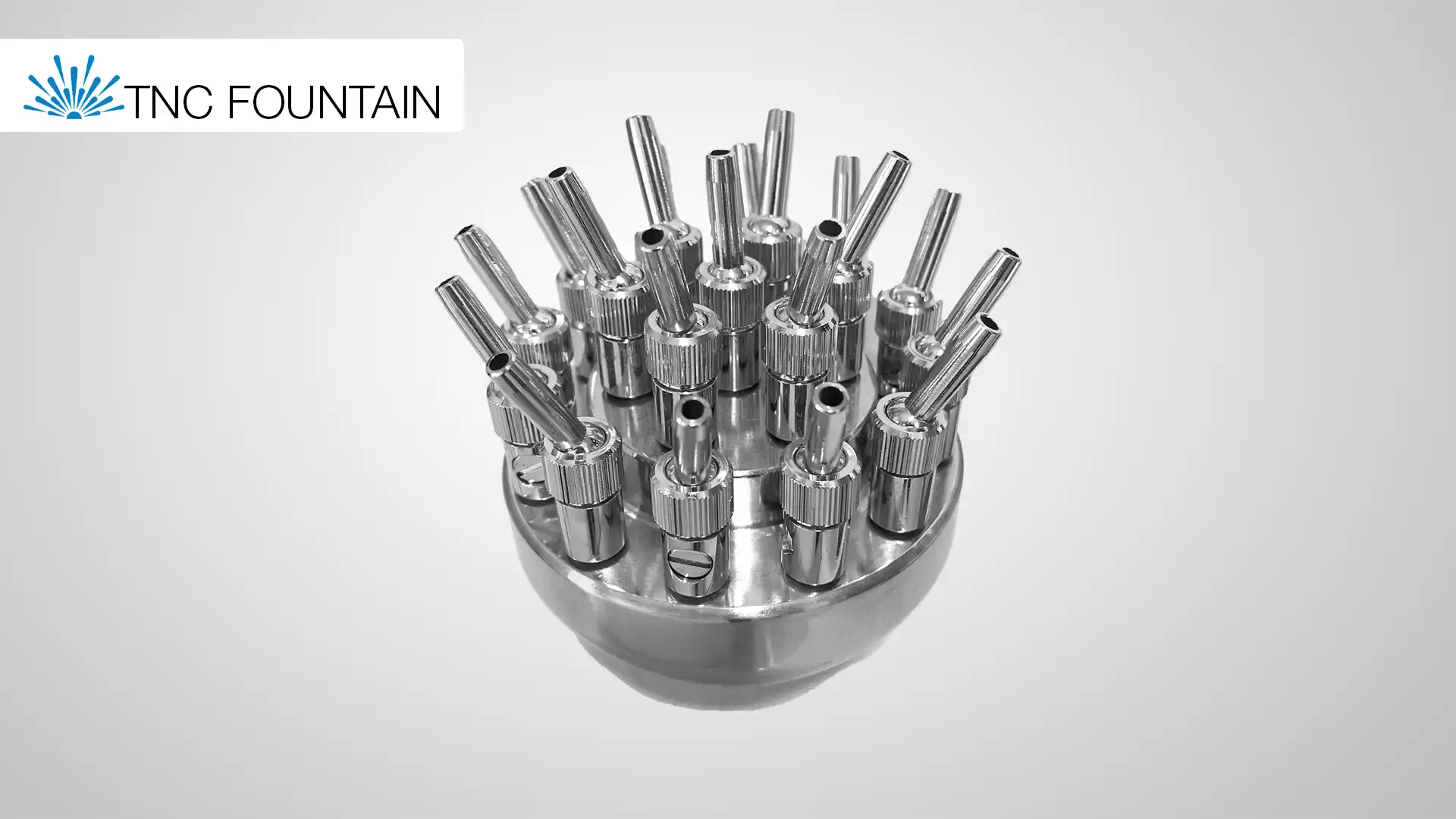
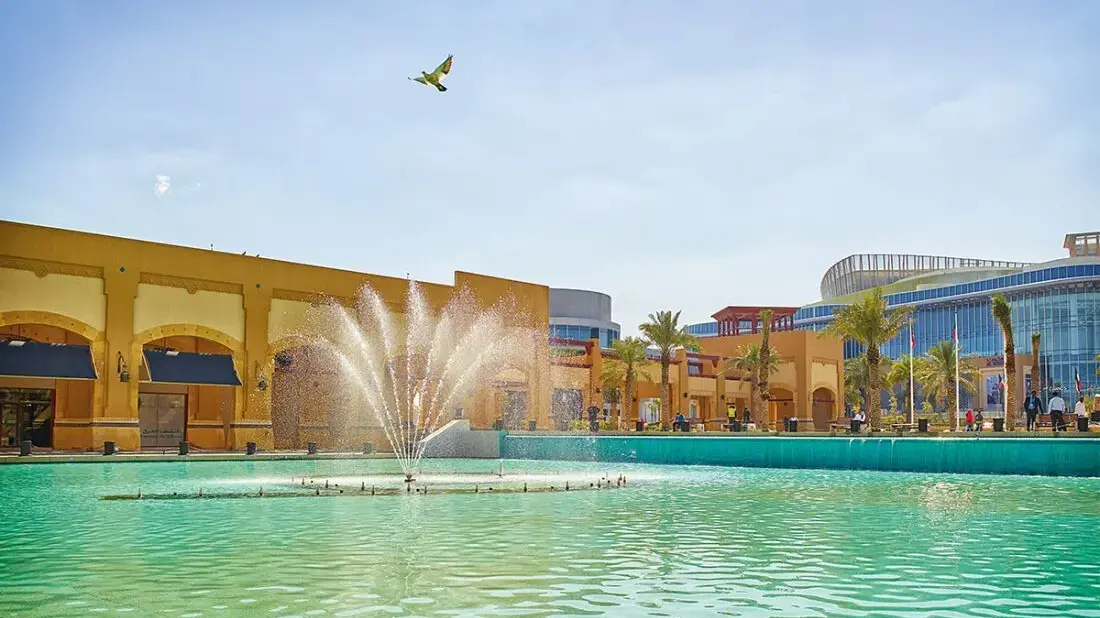
Because of its circular spray pattern, it’s really important from a landscape architecture perspective to place it where it keeps visual balance. Projects recommended by the TNC Fountain team include:
-
As a central nozzle in classic fountains
-
As a single nozzle in small parks, home gardens, and villas
-
As an attention grabber in large city entrance squares
-
As a floating fountain nozzle in large lakes
When using this nozzle in groups or combined with other nozzles, it’s very important to calculate the Flower Fountain Nozzle’s water throw diameter correctly so it doesn’t interfere with other fountain nozzles.
How the water flow pattern works
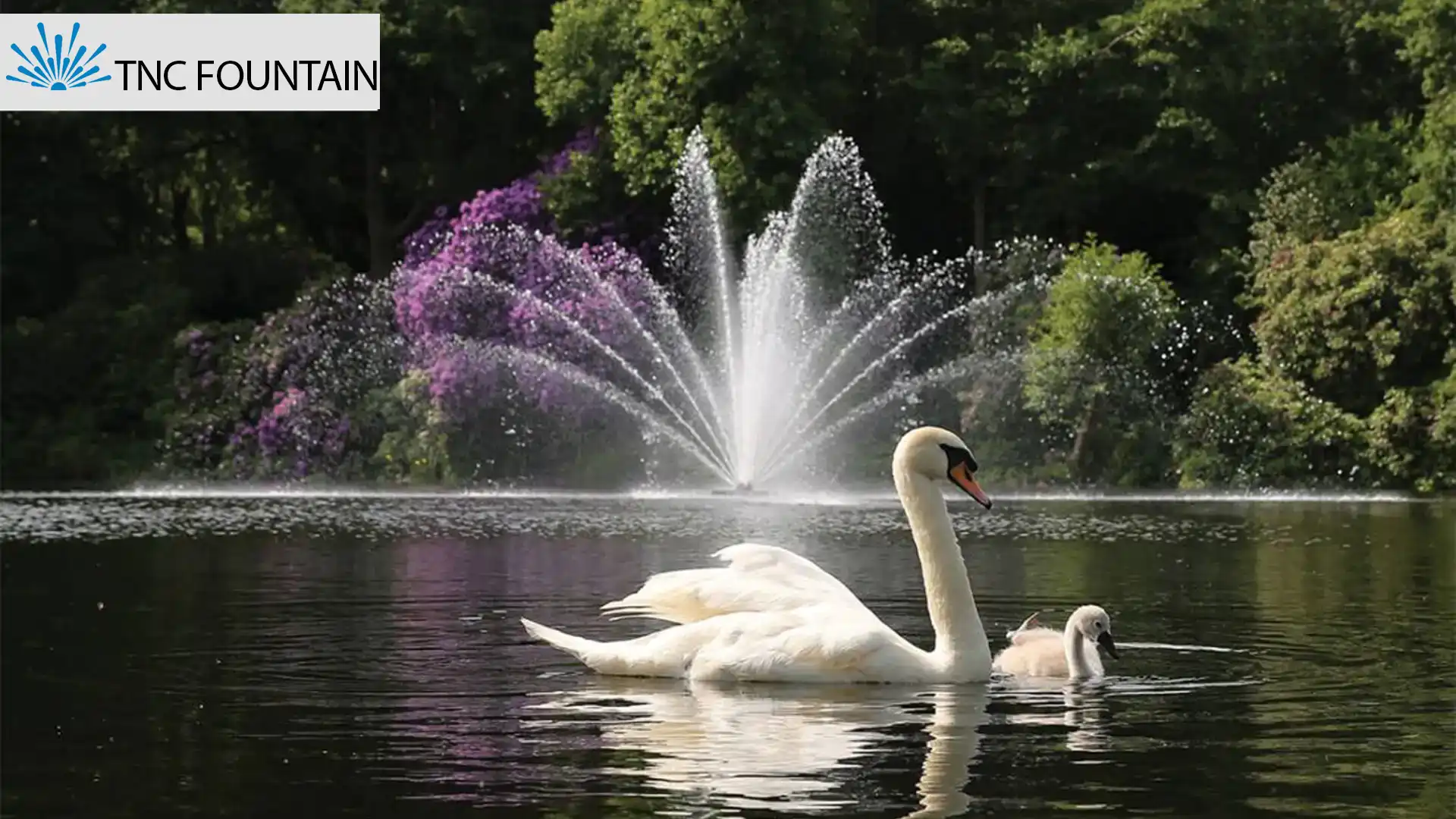
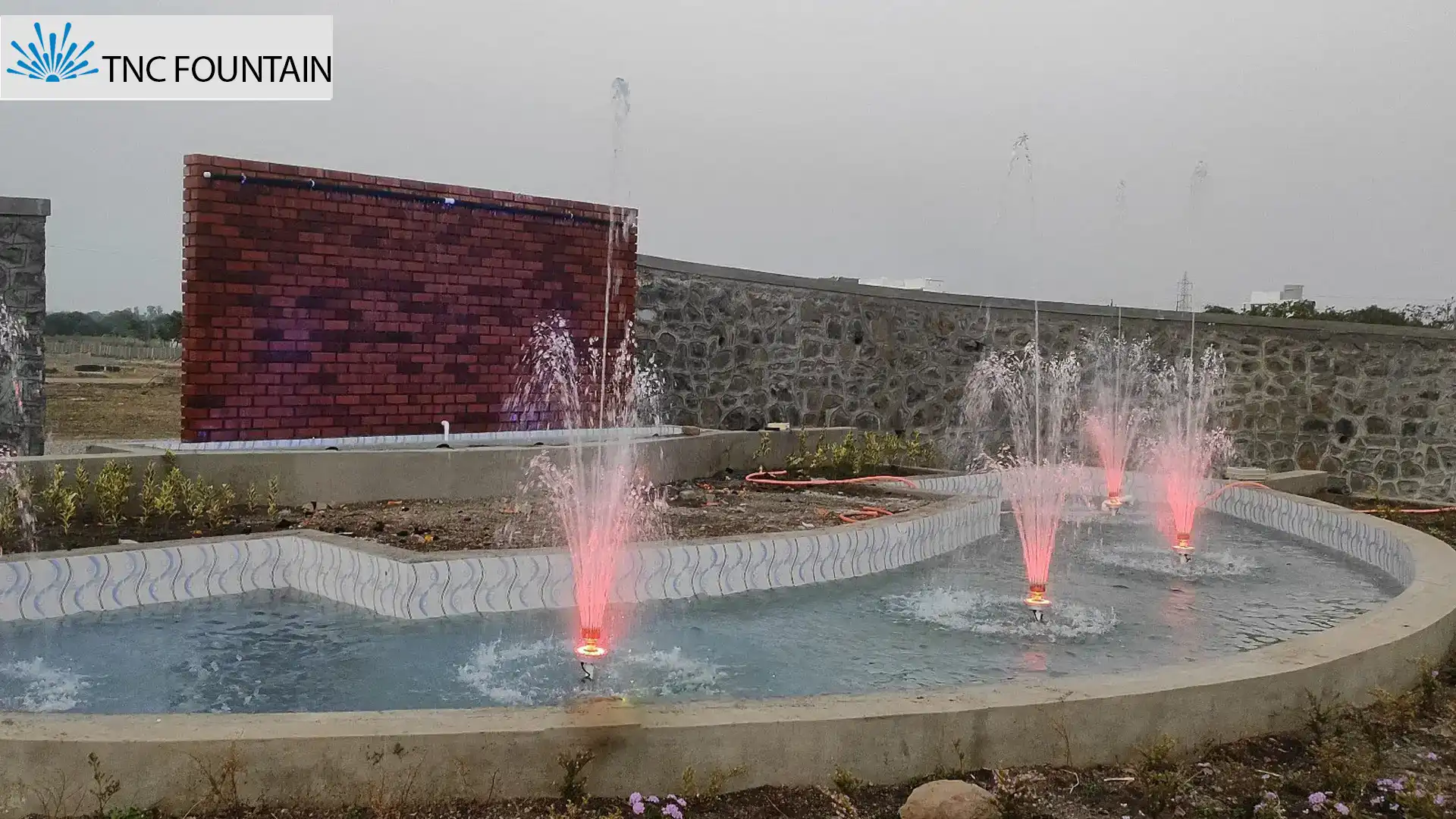
The Flower Nozzle is usually installed on a riser mounted vertically on a pump or manifold. Pressurized water exits through smaller adjustable-angle nozzles from the main chamber, creating a beautiful, attractive display.
In regular models, instead of adjustable-angle nozzles, holes are used on the main nozzle chamber.
Installation and maintenance protocols
To increase the Flower Fountain Nozzle’s lifespan, you need to carefully follow some protocols for installation and maintenance.
What size projects is it suitable for?
Like I said above, this nozzle works for both small and large projects. However, for large projects, especially rhythmic ones, there are some things to keep in mind:
-
Keep the right distance to maintain visual density
-
Combine it with PLC systems so you can control the variable flow
-
Make sure pump flow rate and head pressure match the Flower Fountain Nozzle
Important tips for long, trouble-free operation of the Flower Fountain Nozzle
-
Adjust pump pressure for the right output
-
Use a proper filtration system to prevent the holes from clogging
Cluster Fountain Nozzle
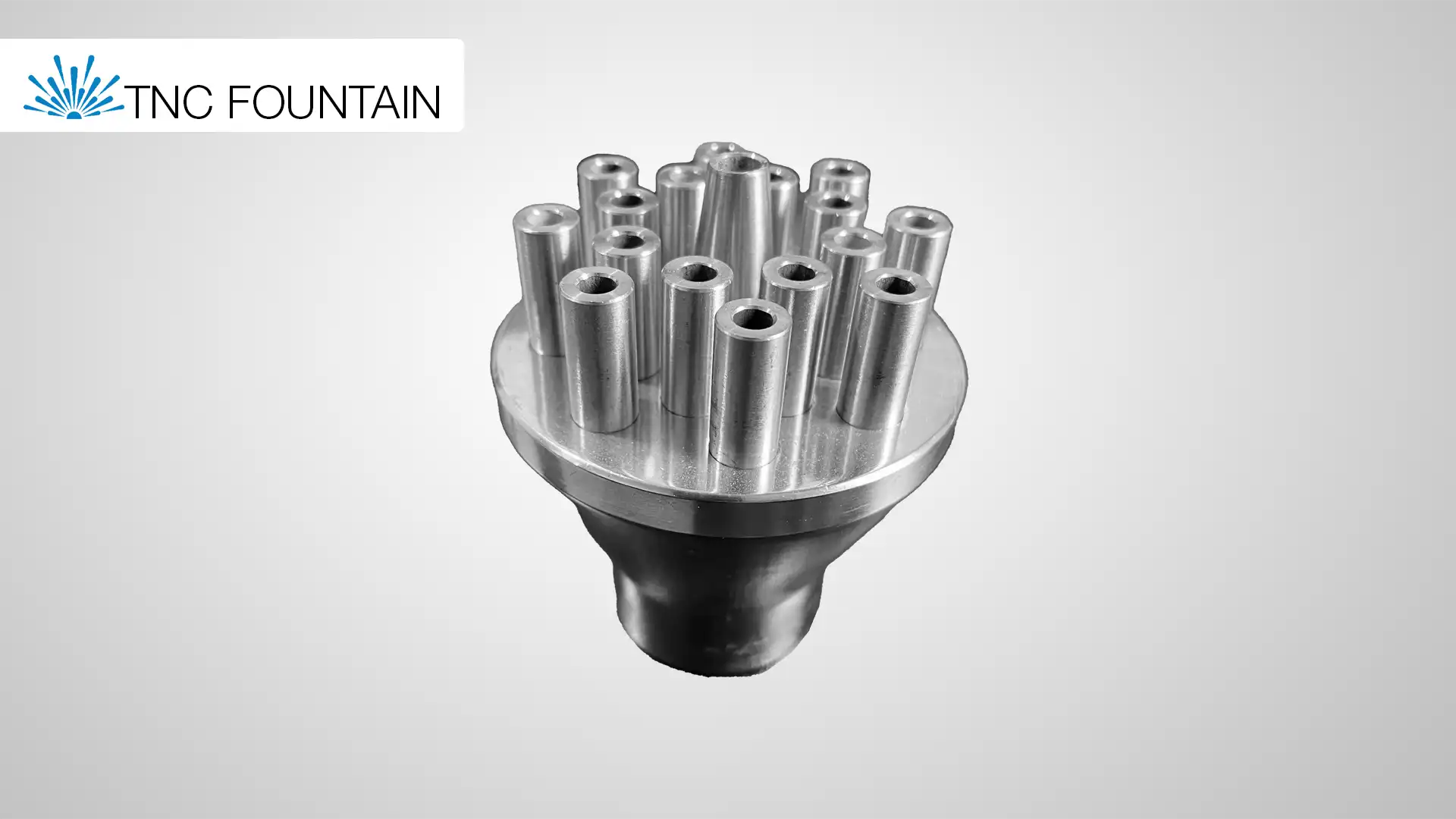
Commonly, this special nozzle finds application in:
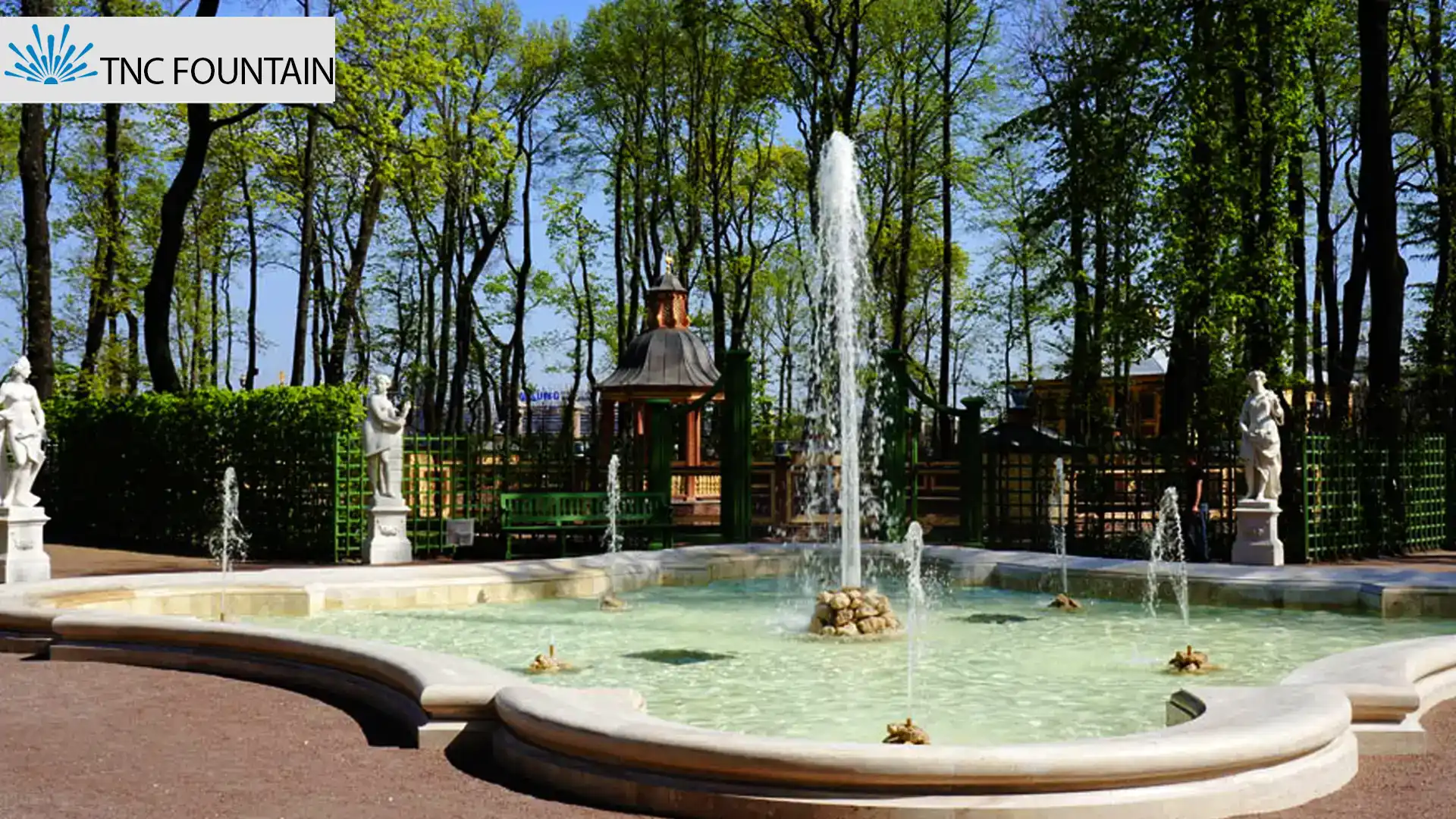
Urban Public Spaces: Fountains within municipalities and city parks.
Commercial Centers: High-traffic shopping areas and office complexes.
Residential Landscapes: Exclusive private gardens and residential complexes.
When properly combined with underwater illumination systems, the Cluster Fountain Nozzle significantly sets the scene on a majestic and calm atmosphere. Fabricated of highly durable stainless steel or brass guarantees the best possible resistance against corrosion and weathering, thus essentially improving the durability, long-term hydraulic efficacy, and final product features.
Core Features and Design Mandates
The design and function of the Cluster Fountain Nozzle focus on constant visual reliability:
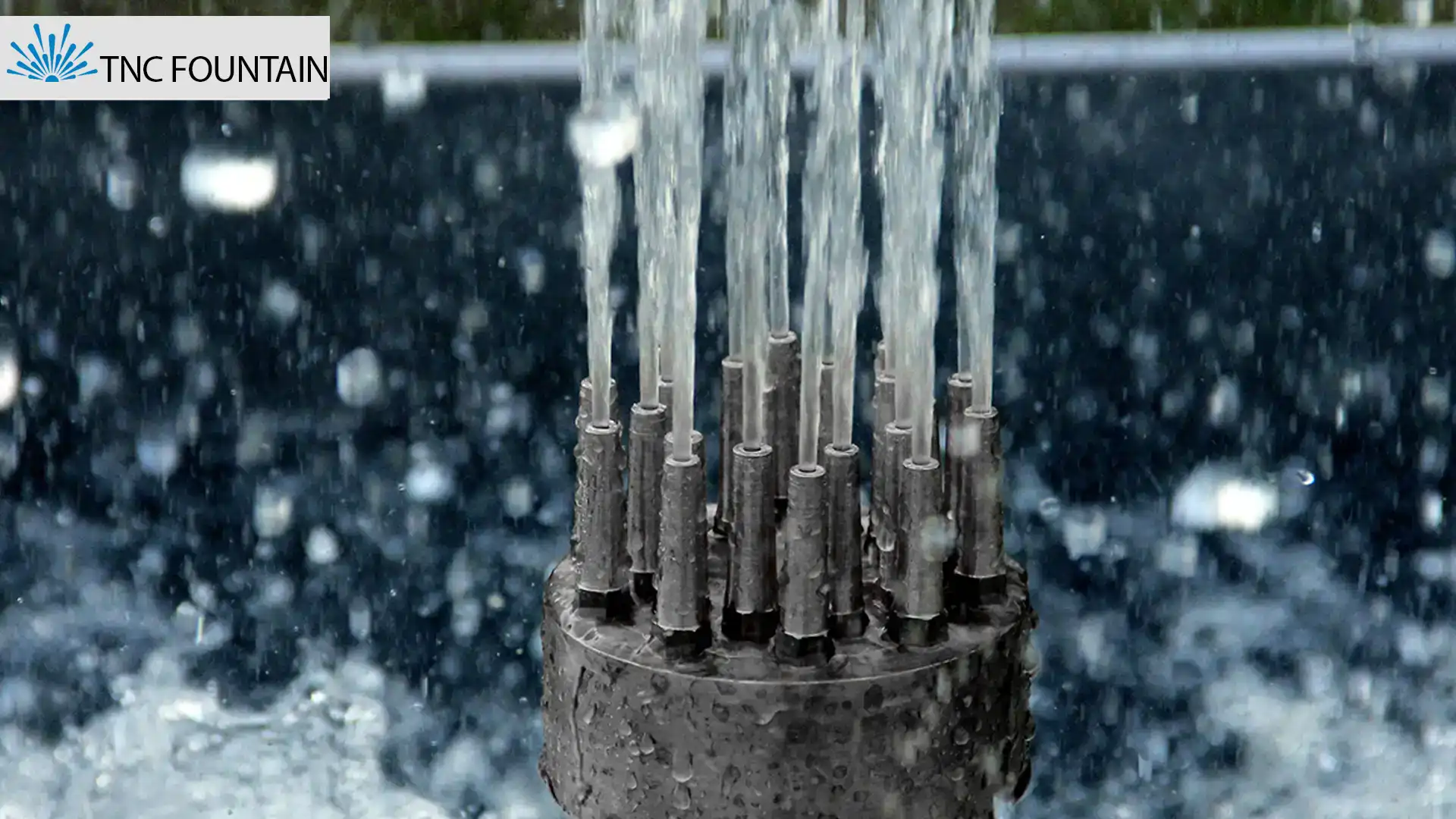
Multi-Stream Density: Ensures a dense, voluminous water flow made up of multiple, distinctive streams.
Pattern Uniformity: Directs visually amazing, even, and indeed structural harmonious patterns.
Versatile Application: Architecturally pinked for public, commercial, and park fountain installations.
Aesthetic Enhancement: Designed to be completely compatible with lighting systems for maximum visual effect.
Material Integrity: Made out of high-grade stainless steel (304/316), or marine-grade brass.
Environmental Endurance: Offers top durability in respect to different environmental and chemical factors.
Key Specifications for the Cluster Fountain Nozzle System
Detailed interpretation of technical information will fulfill the specification and installation requirements necessary for a functional Cluster Fountain Nozzle system.
Technical Parameter for Achieving Optimal Performance
| Parameter | Specification Range/Detail |
| Material | SS304/316 or Marine-grade Brass |
| Pressure Range | 2-6 bar (Adjustable for spray height) |
| Flow Rate | 30-150 L/min (Depending on model and stream number) |
| Connection Types | 1/2” to 2” BSP/NPT (Standardized threading) |
| Spray Pattern | Dense parallel jets (Usually from 5 to 20 individual streams) |
Essential Hydraulic Requirements:
Optimal Nozzle Diameter: Requires precise machining of outlet diameter, ensuring even jet sizes and uniform pressure distribution.
Adjustable Water Pressure: Must include necessary features for adjustment of water pressure to modify spray height and pattern density after installation.
Multi-Stream Capability: Designed to produce perfectly coordinated, densely packed streams of water in tightly synchronized patterns.
Project Applications: Where the Cluster Fountain Nozzle Excels
Unique visual dynamics and dense water displays that the Cluster Fountain Nozzle conjures are perfect for many types of architectural and public installations:
Public squares and major civic plazas.
Urban parks and municipal green spaces.
Commercial and Hospitality:
Luxury hotel lobbies and grand restaurant water features.
Commercial complexes and large shopping centers.
Private and Leisure Settings:
High-end private gardens and villa landscapes.
Tourist attractions and resort amenities.
Advanced Performance and Installation Considerations
The Cluster Fountain Nozzle offers significant functional advantages for designers:
Enhanced Performance Features:
Creates dynamic, visually synchronized water movements.
Perfectly optimized for integration with powerful RGB lighting systems.
Produces mesmerizing, three-dimensional water display effects.
Excellent for establishing clear, powerful focal points in architectural designs.
Equally suitable for stunning daytime visibility and brilliant nighttime displays.
Critical Installation Factors:
Requires precise leveling of the nozzle mounting surface for optimal pattern uniformity.
Performs best when paired with high-pressure, reliable pump systems.
Professional-grade water filtration is strongly recommended to maintain jet clarity and prevent clogging.
Next Steps: Getting Your Desired Water Display
To make sure your system is accurately sized and hydraulic optimized for the dramatic effect of the Cluster Fountain Nozzle, consult with our technical engineering team for project-specific recommendations.
Crown Fountain Nozzle
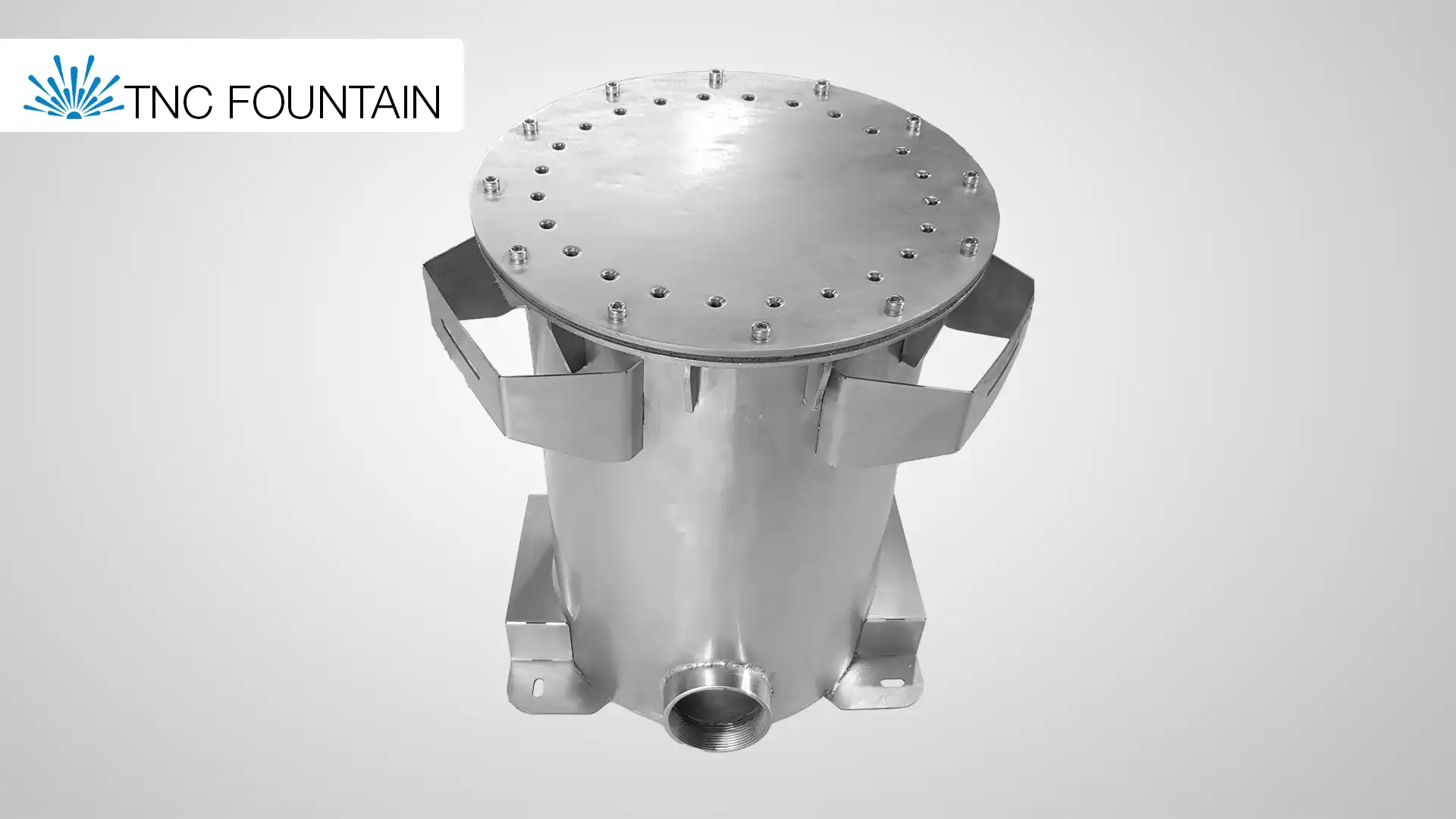
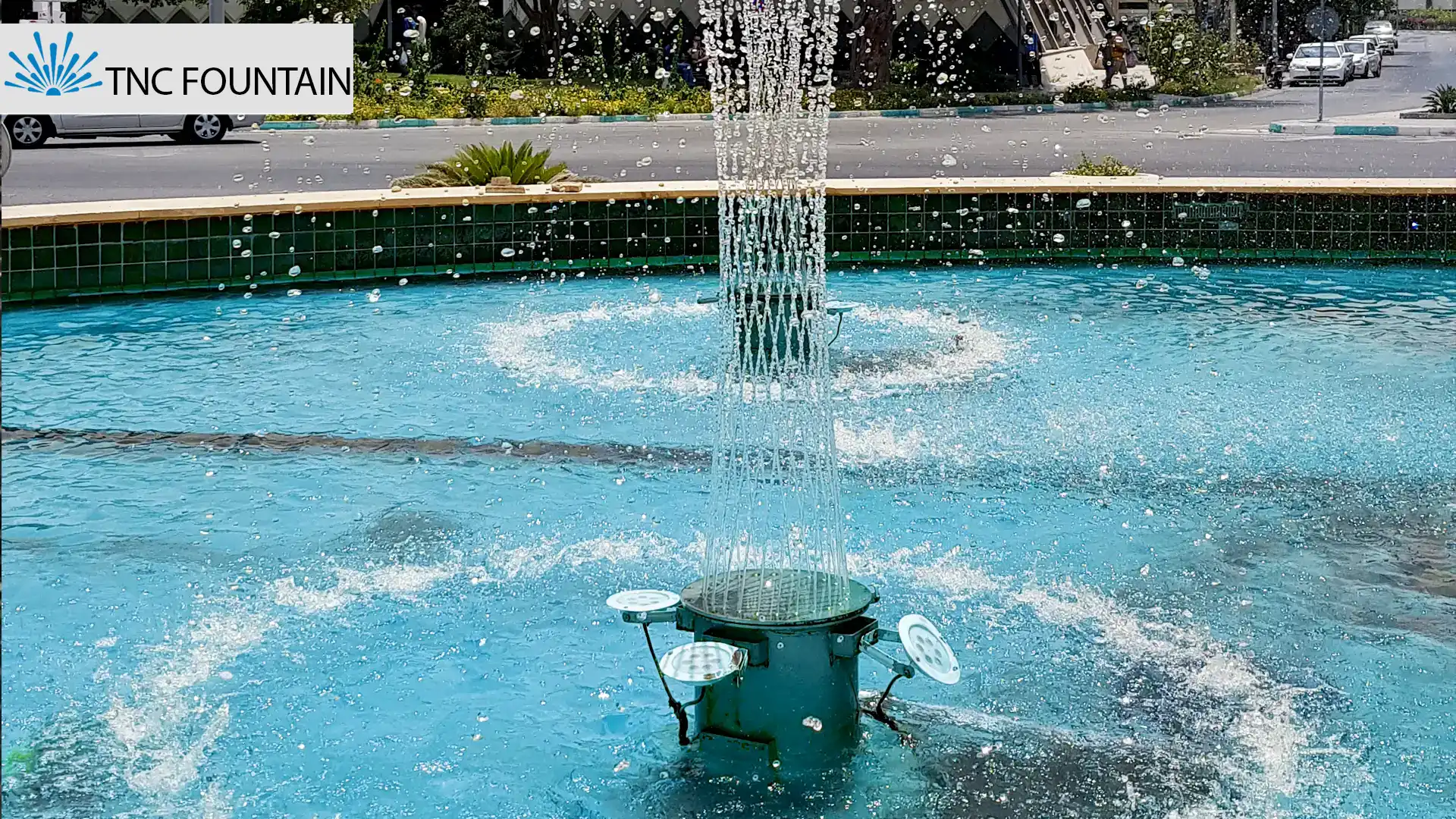
While this nozzle operates with high efficiency regardless of the surrounding water level, its intricate internal geometry makes it particularly sensitive to mineral sediment and environmental debris. Consequently, the integration of a professional-grade filtration system is mandatory to preserve the crystalline quality of the output. Whether utilized in simple rhythmic displays or complex musical fountain packages, the Crown Fountain Nozzle offers a rare blend of functional engineering and artistic elegance, making it an exemplary choice for high-traffic public squares.
The required flow rate and head for the Crown Fountain Nozzle
| Fountain height [m] | NSD [m] | NWR [l/min] | NPR [bar] |
|---|---|---|---|
| 1.00 | 0.85 | 192 | 0.11 |
| 2.00 | 1.55 | 312 | 0.23 |
| 3.00 | 2.40 | 384 | 0.35 |
| 4.00 | 3.20 | 504 | 0.49 |
| 5.00 | 3.90 | 624 | 0.64 |
Technical Parameters and Performance Dynamics
For successful implementation, engineers must adhere to the specific hydraulic requirements that define this nozzle’s operation:
Structural Composition: Typically manufactured from high-grade 304 stainless steel or industrial brass for maximum longevity.
Operating Pressure: Functions optimally between 1.0 and 3.0 bar, depending on the desired height of the crown effect.
Volumetric Flow: Requires a consistent flow rate of 20 to 40 liters per minute to maintain column integrity.
Inlet Specifications: Standardized with 2 to 3-inch threaded connections to facilitate seamless integration into existing manifolds.
Vibration Mitigation: Equipped with an internal dampening system to ensure the water streams remain steady and silent during operation.
Hydraulic Requirements: Why Filtration is Crucial for the Crown Fountain Nozzle?
The very precision that gives the Crown Fountain Nozzle its beauty is also its primary technical challenge. The small, laser-cut outlets can easily become obstructed by fine sediment or organic matter such as leaves. To prevent a diminished aesthetic or irregular water patterns, the following filtration protocols are recommended:
Basket Filtration: When deploying submersible pumps, a dedicated basket filter should be installed to catch larger particles before they reach the nozzle head.
Fine Particulate Secondary Filters: For urban areas with high dust or mineral content, secondary fine-mesh filters help maintain the “glass-like” clarity of the intertwined columns.
Regular Maintenance Cycles: Routine inspection of the internal outlets ensures that the crown shape remains symmetrical and visually impactful.
Spatial Planning for Urban Water Features
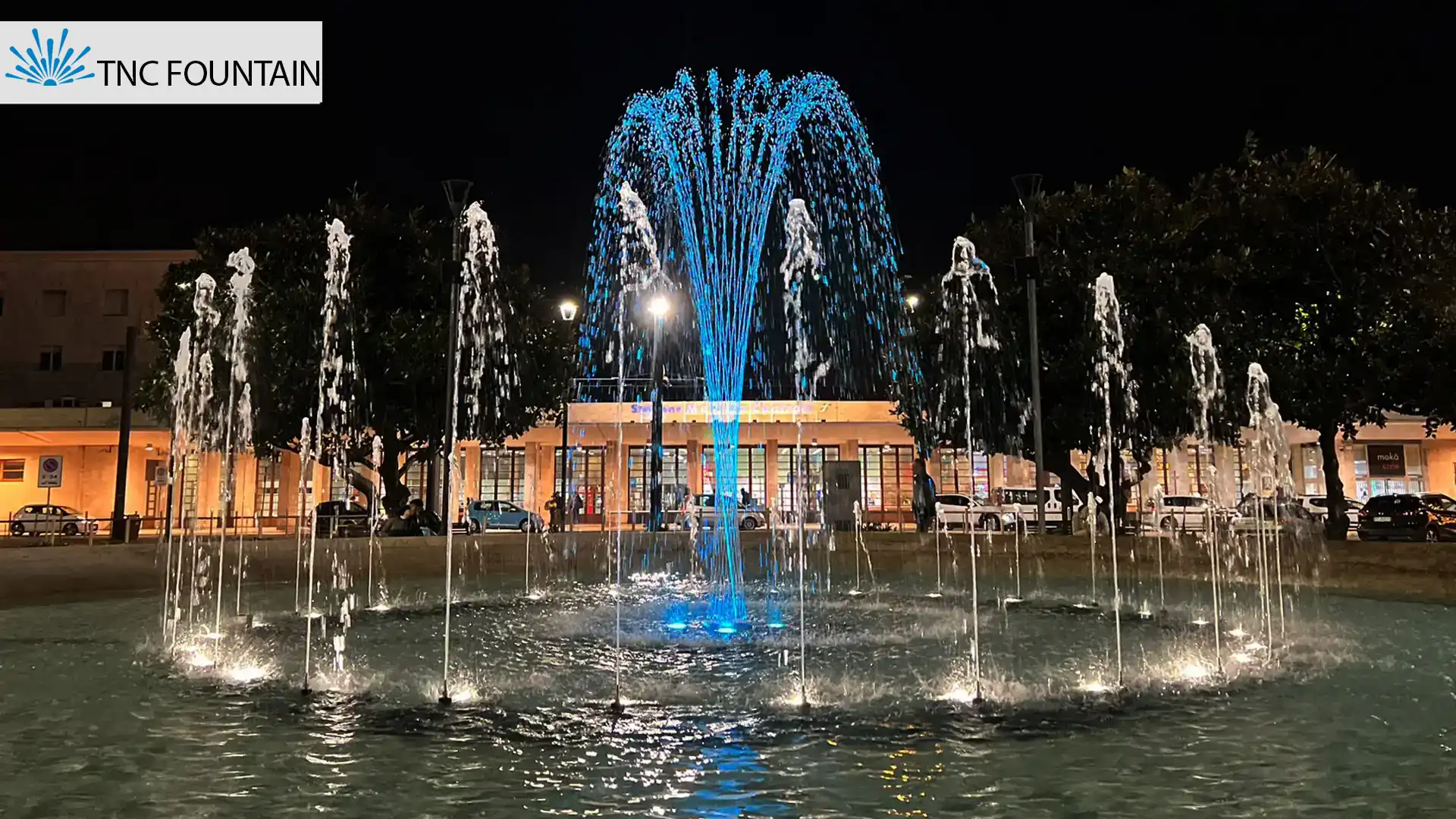
Installing a Crown Fountain Nozzle requires more than just hydraulic power; it demands careful spatial consideration. Because the water projection typically reaches a diameter of 2 meters, a 3-meter basin is the absolute minimum to accommodate wind drift and prevent water loss.
Versatile Depth Compatibility: Since the nozzle is independent of the water level, it is equally effective in traditional “wet” basins or modern “dry” deck fountains where water disappears into a sub-floor reservoir.
Pump Integration: The system is compatible with both dry-mounted centrifugal pumps and submersible units. For the latter, an engineered sump is recommended to protect the hardware and streamline maintenance.
Dynamic Environments: Its flexibility makes it a primary candidate for public parks, municipal plazas, and interactive fountain packages where visitors can engage with the water display.
The Strategic Role of Crown Nozzles in Interactive Installations
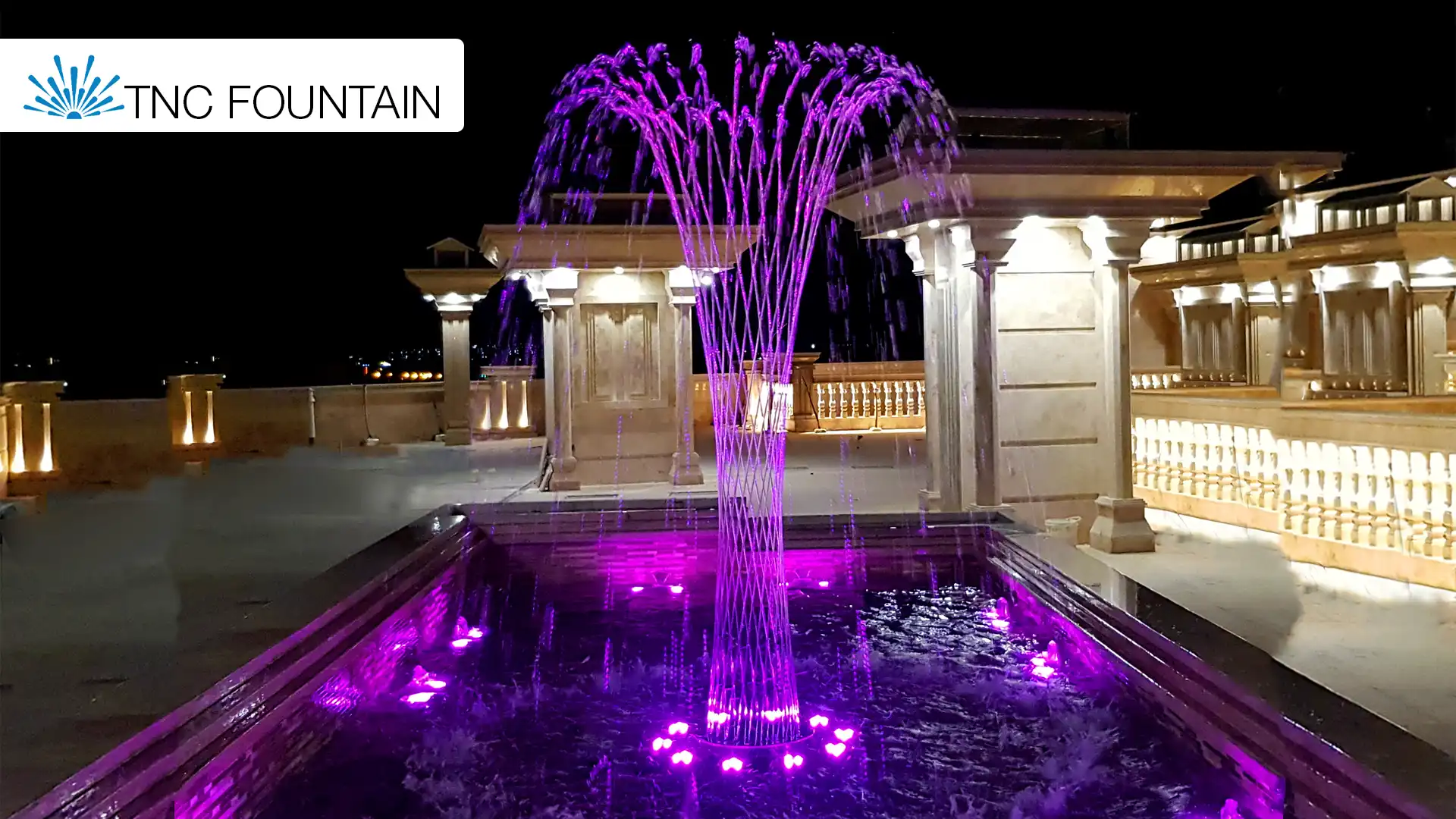
The intertwined columns produced by this nozzle are not merely static; they are highly responsive to rhythmic control. When integrated with advanced PLC (Programmable Logic Controller) systems, the Crown Fountain Nozzle can participate in visitor-responsive displays. This allows the water feature to “dance” in synchronization with music or change its height based on motion sensors, creating a truly immersive experience in public spaces.
Overcoming Installation Challenges
While the space requirements and debris sensitivity are notable, they are easily managed through robust site planning. By ensuring proper basin sizing and investing in a high-quality filtration loop, the technical risks are mitigated, leaving behind a durable and breathtaking architectural landmark.
Technical Specifications Summary:
Material: S/S 304 or Premium Brass
Pressure Range: 1–3 Bar
Flow Rate: 20–40 L/min
Projection Radius: 1.0m (2m total diameter)
Inlet Thread: 2″ or 3″ BSP/NPT